
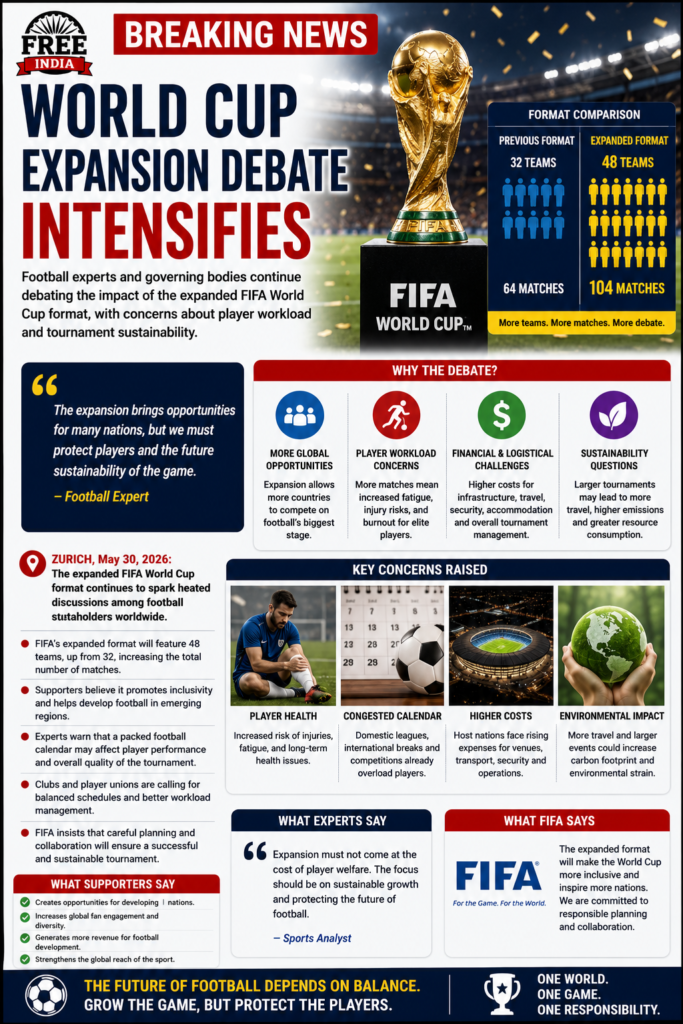
Zurich, May 30, 2026: Debate surrounding the expanded FIFA World Cup format continues to intensify as football experts, players, clubs, and governing bodies weigh the benefits and challenges of the tournament’s larger structure. While supporters argue that expansion increases global participation and opportunities for emerging football nations, critics warn that the changes could place additional strain on players and raise concerns about the long-term sustainability of the competition.
The expanded World Cup format features a larger number of participating nations than previous editions, allowing more countries from Asia, Africa, North America, and Oceania to compete on football’s biggest stage. FIFA has promoted the move as a way to make the tournament more inclusive and representative of the sport’s growing global reach.
However, concerns have emerged regarding the increased number of matches required under the expanded structure. Football organizations and player unions have repeatedly warned that elite players are already facing congested schedules due to domestic leagues, continental competitions, international tournaments, and commercial commitments throughout the year.
Sports scientists and medical experts caution that additional fixtures could increase the risk of injuries, fatigue, and burnout among players. Several coaches and club officials have expressed concerns that an overcrowded football calendar may affect player performance and overall match quality.
Supporters of the expansion argue that the larger tournament creates new opportunities for developing football nations to gain valuable international experience. They believe broader participation can help grow the sport globally, attract new audiences, and generate additional revenue that can be reinvested into football development programs.
The financial impact of the expanded tournament remains another major topic of discussion. Larger tournaments require increased spending on stadium infrastructure, transportation, security, accommodation, and logistics. Some analysts question whether host nations can consistently sustain the growing demands associated with organizing increasingly complex global sporting events.
Environmental sustainability has also become part of the conversation. Critics note that larger tournaments may result in increased travel, higher carbon emissions, and greater resource consumption. Organizers are therefore under pressure to adopt more sustainable planning strategies for future competitions.
FIFA officials maintain that the expanded format will strengthen the global game and provide greater opportunities for nations that previously struggled to qualify. The organization has emphasized that careful planning and collaboration with stakeholders will be essential to ensuring the tournament remains competitive, financially viable, and beneficial for football worldwide.
As preparations continue for future World Cup editions, discussions among players, clubs, national federations, and governing bodies are expected to remain active. The outcome of these debates could significantly influence how international football tournaments are structured in the years ahead.
Key Highlights
- Debate continues over the expanded FIFA World Cup format.
- Supporters say expansion increases global participation.
- Critics warn about growing player workload and injury risks.
- Financial and logistical challenges remain under discussion.
- Environmental sustainability concerns have also been raised.
- FIFA believes the larger tournament will strengthen global football.
Conclusion:
The expansion of the FIFA World Cup represents one of the most significant changes in international football history. While it promises greater inclusivity and global representation, questions surrounding player welfare, sustainability, and tournament management continue to spark debate across the football world. The success of the expanded format will ultimately depend on balancing growth with the long-term health of the sport.

Leave a Reply