
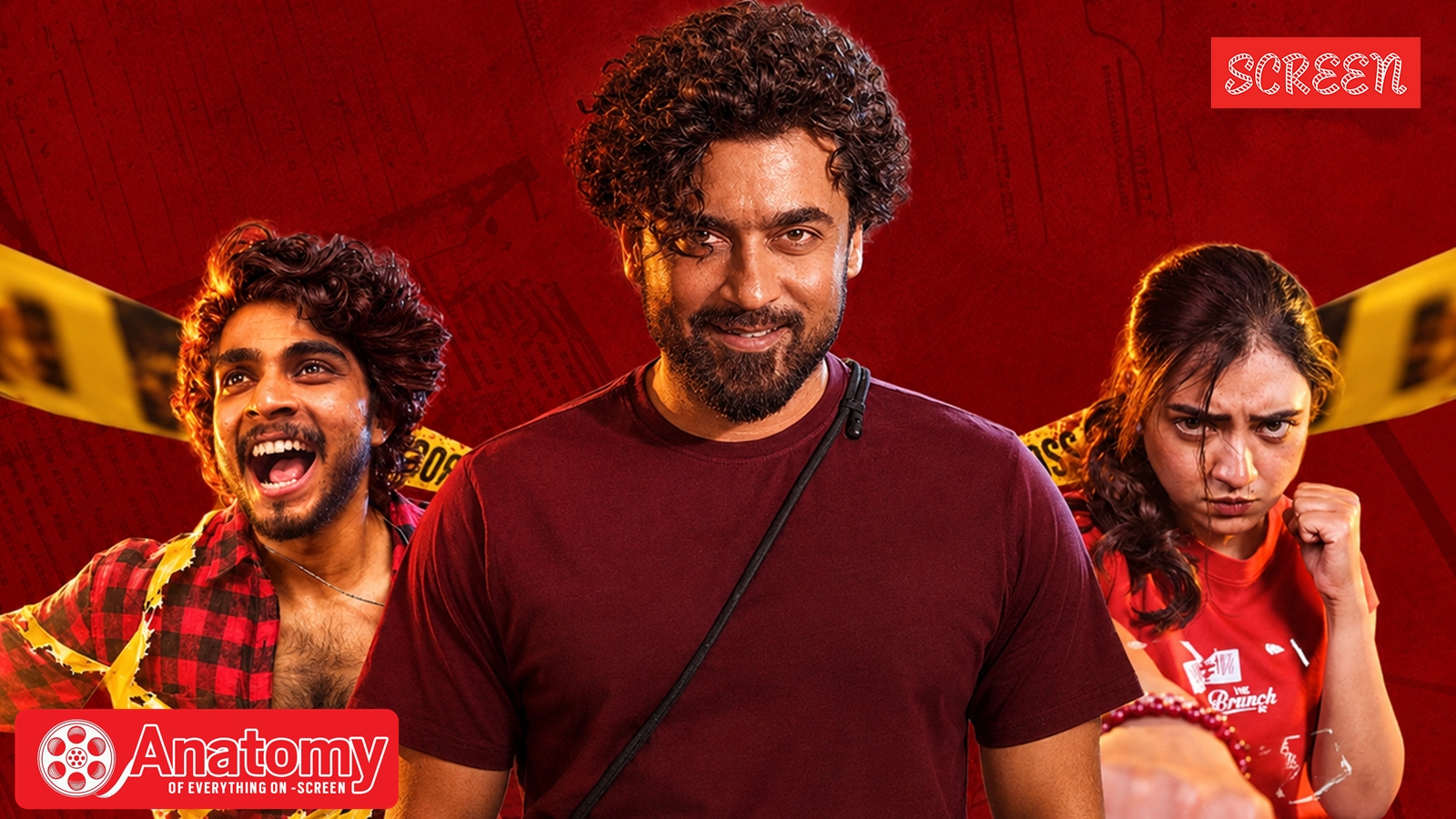
The term “scene” is quite frequently used by both Tamils and Malayalees, though its connotations can differ. Malayalees use “scene” to refer to a troubling situation that could lead to negative outcomes, while Tamils also use it in similar situations, as well as when someone is showing off. For example, “scene podathe” in Tamil means “don’t show off.” Given that the crime comedy thriller Scene is helmed by Malayali Jithu Madhavan and headlined by Tamil star Suriya, it was clear the movie was given this title to attract both audiences equally. But the makers’ brilliance is that it has a hidden third meaning that we learn only upon watching the movie.
Decoding the ‘Scene’
No, Scene is not a phenomenal film. It’s not extraordinary either. But it shows that a work needn’t be phenomenal or extraordinary to keep the audience entertained, offering a 2.5-hour escape from the reality they must return to. It’s essentially an entertainer that doesn’t take itself too seriously.
Only in SCREEN | Many Ramayanas in Malayalam cinema: One would be banned today, one from Bharata’s POV
Over the years, there has been a visible surge in the number of “fanboy sambavams.” These are basically big-ticket, high-octane movies headlined by superstars and created by directors who are their true-blue fans. Such films often feature meta-references and passionately amplify various aspects of the lead actor’s superstardom.
One of the first modern-day movies to pull this off unapologetically was director S Shankar’s Rajinikanth-led Sivaji: The Boss (2007). Don’t get me wrong; I am not suggesting that it’s a great movie. But it capitalised on and celebrated Rajinism to such extremes that it became reference material, highlighting everything his die-hard fans love about the superstar.
Since then, many have attempted to replicate this with various stars. While some have worked, with the most recent fine example being Lokesh Kanagaraj’s Kamal Haasan-starrer Vikram (2022), quite a few have not. The reason is quite simple: creators often don’t put in any effort.
Instead of “wasting time” writing a solid script — with such meta-references organically woven in — makers simply pull hit elements from the star’s previous movies, stuff them into a flimsy story, blow through crores, and create a movie whose sole “original” aspect may be the box-office verdict. I am leaving this open-ended so you can add examples.
Story continues below this ad
Jithu Madhavan, much like any other director, could have fallen into this trap. Suriya, like any of his colleagues, could have pushed Jithu into the pit and jumped in after him. But they simply didn’t. Instead of creating another soulless, bloated “fanboy sambavam,” the duo has created an entertainer that could potentially satisfy both their fans. NGL, Scene has achieved this to a large extent.
What is Scene about?
A sharp and highly skilled police officer, DSP Inbaraj (Suriya) has grown reckless over the years and now just wants to retire. But the department isn’t ready to let him go yet. However, when a case he solved years ago, leading to the imprisonment of a man, crawls back from the grave, Inbaraj is forced to willingly embark on a potentially final mission. This time, though, the force is not with him. Instead, he receives help from Maya (Nazriya Nazim), a skilled and brilliant woman who joins him as an assistant. As they make efforts to solve the case, Eswaran (Naslen), a young contract killer connected to it all, devises a strategy to end the game once and for all.
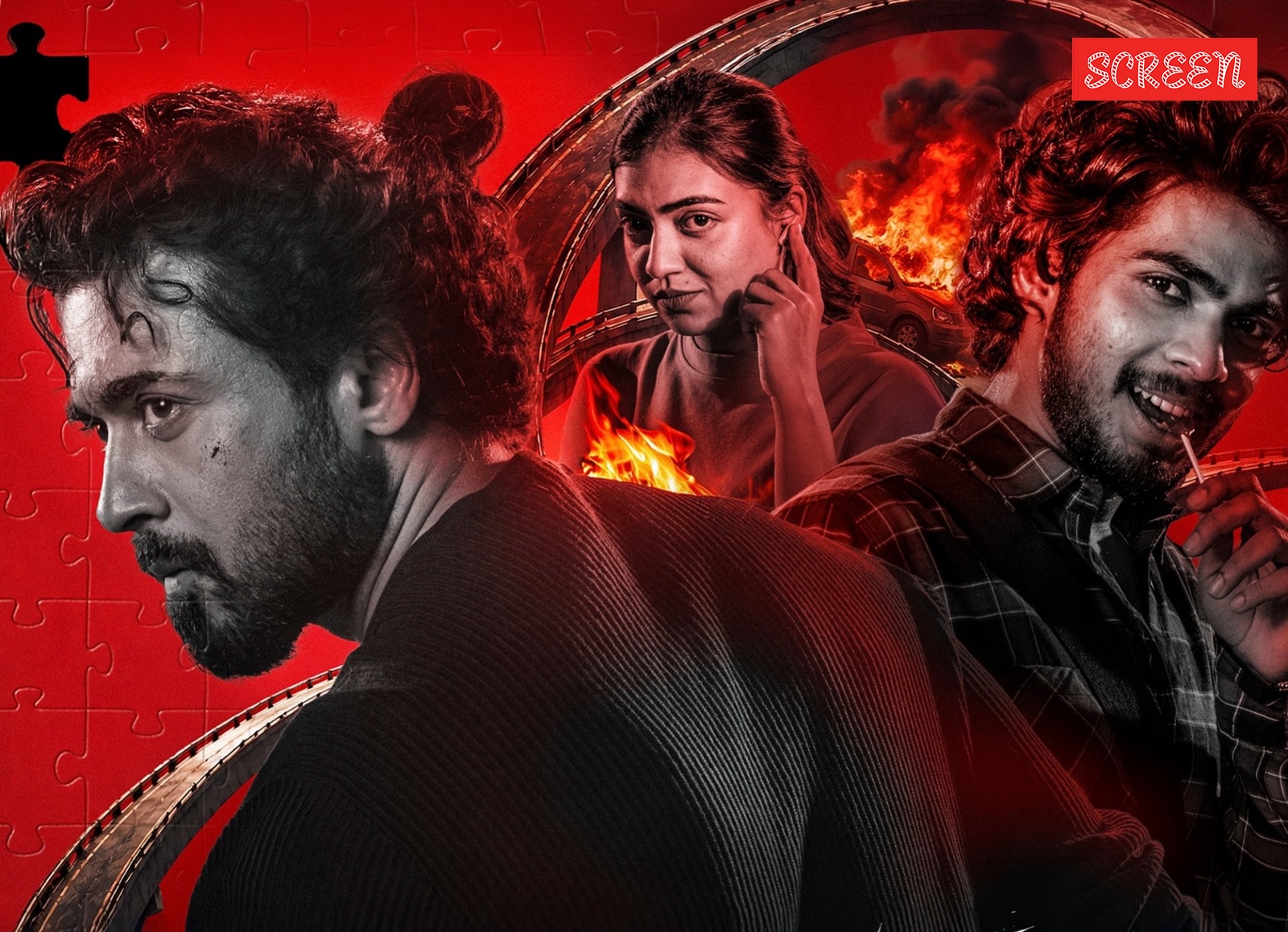 Scene shows that a work needn’t be phenomenal or extraordinary to keep the audience entertained. (Credit: Instagram/@2d_entertainment)
The good thing about a non-Tamil Jithu Madhavan helming Scene is that he isn’t overly obsessed with Suriya’s stardom. Yes, the movie does acknowledge it at times through meta references — such as Maya asking him to give a “Suriya smile,” or Inbaraj quoting Singam (2010) and claiming, “ongi adicha ondra tonne weightuda.” But they never go beyond the fun point.
He did something similar in his previous directorial venture Aavesham (2024) as well. Jithu knew just how brilliant an actor Fahadh Faasil is. So, instead of trying to create a script that explored the various facets of his already documented strengths, Jithu crafted something unique with conviction and gave it to Fahadh, letting him take it forward. Thus, Jithu not only held firm to his vision, but also gave Fahadh the chance to showcase sides of his talent the audience had never seen before.
Story continues below this ad
Don’t Miss | Disco movie review: Chemban brothers’ action thriller tests our patience, sight and hearing
Before Aavesham, not even his biggest fans would have thought he could seamlessly ace a character like Ranga — whose essence, mannerisms, and idiosyncrasies are as unique, exaggerated, and comical as Mammootty’s iconic Bellary Raja from Anwar Rasheed’s Rajamanikyam (2005). But Jithu trusted the brilliant actor in Fahadh, and the duo knocked it out of the park.
Subverting stardom
In Scene, the director doesn’t dive into the world where Suriya is considered a massive star — or “The One,” as he is referred to these days. Nor does Jithu simply drag Suriya into his directorial comfort zone. Instead, they meet midway, discuss, exchange notes, understand one another’s vision, strengths, and weaknesses, and play around with all those elements together. That togetherness is what makes Scene attractive.
For instance, remember the moment when Inbaraj eats expired bread and his reaction when he realises it? The writer–director could have easily made this melodramatic or comical, but he doesn’t do that. He builds up to it with a bit of exuberance, then suddenly drains the colours, highlighting the melancholy, accentuated by Suriya’s subtle yet sharp performance.
Story continues below this ad
Scene is a testament to both Suriya and Jithu Madhavan’s lack of willingness to adhere to the mainstream superstar-centric market’s mandates. Consider the beautifully choreographed and shot scene showing Maya fighting off a group of thugs while Inbaraj desperately keeps warming up. Had it been any other star, the director would have been subconsciously pressured to include at least one shot of him punching someone. Instead, Nazriya walks away with the applause while Suriya relegates himself to the side, almost becoming a laughingstock.
Check Out | Ramayana Box Office Collection Day 3 LIVE Updates: Ranbir Kapoor and Yash-starrer eyes Rs 400 crore mark
Even as the movie progresses, it does not show him magically finding a solution to all his problems. Inbaraj learns a handful of tricks and skills to survive and sustain himself, but he remains tethered to Maya, which we don’t typically see in an Indian hero’s arc.
Also, had it been any other director, they would have cast bigger actors as Inbaraj’s parents. However, Jithu opts for actors we wouldn’t expect in such roles, giving the interval block more weight because we don’t anticipate such a turn.
Story continues below this ad
The same applies to Naslen. Although Naslen is a star — particularly after Premalu (2024) — directors rarely cast actors as young as he is, especially someone who isn’t physically imposing or bulked up, as a ruthless contract killer. But Jithu knew that Naslen’s charm, the seeming innocence in his smile, his youthful appearance, and the lack of bass in his voice would add to the menacing effect if the character is well-written.
Scene’s standout performances
Naslen’s brilliance is that he doesn’t stick to the playbook that most actors follow when portraying psychos. Instead of inserting eccentricity at every turn, he gives Eswaran an eerie ordinariness. He could be someone we just saw on the bus but didn’t notice for more than a second. He could be the young man who often visits our shop for groceries, but whom we never felt compelled to talk to. On top of that, Naslen imbues his character with a layer of chilling confidence that makes Eswaran believe he is invincible.
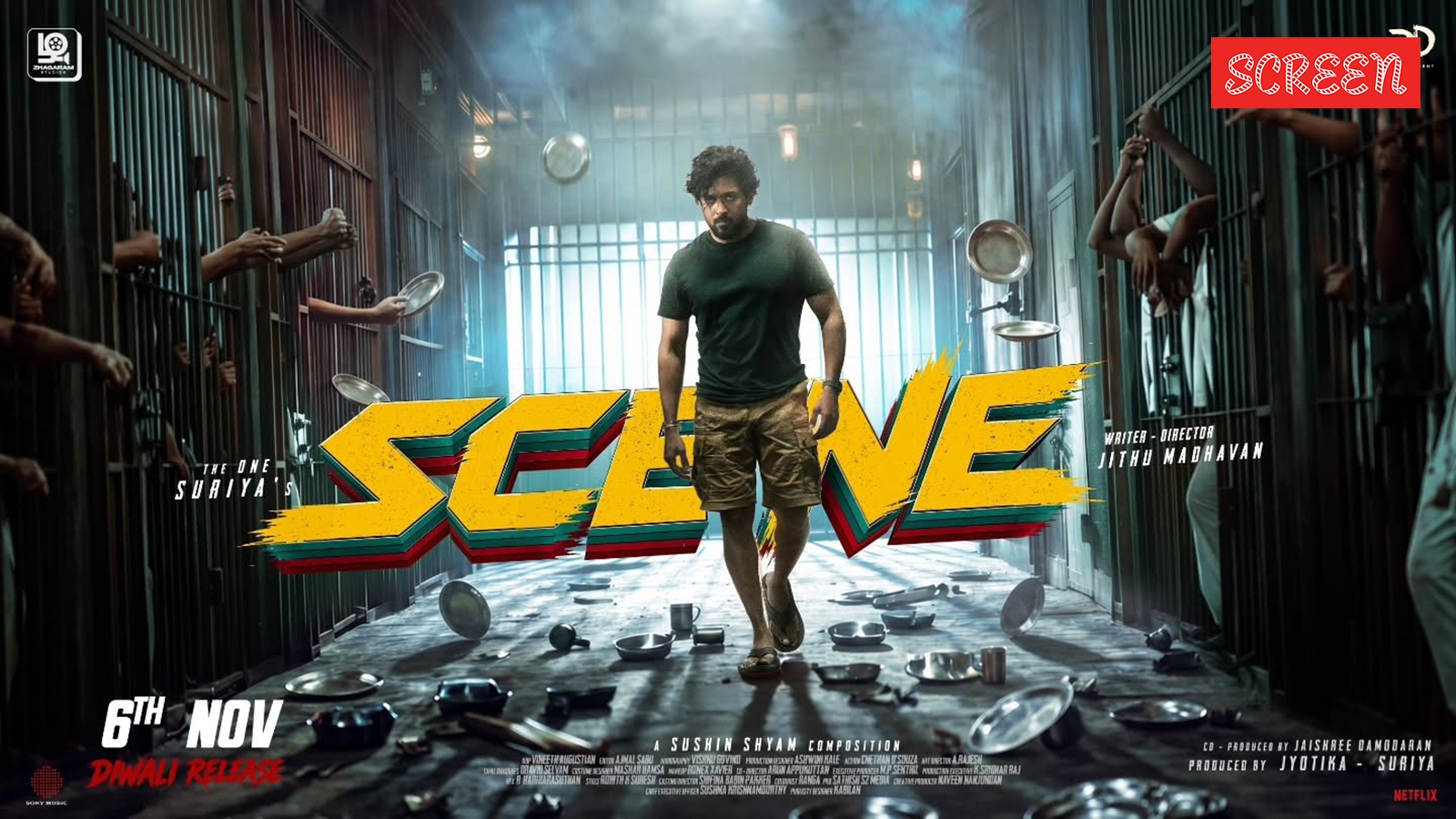 Scene marks Malayalam director Jithu Madhavan’s Tamil debut. (Credit: Instagram/@2d_entertainment)
Jithu crafts the narrative effectively, giving both Inbaraj and Eswaran equal opportunities to showcase their strengths and weaknesses. For a long time, Inbaraj gropes in the dark while Eswaran keeps soaring. Then comes a sharp moment when the tables turn, and Eswaran’s overconfidence exposes him. As he points out Inbaraj and Maya to his accomplice from a moving autorickshaw, identifying them as their rivals, Inbaraj makes Maya look directly at Eswaran, inadvertently blowing the villain’s cover.
Nazriya Nazim is a breath of fresh air in terms of casting. Since Maya must exude relatability, casting someone based solely on society-mandated beauty standards for objectification would have negatively impacted the movie. Nazriya is not only beautifully perfect as Maya, shining in every aspect of her character, but her chemistry with Suriya is also top-notch.
Story continues below this ad
Maya means illusion, whereas Inbaraj means “king of joy.” However, Maya enters his life when he has lost all joy. Yet, she creates a world of illusion for him through her voice and guidance. This impact is brilliantly showcased in a scene where Inbaraj mistakes a dumping yard for a vibrant street filled with flowers simply because she narrated it that way. The song “Thendral Vanthu” by maestro Ilaiyaraaja in the background further elevates this moment.
Scene’s flaws
Nevertheless, Scene definitely needed a better, tighter script. Although humour is often seen as Jithu’s strong suit, as he demonstrated in both Romancham (2023) and Aavesham, Scene is weak on comedy. There are moments that make us chuckle, but they aren’t hilarious.
Equally middling is the character development, which is shocking given how well he did this as the screenwriter in director Chidambaram’s Balan: The Boy (2026). However, beyond their idiosyncrasies and a few traits, Scene’s characters are quite hollow. Although the movie inflates Inbaraj into someone like Daredevil towards the end, Jithu’s failure to explore him vertically makes it feel like an unnecessary embellishment.
Memories of Blunder | Sakthi: ‘A1 star’ NTR Jr’s masterclass in going from 0 aura points to -1,000 effortlessly
Story continues below this ad
The script also takes a long time to settle down, and there are several moments when it seems Jithu is confused about which route to take. There are also some glaring inconsistencies, such as Maya’s tremors and seizures, which appear and disappear whenever Jithu can’t think of anything better.
On the technical front, Sushin Shyam’s music is stunning. Although I wasn’t particularly impressed by “Aeroplane” as a single, it fit perfectly in the climax and elevated the sequence significantly. Vineeth Augustian’s cinematography is particularly commendable since much of the film takes place in limited spaces, requiring him to use tight frames often for certain obvious reasons. However, with Ashwini Kale’s brilliant production design and A Rajesh’s art direction, Vineeth creates visually arresting frames.
Cinema cannot exist in a vacuum; it’s all about the discussions that follow. In the Cinema Anatomy column, we delve into the diverse layers and dimensions of films, aiming to uncover deeper meanings and foster continuous discourses.

Leave a Reply