
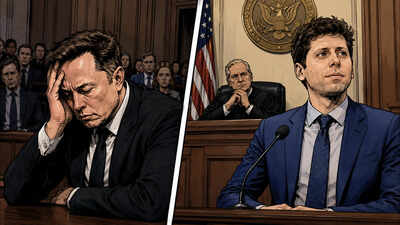
Elon Musk has lost his $150 billion lawsuit against OpenAI. A nine-person jury in Oakland on Monday ruled unanimously that the world’s richest man waited too long to sue—and on that basis cleared CEO Sam Altman, president Greg Brockman and OpenAI itself of his core allegation that they “stole a charity” he helped found. Microsoft, named as a defendant for allegedly aiding the scheme, was let off on the same timing grounds. The jury took about two hours to reach the verdict.It was an ugly three weeks getting there. The trial chewed through Musk, Altman, Brockman, Microsoft CEO Satya Nadella and a long list of former OpenAI insiders, with both sides spending most of the hearing reading each other’s old emails, texts and diary entries aloud—Musk logged more than 150 “I don’t recall” answers under cross-examination alone.Judge Yvonne Gonzalez Rogers accepted the verdict and dismissed the case on the spot. Musk wasn’t there to hear it. Altman and Brockman weren’t in court either. What Musk wanted from the lawsuit was sweeping: $150 billion in damages, Altman removed from OpenAI’s board, and the entire for-profit structure unwound. He walks away with none of it.
Statute of limitations, not the merits: How OpenAI actually won
The case turned on a deadline, not a debate. Under California law, a breach-of-charitable-trust claim has to be filed within three years of the moment the plaintiff knew, or should have known, about the alleged breach. Musk’s legal team had to convince the jury he had no way of knowing about OpenAI’s alleged betrayal before August 2021. The jurors decided he did, and that he had sat on the information for years before walking into court. The separate aiding-and-abetting claim against Microsoft, filed four months after the original suit, ran into the same wall on a slightly later cut-off date and collapsed alongside it.That means nothing in Monday’s verdict actually settles whether OpenAI did or didn’t betray its founding mission. The jury wasn’t asked. They were asked only whether Musk had sued in time, and they said no.
Five years too late: Why Musk’s lawsuit against OpenAI got killed
Musk co-founded OpenAI with Altman in December 2015 as a nonprofit counterweight to Google’s DeepMind. He drafted much of its founding language, picked the name, and gave the lab around $38 million in donations over the next two years. He walked away from the board in February 2018 after a failed bid to take majority control. In March 2019, OpenAI announced it was creating a capped-profit arm to raise the kind of money pure AI research needed. Microsoft put in $1 billion that July.The pivot Musk is now calling a betrayal was, by then, very public and very documented. It was also something he had been aware of in real time. Emails read aloud in court showed Musk himself floating a for-profit structure for OpenAI in 2017, before he was offered, and refused, majority control. He didn’t actually sue until the summer of 2024, roughly five years after the for-profit move and more than three years after the August 2021 cut-off date. The jury found that gap was the problem. Whether OpenAI is, in spirit, the company Musk helped start in 2015 is a question this verdict leaves entirely open. The court just decided he had forfeited his right to ask it.
What the verdict means for OpenAI and Elon Musk
For Musk, it is a near-total loss. He gets no damages, no removal, no unwinding. His own xAI, now folded into SpaceX and rebranded SpaceXAI, is preparing an IPO of its own that some reports peg above $1.75 trillion, so the strategic motive critics had ascribed to the lawsuit—hobbling a competitor before going public—failed on both ends. The jury here was advisory, meaning the judge had final say. She agreed with them. Before excusing the panel, Gonzalez Rogers paraphrased an older judge on what juries actually are: “as human as the people who make it up.”For OpenAI, the result is close to the cleanest possible outcome. The company is now free to push ahead with an IPO that could value it at $1 trillion. A Musk win would have given Gonzalez Rogers grounds to unwind the for-profit structure entirely—a remedy that could have hobbled OpenAI against Google and Anthropic in the middle of the most expensive technology race in history. Altman keeps his board seat. Brockman keeps his roughly $30 billion stake. Microsoft, which has poured more than $100 billion into the partnership, keeps the partnership.

Leave a Reply