
Calcium, vitamin D, and iron are essential nutrients that support bone health, oxygen transport, and several important bodily functions. However, taking them together may not always be ideal, especially because calcium can interfere with iron absorption.
DISCLAIMER: This article is based on information from the public domain and/or the experts we spoke to. Always consult your health practitioner before starting any routine.
What is the reason behind this?
Calcium can interfere with iron absorption when both are consumed together, especially in supplement form.
Explaining this, Deepa Mishra, dietitian, Narayana RN Tagore Hospital, Mukundapur, Kolkata, says, “Calcium inhibits the absorption of non-haem iron, the type found in plant-based foods and supplements, because both minerals use similar intestinal transport pathways. When present together in high concentrations, they may compete for absorption, reducing the uptake of one or both nutrients.”
“To get the most out of these supplements and optimise absorption, calcium and iron should be taken at different times of the day. This is especially important for pregnant women, vegetarians, and people with iron deficiency. It is recommended to separate iron and calcium supplements by at least two hours,” she adds.
What about Vitamin D?
Vitamin D plays an important role in calcium absorption and helps maintain healthy bones and teeth. This is why calcium and vitamin D are commonly prescribed together.
“While iron is absorbed through specific transporters in the gut lining, vitamin D is a fat-soluble vitamin absorbed along with fats in the small intestine. Unlike calcium, vitamin D does not compete directly with iron uptake. However, for best results, iron is usually taken on an empty stomach, while vitamin D should be taken with a meal containing fat,” Mishra explains.
Story continues below this ad
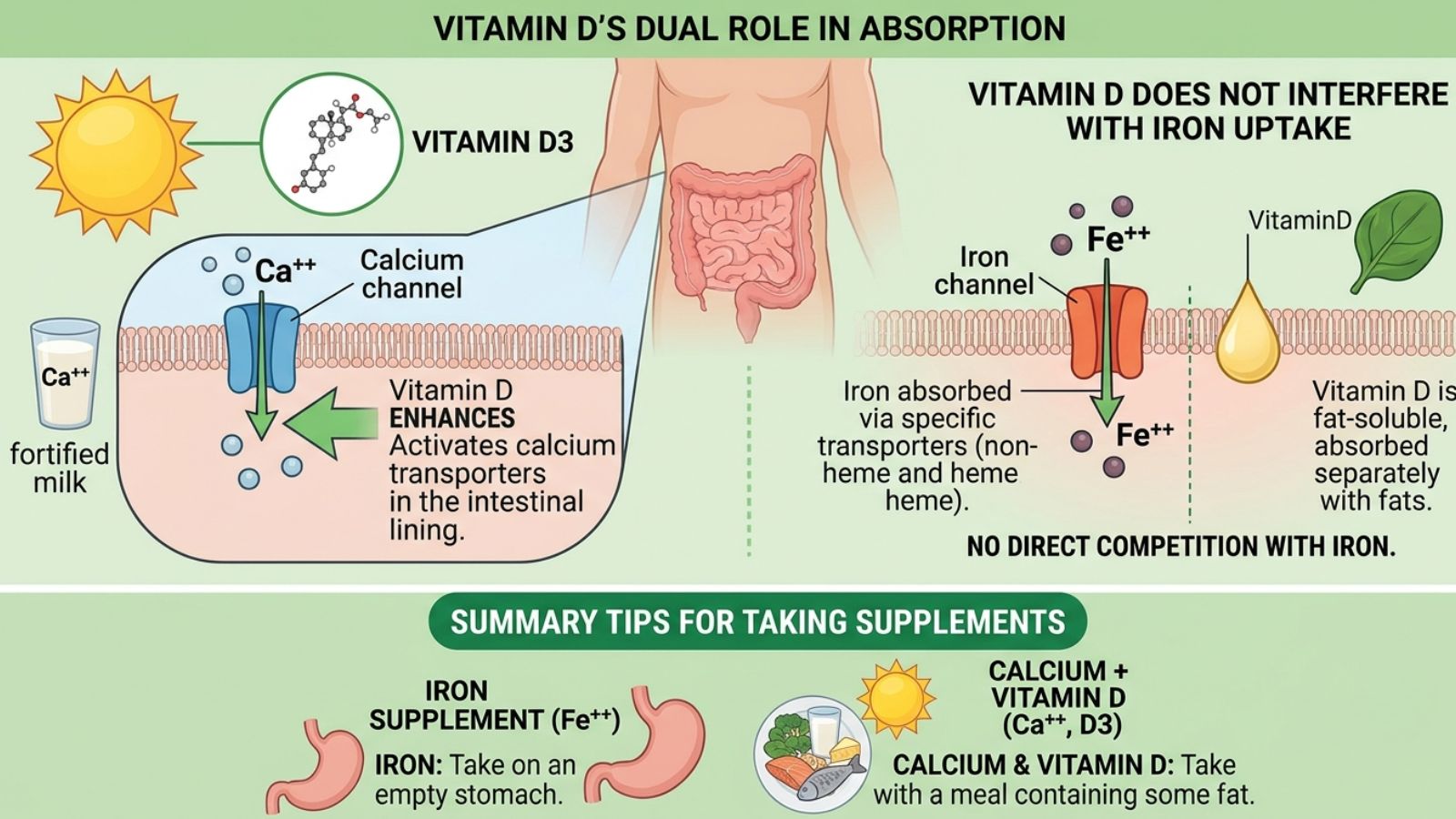 Calcium, iron and vitamin D supplements serve different functions, but their timing can influence how well some nutrients are absorbed. (AI-generated image for representational purposes)
Things to keep in mind
Mishra advises avoiding taking iron with coffee, which contains polyphenols; tea, which contains tannins; or dairy products, which contain calcium, as these can reduce iron absorption. Vitamin C or citrus juice may help improve iron absorption.
“In practice, iron can be taken in the morning, preferably on an empty stomach. Take calcium with lunch or dinner, keeping an appropriate interval from iron. Vitamin D can be taken with a main meal that contains some fat,” she says.
Iron is available from meat, fish, legumes, beans, and green leafy vegetables. Calcium-rich foods include milk, curd, paneer, and calcium-fortified alternatives. You can get vitamin D from fortified products and sunlight exposure.
While these nutrients are all important, their timing matters. “In the case of supplements, it is necessary to assess individual nutritional requirements and follow appropriate dosage and timing recommendations to optimise absorption and ensure safe, effective supplementation,” Mishra explains.
Story continues below this ad
DISCLAIMER: This article is based on information from the public domain and/or the experts we spoke to. Always consult your health practitioner before starting any routine.

Leave a Reply