
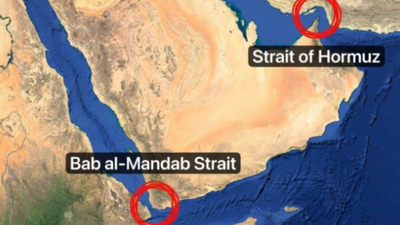
Iran on Thursday warned it could threaten the Bab al‑Mandeb Strait, a vital global shipping route, if the United States and Israel choose to escalate the war by any attempt of ground invasion of Iranian territory including critical Kharg Island, The New York Post reported.Tehran already exerts control over the Strait of Hormuz, through which about one‑fifth of the world’s oil normally flows, and that opening another front would aggravate economic disruption from the Middle East conflict. The Bab al‑Mandeb Strait — whose name in Arabic means “Gate of Tears” — links the Red Sea with the Gulf of Aden and is one of the world’s most important shipping corridors. Islamic Revolutionary Guard Corps sources told the Tasnim News Agency, “If the enemy wants to take action on land in the Iranian islands or anywhere else in our lands or to inflict costs on Iran with naval movements in the Persian Gulf and the Sea of Oman”“We will open other fronts for them as a surprise so that their action will not only be of no benefit to them but will also double their costs” they added.
Israel Iran War
Strategic choke point under threat
The Bab al‑Mandeb Strait, at the southern end of the Red Sea between Yemen and the Gulf of Aden, handles a significant share of world shipping and oil flows, making it one of the world’s most important maritime corridors. Interference there would have far‑reaching economic consequences beyond disruptions already seen at Hormuz. Iran’s warning came amid the escalating conflict in the Middle East region that has seen global oil prices rise and international concern grow over stability in Middle East sea lanes. Regional efforts to protect shipping have been complicated by ongoing hostilities and the effective closure of the Strait of Hormuz to some traffic.
Strait of Hormuz
The Strait of Hormuz has already been a flashpoint, with Iran effectively blocking or delaying shipments through the waterway, which carries about 20% of the world’s oil supply. This move has triggered global price surges and highlighted Tehran’s ability to wield strategic leverage over energy markets. Analysts warn that any further escalation could compound the already severe economic impact on international oil trade.
Houthis positioned to play role
Iran’s semi‑official Fars News Agency has reported that the Iran‑aligned Houthis in Yemen would join the fight to help Tehran seek control of the Bab al‑Mandeb, according to the military source. The group — based in Yemen — has previously targeted vessels in the Red Sea in response to the wider conflict. While Tehran’s threat did not specify how control of the strait might be asserted, the involvement of Yemen‑based fighters would extend the geographic scope of the conflict far beyond the Persian Gulf, analysts say. The warning follows weeks of intense conflict between US‑Israeli forces and Iran after strikes on Iranian military sites. The conflict has disrupted Gulf and Red Sea shipping, prompted global economic concern, and fuelled calls for de‑escalation from various world powers. Kharg Island, a key Iranian oil export hub that handles the bulk of Tehran’s crude shipments, has been at the centre of strategic calculations, with US forces reportedly considering options to secure it and pressure Tehran on Hormuz.

Leave a Reply