
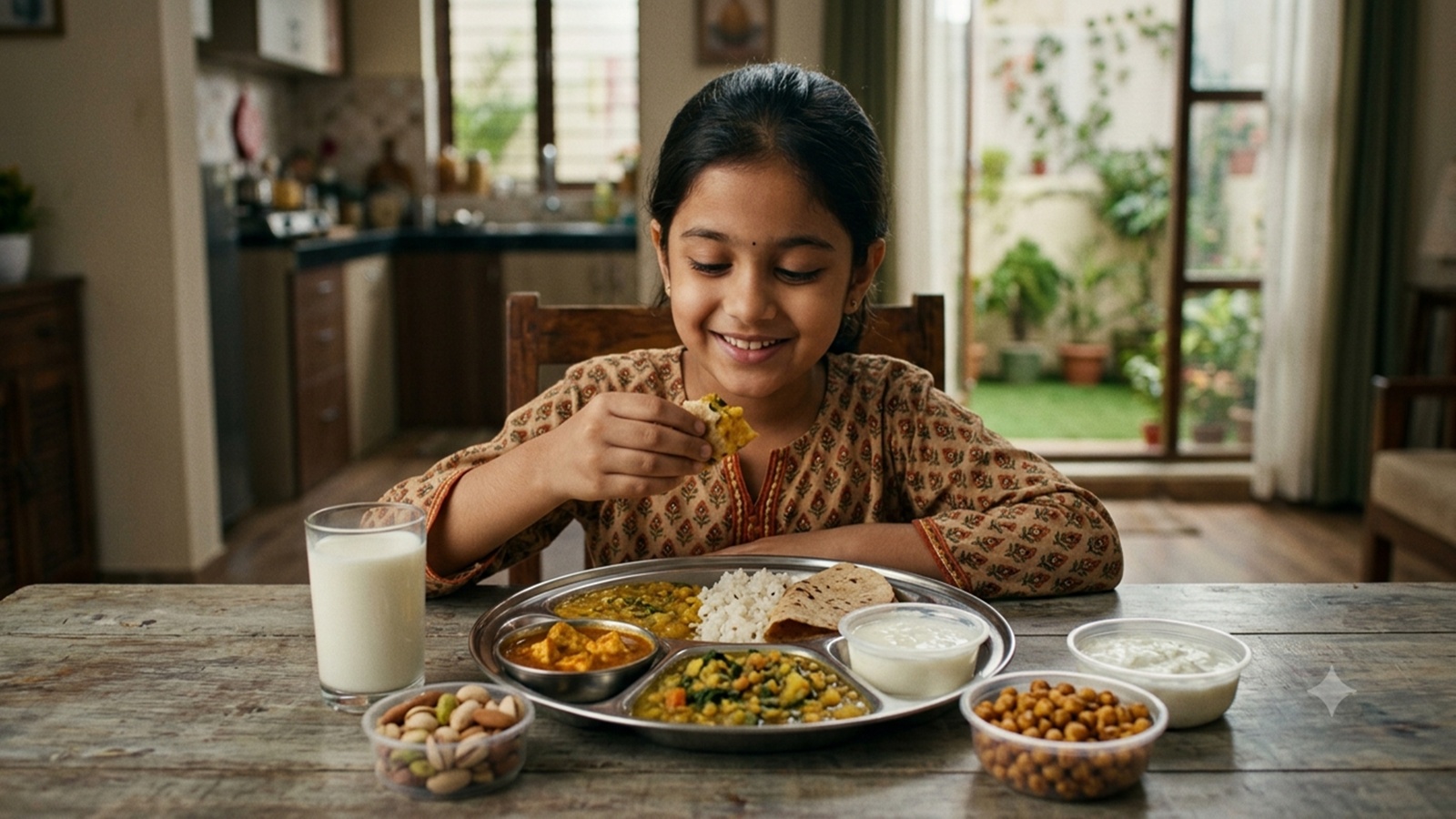
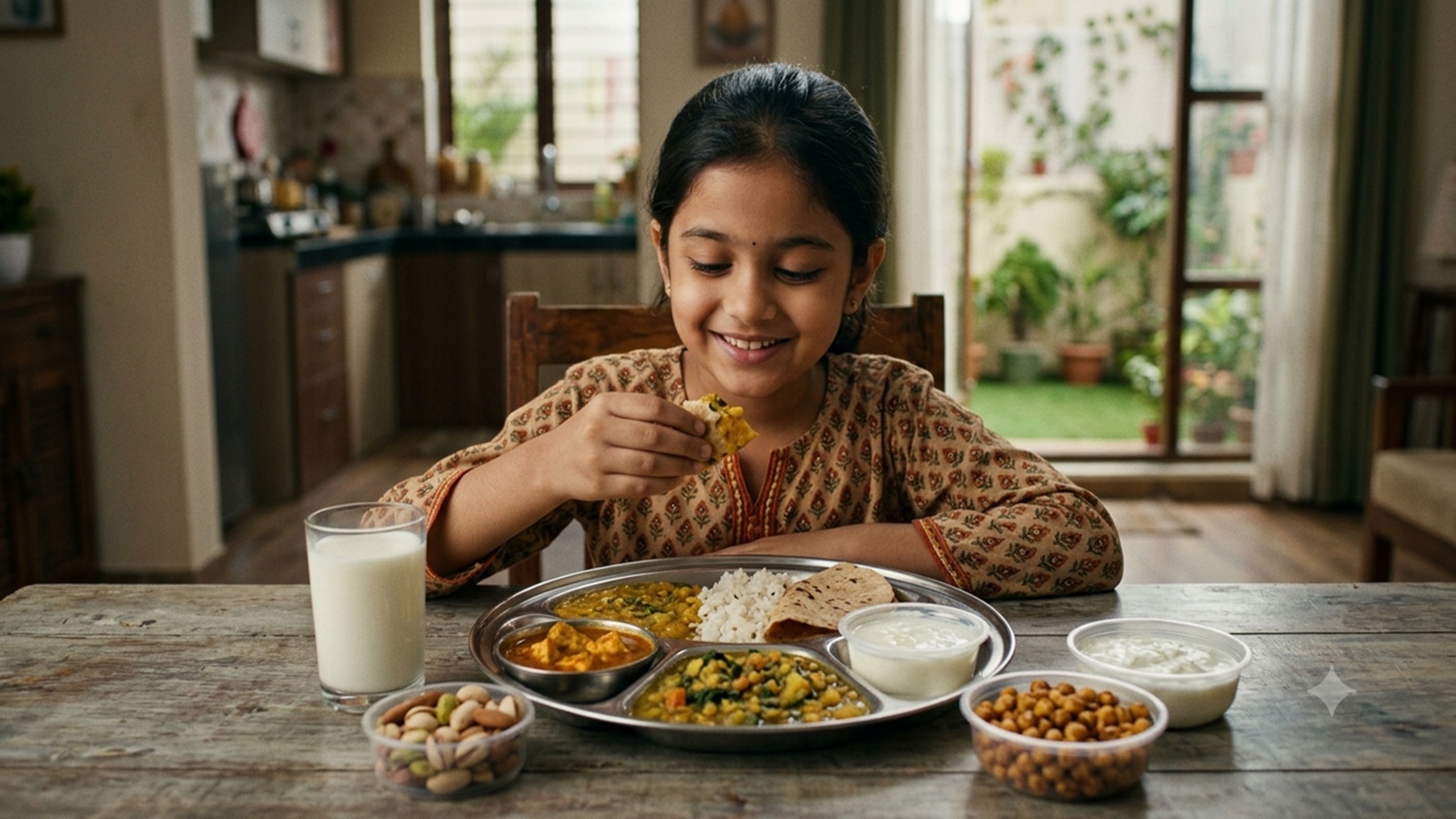
Fitness trainer Sonali Saraogi Singh recently dropped the daily 40-gram, protein-rich diet she feeds her daughter, and the routine is a great starting point for anyone looking for a simple, affordable meal plan that doesn’t require expensive supplements. Here’s her detailed routine shared in a recent Instagram post, captioned: “35 to 40 grams of protein. Under ₹500. Every single day. No drama and no expensive supplements needed.”
“1. Morning starts with a glass of milk, giving 8 grams of protein, and it is the most important part of the day because protein first thing reduces cortisol, sets her energy and builds the foundation for everything that follows.
2. Up to two eggs daily in different forms, whether French omelette or boiled, add another 10 to 12 grams, and protein bread adds 2 to 3 grams, making the first half of the day already well covered without any supplements.
3. Lunch with dal sabji rice and curd adds another 5 to 6 grams comfortably, and evening nuts, including pistachios and almonds, contribute a few more grams while also providing healthy fats that support her brain and overall development.
DISCLAIMER: This article is based on information from the public domain and/or the experts we spoke to. Always consult your health practitioner before starting any routine.
4. Dinner is dairy-based with dal or curry and rice, and she ends the day with another half glass of milk, and on days when the 40-gram target is still not met, there are two backup solutions ready.
5. A homemade seeds powder made from roasted and blended flax, pumpkin and sesame seeds goes into all her food silently, and half a scoop of unflavored high-quality whey isolate mixed into her roti or other foods closes the gap completely.”
Decoding the plan
Dt Amreen Sheikh, chief dietitian at KIMS Hospitals, Thane, says sustaining a simple, affordable, protein-rich diet is possible with careful meal planning.
Story continues below this ad
Rather than trying to consume a large amount of protein in one meal, she suggests distributing it across breakfast, lunch, dinner, and one or two healthy snacks. “This approach not only improves protein absorption but also helps you feel full longer, supports muscle recovery, and keeps energy levels steady,” Sheikh tells indianexpress.com.
According to her, a practical protein target can include “two glasses of milk (around 16 grams), 100 grams of paneer (18–20 grams), one cup of Greek yogurt (15–18 grams), one cup of cooked dal (8–10 grams), one serving of soy chunks (20–25 grams), and a handful of roasted chana or nuts (6–8 grams)”. Most of these foods feature in Singh’s meal plan for her daughter.
However, Sheikh also warns that protein needs can vary based on age, body weight, activity level, and health status.
“Pursuing a specific number just because it’s popular on social media isn’t always the best approach. Instead, aim to include a good source of protein in each meal. If you have kidney disease, liver disease, or other health issues, consult a qualified dietitian before making significant changes to your diet,” she warns in conclusion.
Story continues below this ad
DISCLAIMER: This article is based on information from the public domain and/or the experts we spoke to. Always consult your health practitioner before starting any routine.

Leave a Reply