
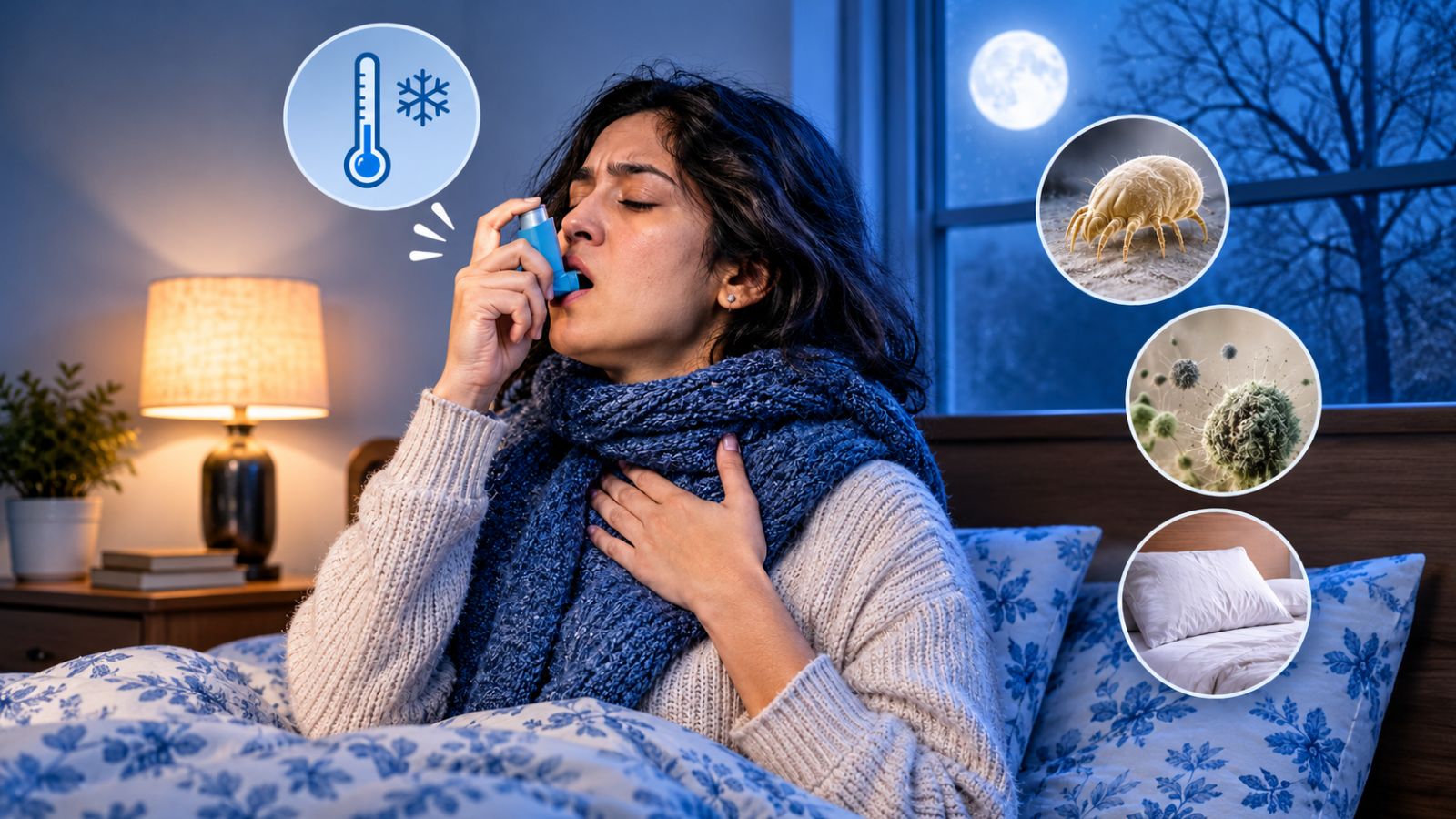
Wheezing often worsens at night during winter, especially in people with asthma. This may be due to a combination of environmental triggers, temperature changes, and the body’s natural circadian rhythm.
Dr Manisha Mendiratta, Director & Head – Pulmonology, Sarvodaya Hospital, Sector-8, Faridabad, says, “Exposure to cold air can irritate the airways, causing them to narrow and trigger bronchospasm, making breathing difficult.”
DISCLAIMER: This article is based on information from the public domain and/or the experts we spoke to. Always consult your health practitioner before starting any routine.
“During winter, people also tend to spend more time indoors, increasing their exposure to allergens such as dust mites, mould, pet dander and household dust, which can further aggravate airway inflammation and trigger asthma symptoms,” she adds.
Why do symptoms worsen at night?
The body’s natural biological rhythm plays a role in worsening nighttime symptoms, as lung function tends to be lower in the early morning, while airway inflammation and sensitivity may increase at night, explains Dr Mendiratta.
“Additionally, lying down can encourage mucus accumulation and postnasal drip, contributing to coughing, chest tightness and wheezing. Poorly controlled asthma, respiratory infections and exposure to cigarette smoke, indoor pollutants and other irritants can further intensify these symptoms,” she adds.
 People with asthma may experience increased airway irritation and wheezing during winter, particularly when exposed to cold air and indoor allergens. (Image Source: Freepik)
Ways to prevent asthma symptoms from worsening at night during winter
To prevent asthma symptoms from worsening at night during winter, here are some tips that Dr Mendiratta shares:
Story continues below this ad
- Avoid sudden exposure to cold air, and cover your nose and mouth with a scarf when stepping outdoors.
- Maintaining a clean, dry and well-ventilated indoor environment can help minimise exposure to dust mites and mould.
- Wash bedding regularly, and avoid exposure to cigarette smoke, incense, strong fragrances, and other respiratory irritants.
- People with asthma should also monitor local air quality and limit outdoor exposure when pollution levels are high.
- Patients should take their regular controller medications as advised by their doctor, even when they are not experiencing symptoms.
- It is equally important to use inhalers correctly and keep a prescribed reliever inhaler accessible.
- Identifying individual asthma triggers and attending regular follow-up consultations with a pulmonologist can also help keep the condition under control.
When to seek help?
Frequent episodes of nighttime coughing, wheezing, or waking up because of breathing difficulties should never be ignored, as these may indicate poorly controlled asthma and the need to review treatment.
Dr Mendiratta says, “If a person experiences severe breathlessness, difficulty speaking, bluish discolouration of the lips or inadequate relief from their prescribed rescue medication, immediate medical attention is essential.”
Consistent medication adherence, timely intervention, and appropriate preventive measures can significantly reduce nighttime flare-ups and help people with asthma breathe more comfortably throughout the winter months.
‘Asthma’ has been trending on Google for the past 24 hours.
Story continues below this ad
DISCLAIMER: This article is based on information from the public domain and/or the experts we spoke to. Always consult your health practitioner before starting any routine.

Leave a Reply