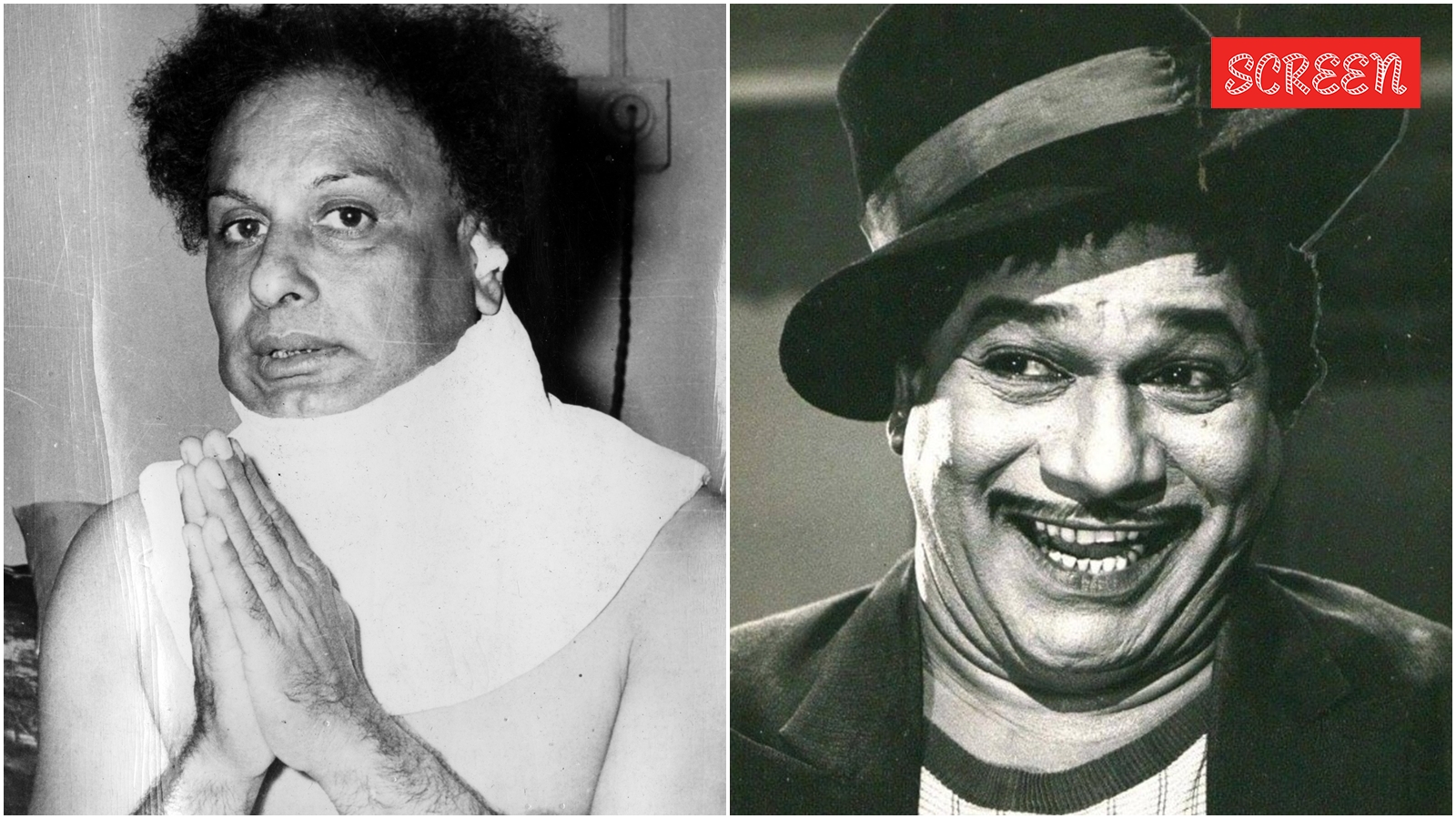
From Martin Luther King Jr and Mahatma Gandhi to Abraham Lincoln, Indira Gandhi, and John F Kennedy, several world leaders have been assassinated by gunshots throughout history. In 1967, Tamil Nadu was shocked when actor-politician MG Ramachandran (MGR) faced a similar assassination attempt involving a gun — that too at the hands of one of his film industry colleagues.
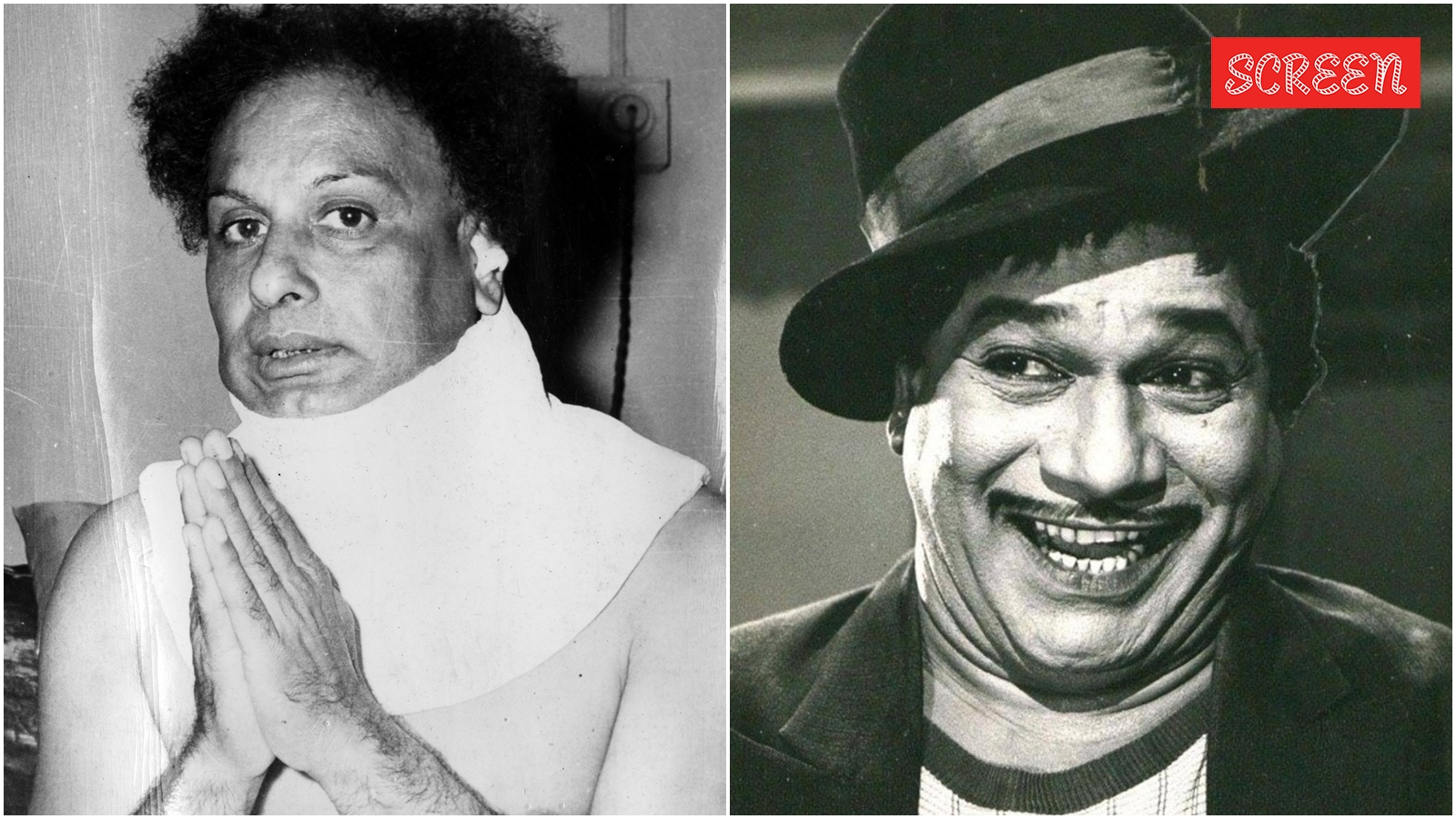
The incident happened at a time when MGR was reigning supreme in Tamil cinema. On January 12, 1967, the state of Tamil Nadu was stunned to learn that their beloved superstar had been shot at by fellow actor MR Radha, renowned for his villainous roles. The incident took place at MGR’s Nandambakkam residence.
Memories of Blunder | Vishal’s Magudam is ‘therapeutic,’ ‘kidney-touching’ and makes many bad movies look good
According to The Hindu, Radha visited MGR’s home with KK Vasu, a producer, to discuss a new project featuring the Puratchi Thalaivar in the lead role. They arrived at his house in the evening. Since only the three of them were present when the incident occurred, one can only believe what the majority stated afterwards and what the evidence pointed to.
MGR claimed — and Vasu pretty much attested — that Radha was the one who shot him and later attempted suicide. Meanwhile, Radha alleged that MGR fired first and that he shot back in reflex.
Conflicting versions of the shooting
MGR stated that as the three of them were discussing the project, Radha stood up. Moments later, they heard a loud noise, and MGR felt a shooting pain, after which he saw blood coming from his body. When he looked around, he purportedly saw Radha standing with a gun. He then allegedly shot himself in the right temple and neck.
Must Read | Amitabh Bachchan on bond with Abhishek Bachchan: ‘Views may differ, destination remains same’
Story continues below this ad
Radha, on the other hand, narrated a different version. He claimed that as their conversation continued, MGR scolded him for purportedly writing negative articles about him. As the argument escalated, Radha said he heard a loud noise and saw MGR with a gun. He claimed that he rushed towards MGR, snatched the gun, and fired back in reflex.
Subsequently, MGR walked out of his home and asked his driver to take him to the hospital. The bullet had reportedly entered through his left ear and lodged itself behind the first vertebra. Radha also somehow escaped and approached the police, saying MGR shot him. Both were admitted to the Government Royapettah Hospital, and later shifted to the Government General Hospital.
Soon, the news reached thousands, and people began flocking to the hospital. In no time, a riot-like situation erupted, with people hurling stones at public property. The police reportedly resorted to a lathi charge and fired tear gas shells to bring the situation under control. Meanwhile, some even vandalised Radha’s house in St Thomas Mount.
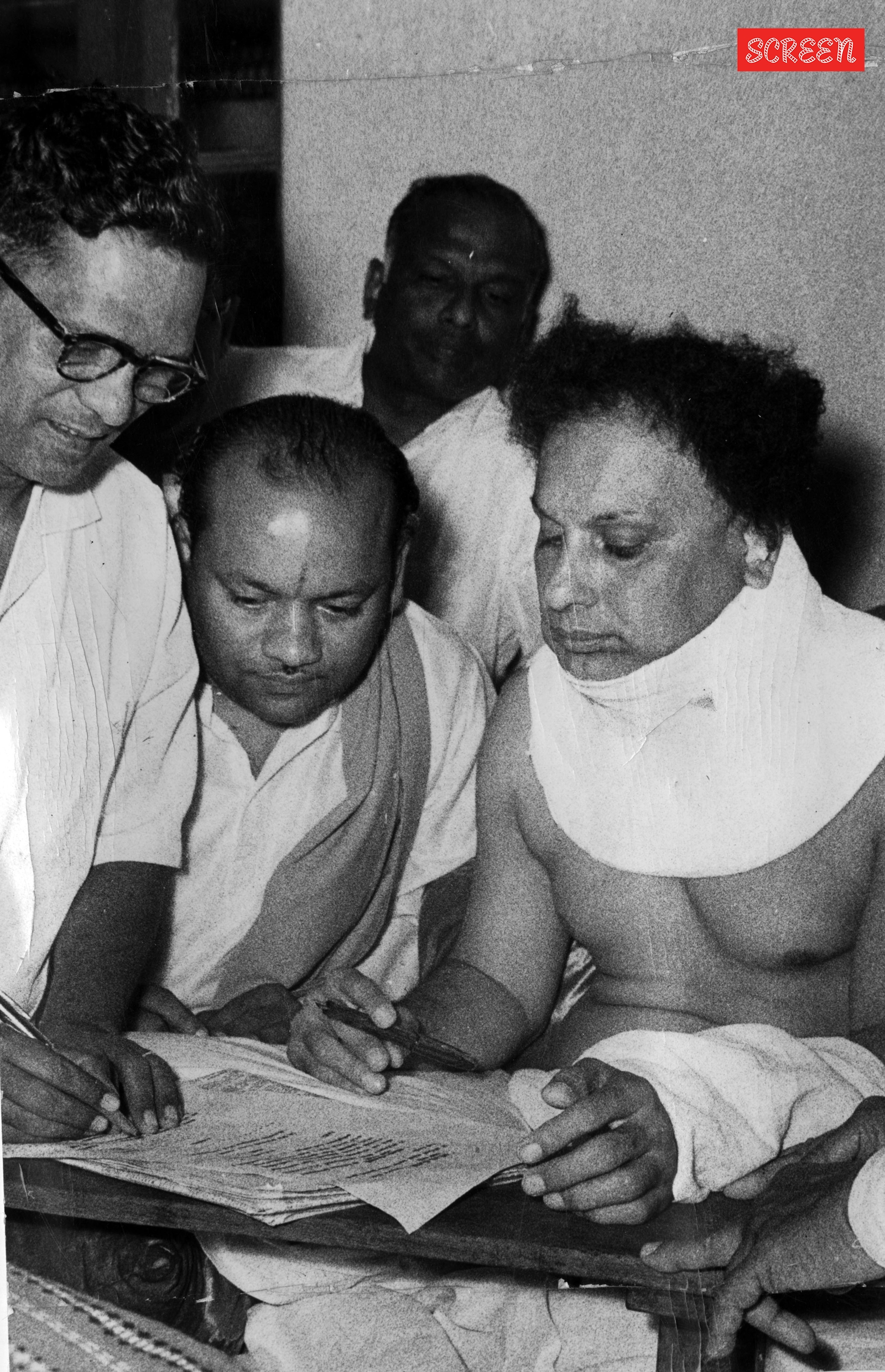 In his hospital bed, MGR takes the oath of allegiance to the Constitution before filing his nomination for the St Thomas Mount assembly constituency in Madras State. (Express archive photo)
Although the doctors managed to remove the bullets from Radha’s body, they couldn’t initially remove the bullet from MGR’s body. Months later, when the bullet shifted from its original position, doctors extracted it. MGR’s voice was permanently impaired as a result of the incident.
Story continues below this ad
The trial and forensic evidence that sealed the verdict
What followed was a months-long legal battle that eventually led to Radha being sentenced to jail for half a decade. Over a month after the incident, the police filed a chargesheet accusing Radha of attempted murder and a suicide bid.
When the trial commenced in the Sessions Court in Madras on August 1, the prosecution was determined to prove that Radha visited MGR’s house with the intention of assassinating him due to political animosity, professional jealousy and personal prejudice.
Also Read | ‘Hurt’ Aishwarya Rai spoke about Shah Rukh Khan removing her from 5 films: ‘No explanation’
The prosecution also brought in many witnesses to establish that Radha struggled financially. They then tried to link his financial struggles with his political views, claiming that Radha, a Dravidar Kazhagam (DK) supporter, harboured extreme views against MGR, who belonged to the Dravida Munnetra Kazhagam (DMK).
Story continues below this ad
Although the circumstances were against them, Radha’s defence counsel argued that the prosecution “failed to prove the charges.” It further claimed that what happened was an accident amid a struggle. The defence rejected the motives the prosecution attributed to Radha.
As his counsel argued that the essence of the matter was “who shot whom,” the two bullets recovered from Radha’s body and one from MGR’s body were sent for proper examination, during which it was determined that the three bullets came from the same gun.
ICYMI | Karan Johar confirms Koffee With Karan to end, announces its last season: ’22 years later…’
Subsequently, a firearms expert was brought in to ascertain from which gun the bullets were fired. After studying the cartridges, it was concluded that the bullets came from Radha’s gun. The prosecution pressed further by questioning why Radha brought a loaded weapon to MGR’s house. It was also found that the weapon’s license had expired about three years earlier.
Story continues below this ad
In November, the court found Radha guilty and sentenced him to seven years of rigorous imprisonment. Although he moved the High Court, he did not receive relief. Radha subsequently approached the Supreme Court. The apex court also rejected his appeal, but his jail term was reduced to five years on humanitarian grounds.
Must Read | Sanjeev Kumar convinced Jaya Bachchan to work with Amitabh, Rekha; she had 1 condition
On April 29, 1971, the then-DMK government released MR Radha. He reportedly served four years and three months in jail. MR Radha died in 1979.
How the shooting altered Tamil Nadu’s political landscape
Meanwhile, the incident marked a significant turning point in MGR’s political career. In the 1967 Madras State Legislative Assembly elections held in February, the DMK fielded him in the St Thomas Mount constituency, where he won by a thumping majority.
Story continues below this ad
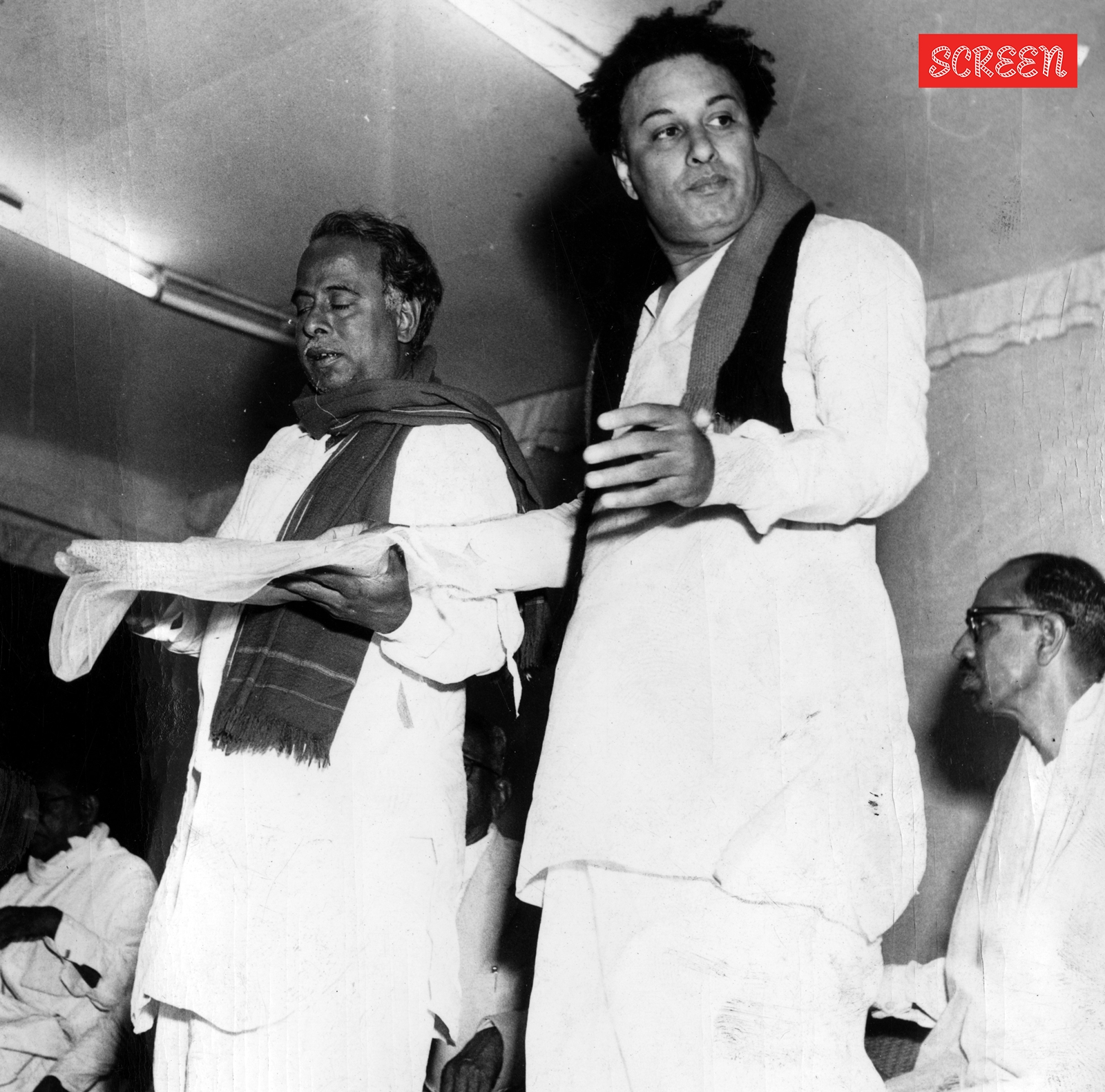 MGR with DMK leader CN Anandurai (L) at a function in the Nungambakkam tank area in Madras. (Express archive photo)
This election also changed the political dynamics in the erstwhile Madras State, effectively ending Congress rule and bringing the DMK to power, thus marking the ascendancy of CN Annadurai as the fifth Chief Minister of the state. During this time, the Madras State (Alteration of Name) Act, 1968, was implemented, marking the birth of Tamil Nadu. Thus, Annadurai also became the first Chief Minister of Tamil Nadu.
MGR established the All India Anna Dravida Munnetra Kazhagam (AIADMK) in 1972 and became the Chief Minister of Tamil Nadu in 1977. He remained in office until his death in 1987.
Disclaimer: This reflective historical account mentions past violence and injury for informational purposes and does not constitute medical, legal, or personal safety advice.

Leave a Reply