
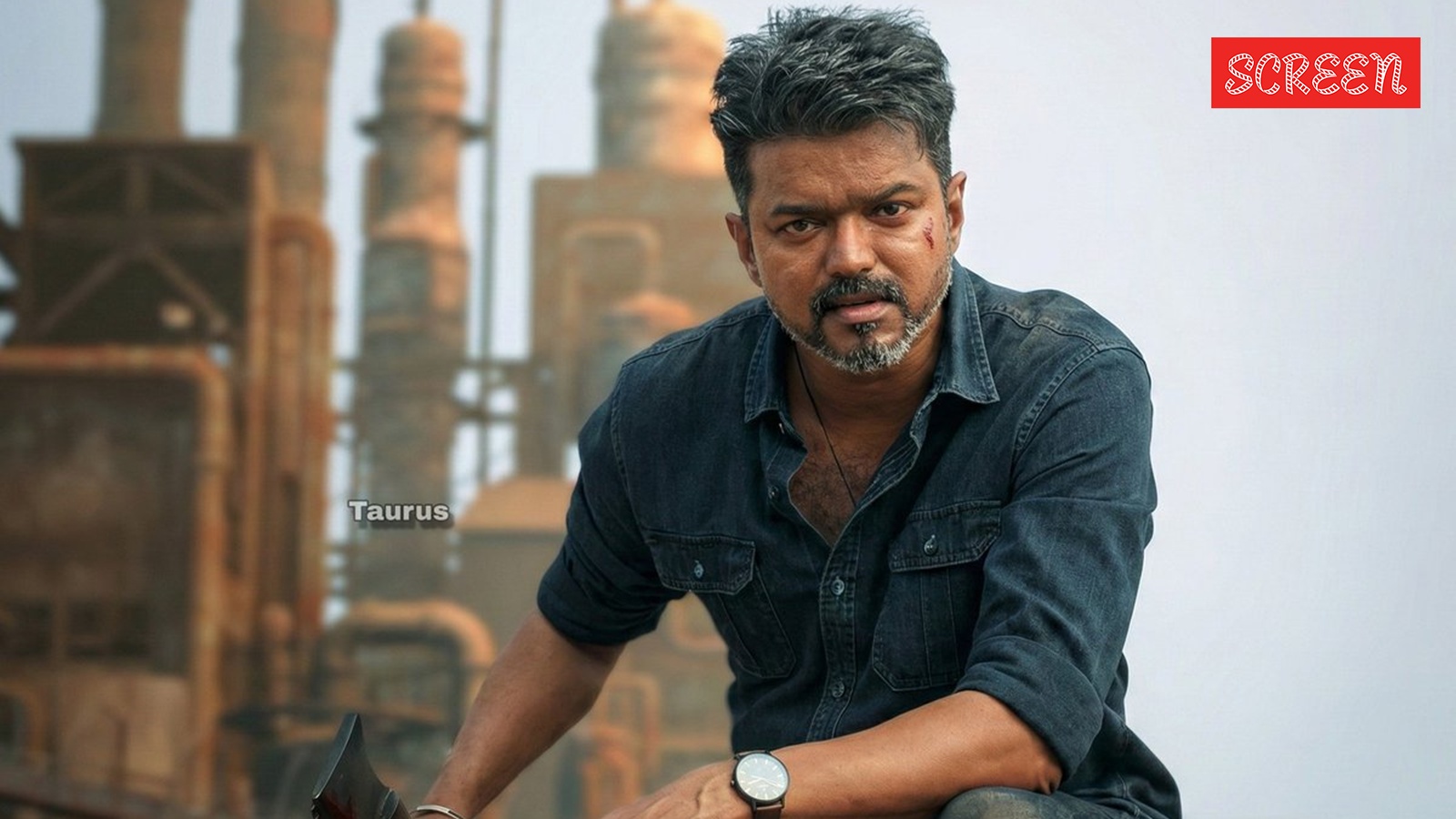
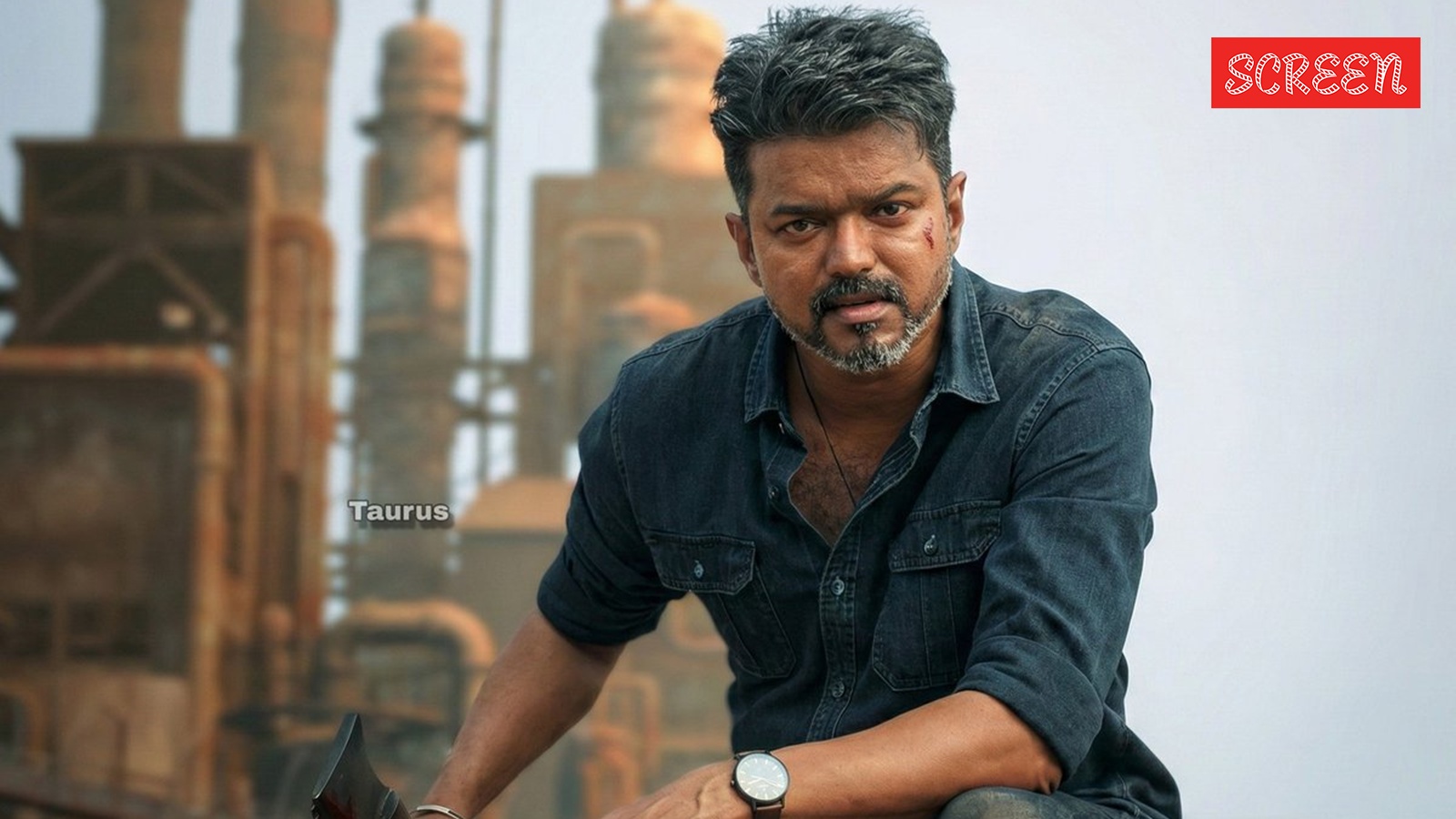
Director H Vinoth and art director V Selvakumar have given a detailed, unfiltered account of what it actually takes to build and maintain a massive film set, during a behind-the-scenes visit to the Democracy Town set of CM Vijay’s Jana Nayagan.
Giving a tour to Cineulagam, H Vinoth was candid about the economics of set-based shooting versus live locations. He acknowledged that while sets offer complete control over the environment, the cost is prohibitive for most productions. “You could come and shoot in a big building renting it for two, maybe Rs 2 lakh. But as soon as you go there, the cost shoots up to Rs 3-4 crores,” H Vinoth said. “The budget is the main issue. Only big heroes can afford that. Like a Vijay, Rajini (Rajinikanth), Kamal (Haasan). Big heroes like them, and then the next tier of big heroes, only they can afford it. That’s the main drawback.”
He also noted that CG technology has changed the game for set shoots in recent years, solving problems that once made them impractical. “Back in the day when we were settling things, there used to be issues where we couldn’t show the live feed. But now that CG is here, we can show the live feed. We can do a top shot and show what’s here, what’s happening here. We can stitch a single shot. That’s why since settling things, the traffic has dropped a lot today,” he said.
Also Read: Jana Nayagan: Vijay’s propaganda film makes even Sura and Villu look like masterpieces
But H Vinoth was also honest about why many filmmakers still prefer shooting on real roads with real people. “What people want is to come and shoot at a live location. No matter what, shooting at a live location where there are people around, that’s a whole different vibe,” he said. “A lot of directors used to say it’s just a gimmick, that you can’t finish shooting like that. But now, there are tons of films doing live shoots.”
He pointed to Rajinikanth’s Kabali as a cautionary tale for what happens when a top star tries to shoot on public roads. “When Kabali came out, they set up this huge production. They went to the live location and did their shoots there, right? But then, you ask around and find like 15,000 to 25,000 people had shown up,” H Vinoth said.
If the economics of set shooting are daunting, the physical reality is worse. Art director V Selvakumar described a production cycle that involved building elaborate sets, watching them get destroyed on camera, and then rebuilding them from scratch, sometimes multiple times for the same sequence.
Story continues below this ad
The explosion scenes were particularly demanding. “A vehicle comes and there’s a blast. However, the take may not get okayed. Then how will you get another vehicle ready? You can’t just say the blasted vehicle is done and call it a day,” Selvakumar said. “For a big film, we can make two or three versions. We have to keep the options.”
One wall on the set was repaired four times after repeated blast sequences. But the most dramatic moment came when an entire set caught fire during a shoot and had to be demolished and rebuilt from scratch. “In this film, everything, every set, was completely demolished down to the base and rebuilt,” Selvakumar said. “We first set it up like this. Then during the shoot, all of it went up in flames. So when the Madurai sequence came up, we had to fully dirty and block this street as Madurai.”
Also Read: 50 percent Anil Ravipudi, 50 percent H Vinoth: Why only one half of Jana Nayagan works
Rather than simply repairing the fire damage, the team turned the space into something entirely new. “They turned that place into a kind of market. It became like the Madurai Plaza. They put up temple arches everywhere, decorated with temple-style arches, and even set up a chariot,” Selvakumar said. A biryani shop named “Madurai Nalla Sri Muniyandi Vilas” was added to complete the transformation. Two songs from the film, “History” and “Katcheri,” were later shot on the same rebuilt road, each time with the set dressed differently to appear as a completely different location.
Story continues below this ad
Selvakumar acknowledged the emotional weight of watching months of painstaking work get blown up, set on fire or torn down for a single shot. “Only the art director in Indian cinema really gets that feeling. It’s like, ‘It’s okay, just smash it and break it.’ There’s definitely some pain in that,” he said.
About the film
Jana Nayagan, directed by H Vinoth and starring CM Vijay in his final acting role before entering politics, was shot over approximately 120 days, with Vijay present on set for 84 of those days. Ninety-five percent of the film was shot on the Democracy Town set at Pepsi Film City, with only three days of exterior shooting in Kodaikanal. The set included recreations of Madurai, Chennai, North India, an African jail, a factory, government offices, police stations, courts and even a forest with a waterfall, all built on the same piece of land and redressed as needed throughout the shoot.

Leave a Reply