
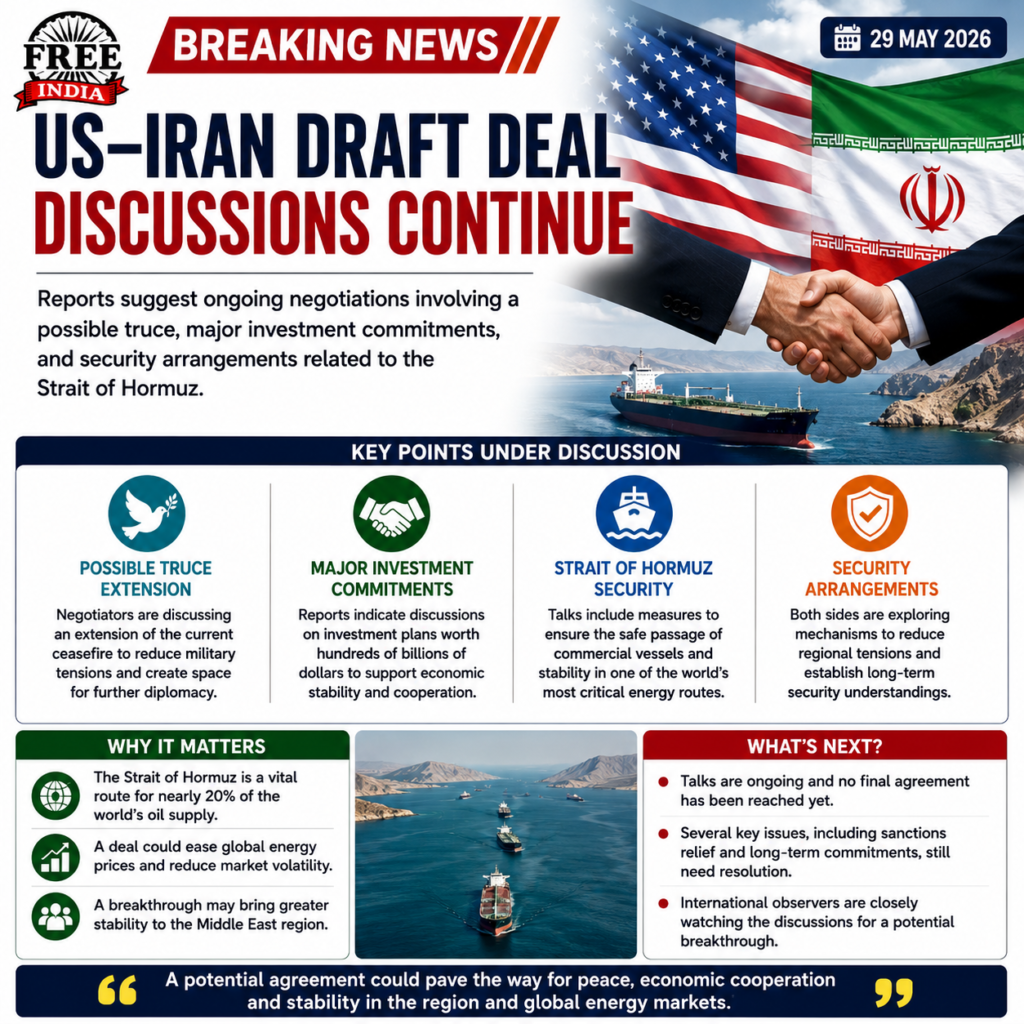
Diplomatic efforts between the United States and Iran have gained momentum as reports indicate ongoing negotiations aimed at extending a ceasefire, reducing regional tensions, and restoring stability in the strategically important Strait of Hormuz.
According to multiple reports, negotiators from both sides have been discussing a draft framework that could pave the way for a broader agreement addressing security, economic cooperation, and maritime navigation. While no final agreement has been officially approved, officials have described the talks as constructive and progressing toward a possible breakthrough.
One of the key elements under discussion is a proposed extension of the current ceasefire arrangement. The draft framework reportedly includes a temporary truce period that would allow both sides to continue diplomatic negotiations while reducing the risk of further military escalation in the region.
Another major component of the talks involves the Strait of Hormuz, one of the world’s most important energy shipping routes. Negotiators are exploring measures to ensure the safe passage of commercial vessels and restore confidence in global energy markets. The reopening and security of the waterway remain central issues in the ongoing discussions.
Reports have also suggested that economic measures are being considered as part of a broader settlement package. These include discussions involving potential investment commitments, sanctions-related relief mechanisms, and the possible unfreezing of certain Iranian assets. Some reports have mentioned investment proposals worth hundreds of billions of dollars as part of long-term economic stabilization efforts.
Energy markets have reacted closely to developments in the negotiations. Oil prices experienced significant fluctuations as traders assessed the likelihood of a ceasefire extension and the potential normalization of shipping activity through the Persian Gulf. Analysts believe a successful agreement could help ease concerns about global energy supplies and reduce market volatility.
Despite the positive signals, several challenges remain unresolved. Officials from both countries have acknowledged that important issues—including long-term security arrangements, sanctions, and future diplomatic commitments—still require further negotiations. Observers caution that the talks remain fragile until a formal agreement is signed and implemented.
International observers are closely monitoring the discussions, as any breakthrough between Washington and Tehran could have significant implications for Middle East stability, global oil markets, and broader international diplomacy. A successful agreement would mark one of the most important diplomatic developments in the region in recent years.

Leave a Reply