
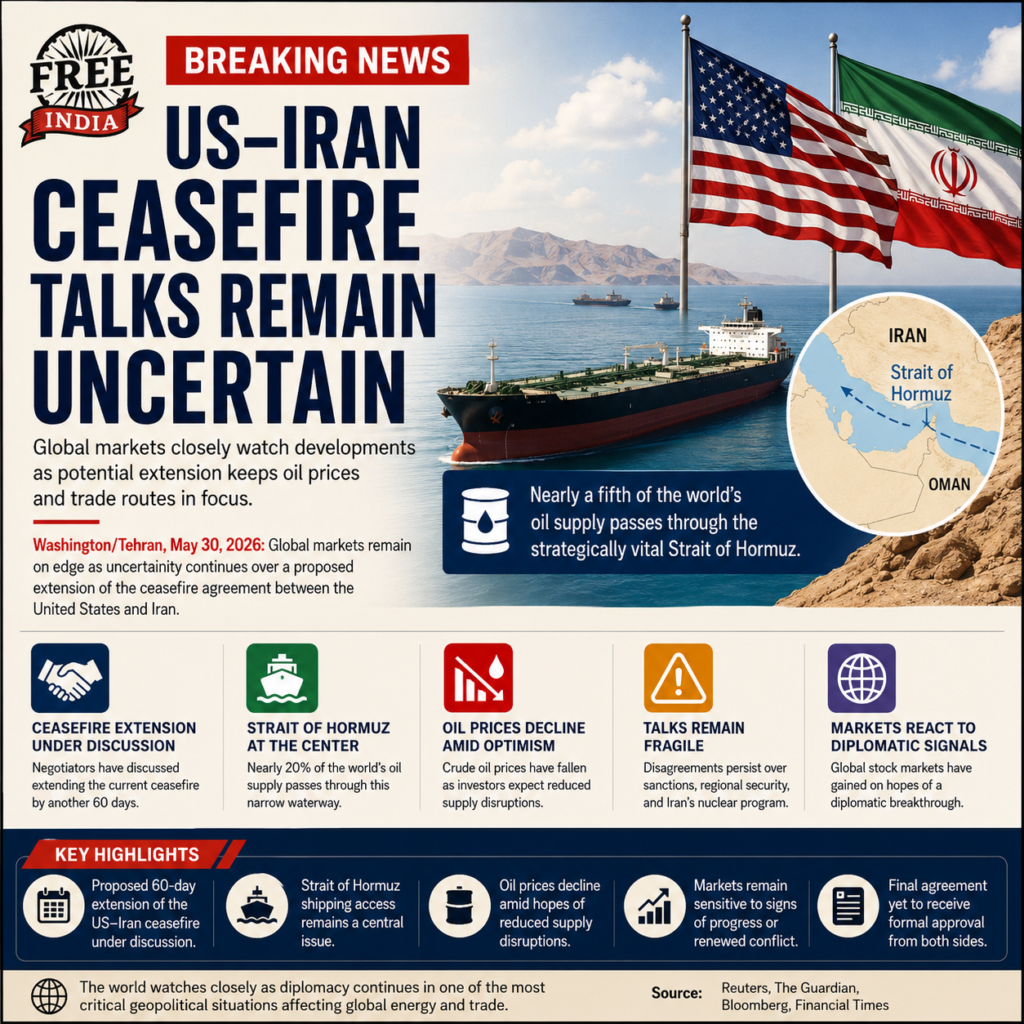
Washington/Tehran, May 30, 2026: Global financial markets remain on edge as uncertainty continues over a proposed extension of the ceasefire agreement between the United States and Iran. While diplomatic discussions have reportedly made progress, officials from both sides have stopped short of confirming a final agreement, leaving investors and energy traders cautious.
According to multiple international reports, negotiators have discussed extending the current ceasefire by another 60 days. The proposed deal would reportedly include measures to ensure the safe movement of commercial vessels through the strategically important Strait of Hormuz, one of the world’s most critical oil shipping routes. However, the agreement still awaits formal approval from top leadership in Washington and Tehran.
The Strait of Hormuz has remained at the center of the crisis. Nearly a fifth of the world’s oil supply passes through the narrow waterway, making any disruption a major concern for global energy markets. Previous tensions in the region led to shipping delays, higher insurance costs for vessels, and sharp increases in crude oil prices.
Recent reports suggesting progress in ceasefire negotiations have already influenced commodity markets. Crude oil prices have fallen in recent trading sessions as investors anticipate a reduction in supply risks if the waterway remains open and shipping restrictions are eased. Analysts believe that a successful extension of the ceasefire could help stabilize energy prices and reduce inflationary pressure on major economies.
Despite optimism, officials have warned that negotiations remain fragile. Reports indicate that disagreements continue over broader issues, including sanctions, regional security arrangements, and Iran’s nuclear program. Iranian media have also stated that the final text of any agreement has not yet been officially approved.
Financial markets across Asia, Europe, and North America have reacted positively to hopes of a diplomatic breakthrough. Stock indices have gained ground, while safe-haven assets such as gold and the US dollar have experienced fluctuations as investors assess the likelihood of a lasting agreement.
Experts caution that any renewed military escalation could quickly reverse recent market gains. For now, governments, investors, shipping companies, and energy producers around the world remain focused on the outcome of the high-stakes negotiations, which could significantly shape global trade and energy markets in the coming weeks.
Key Highlights:
- Proposed 60-day extension of the US–Iran ceasefire under discussion.
- Strait of Hormuz shipping access remains a central issue.
- Oil prices decline amid hopes of reduced supply disruptions.
- Markets remain sensitive to any signs of diplomatic progress or renewed conflict.
- Final agreement yet to receive formal approval from both sides.

Leave a Reply