
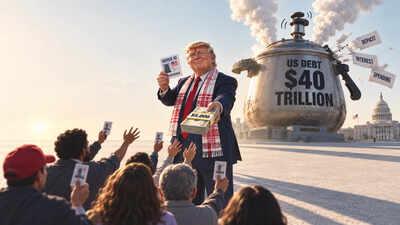
US President Donald Trump may never admit it, but it’s self-evident. The self-proclaimed oldest democracy is beginning to borrow from political toolkits of the world’s largest democracy.It first reflected in Trump’s obsession with photo identification for voting. Now comes the promise of money.$5,000 Trump dividendIt’s scene which is quite familiar for Indians. Come election time and it starts raining freebies for voters. The template works like this: Make promises first and then do economic calculations later, once you have won the polls.Now, something similar is happening in US.At the Republican midterm convention in Dallas, Trump offered voters a strikingly transactional proposition: Return Republicans to power in Congress and every adult American citizen could receive $5,000.“Pretend that I’m on the ballot just one more time,” Trump told supporters.“If the Republicans win the House of Representatives and the United States Senate…I will issue a dividend to every adult citizen in the United States of America for $5,000,” Trump said.“It will be called the Trump dividend,” the president said. “Now all we have to do is win.”With potentially more than 200 million payments, Trump could be promising well over $1 trillion in “dividends” unless the programme is restricted by income or other eligibility criteria, a WSJ report said.There is little chance that a $1 trillion-plus payout would sail through Congress at a moment when US public debt has surpassed $40 trillion for the first time and is already pushing up borrowing costs. But as political messaging, the promise matters. For anyone familiar with Indian elections, the formula feels instantly recognisable.
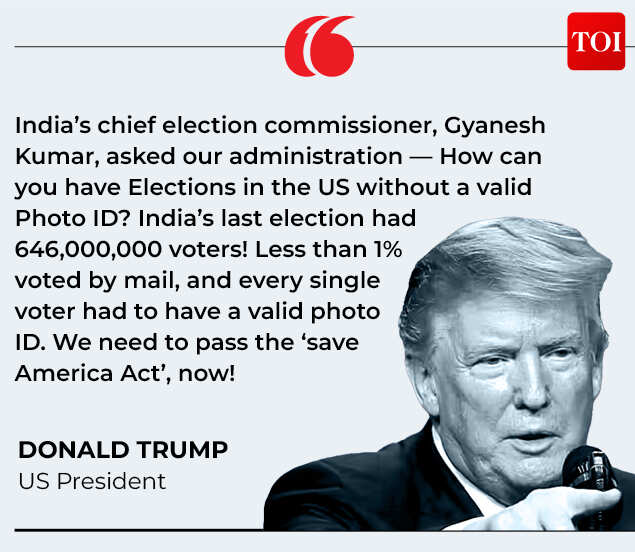
Trump mid August had praised India’s election system and called for the passage of the SAVE America Act
Make voter identity a major political issue. Build databases capable of identifying citizens and beneficiaries. Deliver welfare directly rather than through opaque bureaucracies. Brand the benefit aggressively. And, most importantly, make sure the voter knows exactly which government put the money in the account.Trump, in other words, appears to be discovering the politics of Indian-style direct welfare.From welfare to political technologyIndia’s welfare state has changed dramatically over the past decade. The Modi government’s Direct Benefit Transfer(DBT) changed that relationship.Money began arriving straight into bank accounts. A voter receiving Rs 2,000 directly into a bank account does not need a politician to explain government policy. That is electoral gold.Indian states took the idea further.Cash assistance for girls and women has become one of the most powerful electoral instruments in recent times.Madhya Pradesh’s Ladli Behna programme, Maharashtra’s Ladki Bahin scheme and similar initiatives elsewhere turned women not merely into welfare recipients but into a distinct political constituency.
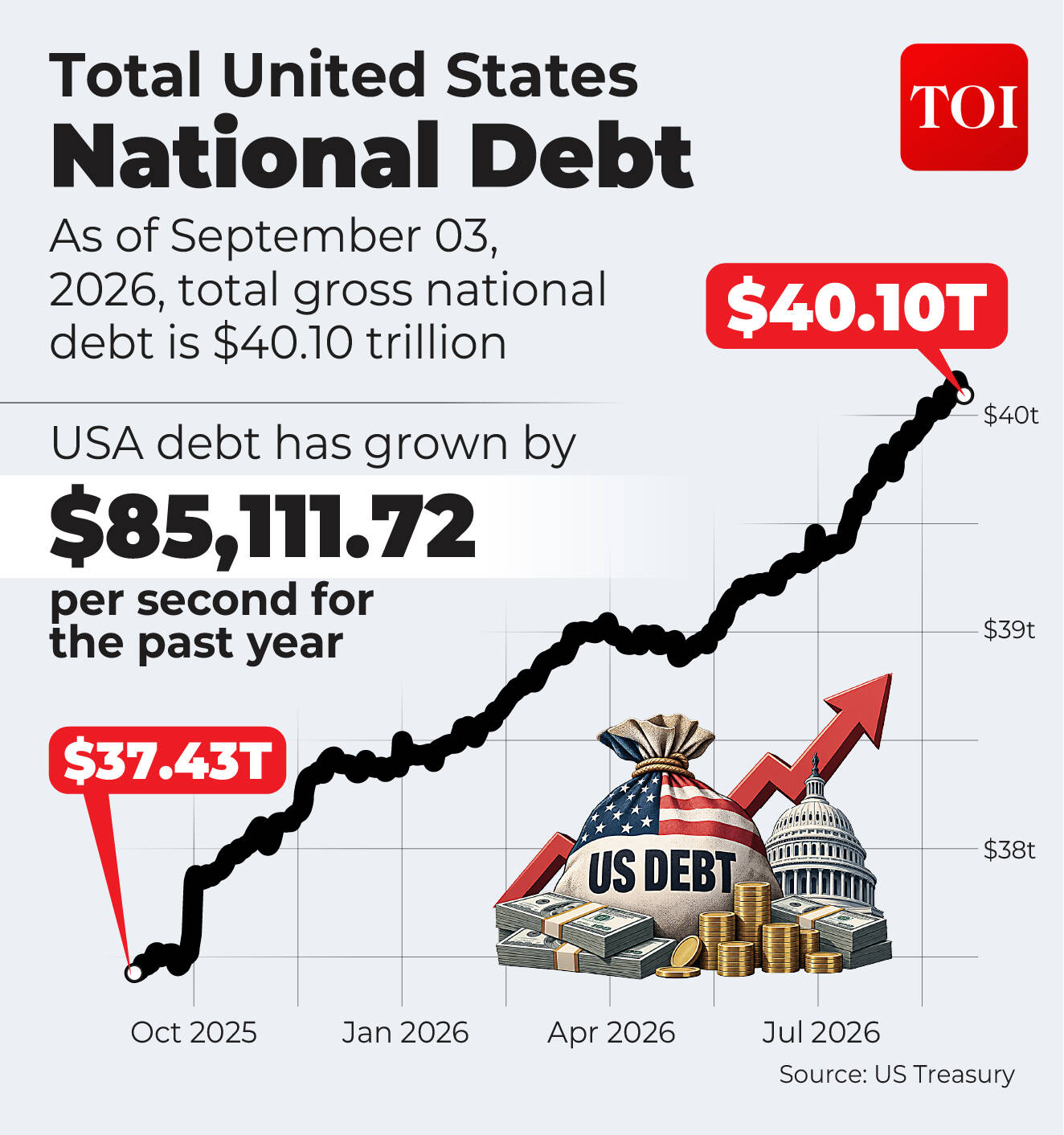
Trump cash push comes amid mounting US national debt which surpassed $40tn in August
Indian politicians have understood that modern welfare is not merely about how much governments spend. It is about how clearly citizens can identify the sender.That is the political insight hiding inside Trump’s $5,000 proposal. However, Tump’s dividend is not identical to India’s DBT schemes: It targets no specific demographic and depends on a Congress that shows no appetite for it. But the underlying instinct is the same one Indian incumbents have refined: Convert a government or leader’s flagging popularity into a direct, personal payment timed to the ballot box, and let voters decide whether to reward the giver.ID first, benefits laterThe other Indian parallel is Trump’s push for tougher voter identification. In his March 2025 executive order overhauling federal election procedures, Trump explicitly cited India and Brazil for linking voter identity to biometric databases, contrasting them with an American system that leans on self-attestation of citizenship.In August, Trump again posted on Truth Social about photo ID cards. “We need to pass THE SAVE AMERICA ACT, now!” Trump wrote, invoking legislation that would mandate citizenship proof and government-issued photo ID for federal voting.His administration has repeatedly argued that US elections require stronger proof of identity and citizenship.
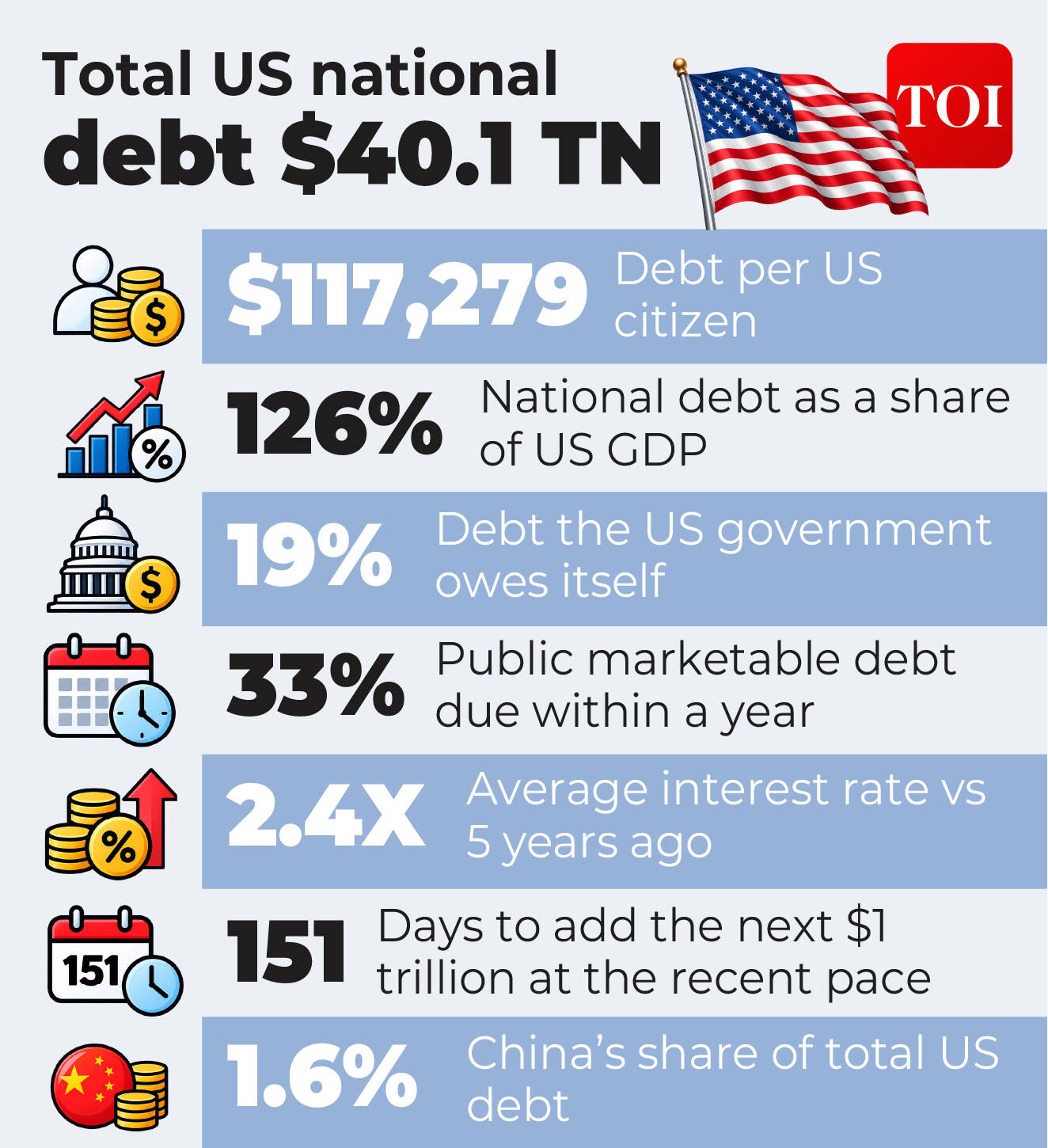
US national debt has soared under Trump’s second administration.
However, India’s system is more complicated than that comparison suggests.The Electors Photo Identity Card, or EPIC, is widely used, but it is not the sole document voters can present. The Election Commission accepts several alternative photo identification documents, and Aadhaar is not mandatory for voting.The US also does not start from zero. Most states already have some form of voter identification requirement.Still, politically, Trump is assembling two ideas that sit comfortably together in the Indian political imagination: Prove who the voter is and then deliver benefits directly to that person.A president under pressureTrump has promised to campaign aggressively for Republicans and he is expected to make about 35 trips on behalf of candidates in closely fought races. He is also directing his political action committee to deploy some of the hundreds of millions of dollars it has raised in key contests, a Bloomberg report said.There is no doubt that Trump is feeling the heat. Polling shows Americans unconvinced by Trump’s insistence that affordability complaints are overblown, and Wednesday’s convention drew visible empty seats as vulnerable Republican candidates skipped the event altogether. Trump’s popularity is at all-time low and he has entangled US in what seems to be a forever war with Iran.But politically, the message is unmistakable. Faced with the prospect of losing Congress and spending the remainder of his presidency as a lame duck, Trump appears increasingly willing to borrow from India’s electoral playbook.

Leave a Reply