
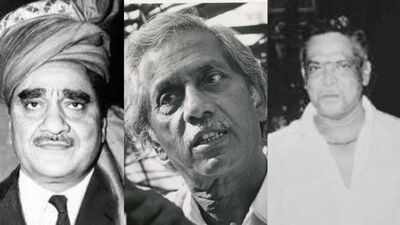
MUMBAI: Long before Dawood Ibrahim became synonymous with Mumbai’s underworld, the city had already produced a generation of crime bosses who controlled smuggling routes, gambling dens, illicit liquor networks and local rackets.They were different from the gangsters who followed them.Their power was often rooted in particular neighbourhoods and communities and their influence extended beyond the criminal world into cinema, politics and local social networks.Among the most prominent were Karim Lala, Haji Mastan and Varadarajan Mudaliar — three men who, together, formed the old guard of Mumbai’s underworld in the 1960s and 1970s.
A ‘Troika’
They were a troika that controlled the city’s underworld during that period.Their era would eventually give way to a more violent phase. At the centre of that transformation was a young gangster from Dongri: Dawood Ibrahim.
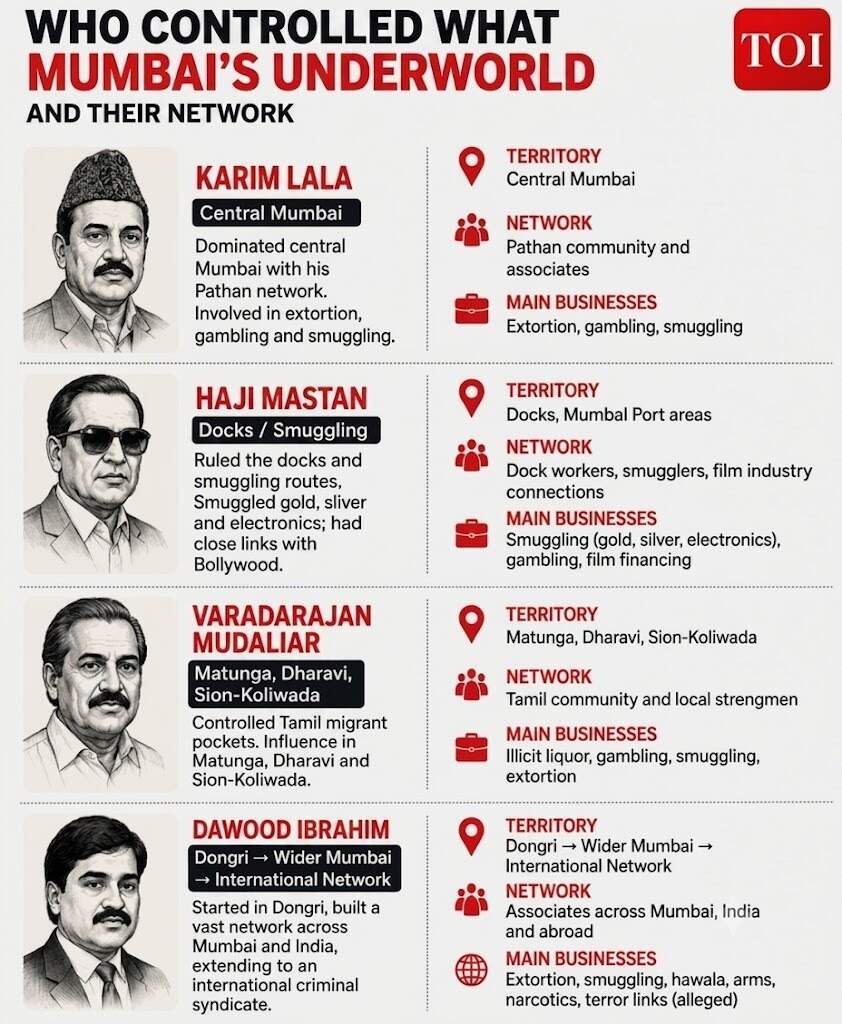
Who controlled what?
The old-school don
Abdul Karim Sher Khan, better known as Karim Lala, arrived in Mumbai from Afghanistan and began his life in the city around the docks.He gradually built a reputation by settling disputes and organising fellow Pathans before expanding into gambling and smuggling.Lala became involved in the smuggling of gold, silver and electronics and also operated gambling, drug and protection rackets.He was regarded as the first don of his kind in Mumbai and became the most prominent figure of the city’s Pathan mafia.His influence was not confined to crime. Lala became an important figure among Mumbai’s Pathan community and was known for his involvement in community affairs.By the 1960s and 1970s, he was part of a powerful trio with Haji Mastan and Varadarajan Mudaliar. The three operated largely in different spheres but collectively represented the old order of Mumbai’s underworld.
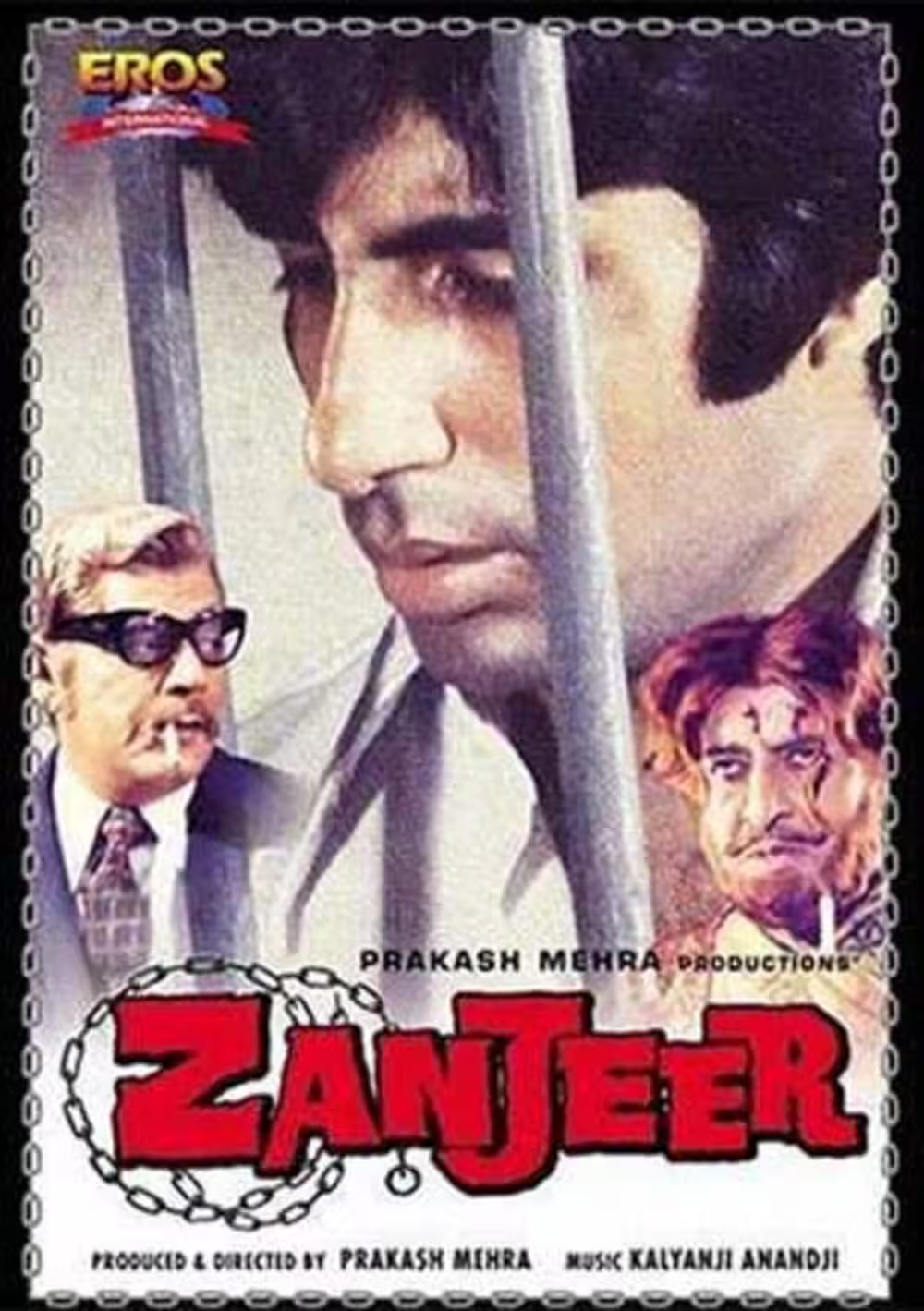
Zanjeer Movie Poster
Lala’s image eventually became so entrenched in popular culture that he was reported to have inspired Pran’s Pathan character in Zanjeer.But the old order would not survive the arrival of a younger generation.
The don who traded the gun for glamour
Haji Mastan emerged from the same world of Mumbai’s docks.Mastan arrived at the Bombay docks as a porter in 1944, where he met Karim Lala. He became a major player in the smuggling of precious metals between 1955 and 1975 and later developed close links with Bollywood, including financing film directors and studios.Unlike the image of the gun-toting gangster that would later dominate Mumbai’s crime stories, Mastan cultivated a different public persona.He was known for his polished appearance, his connections with film personalities and his philanthropy. Yet that public image existed alongside his criminal activities.His reputation for helping the poor did not erase the criminality he practised, encouraged and condoned.Mastan’s proximity to Bollywood became part of the mythology surrounding Mumbai’s underworld.Both Karim Lala and Haji Mastan were seen socialising with film stars at parties in the 1970s, while Mastan even entered politics and floated his own political outfit.His influence was so strong that his life became associated with one of Hindi cinema’s most famous gangster films.According to multiple reports, the popular movie ‘Deewaar’ was loosely based on Mastan’s life, although the connection has also been disputed by his family.
The real-life don behind ‘Nayakan’
Then there was Varadarajan Mudaliar, who represented another strand of Mumbai’s underworld.Mudaliar came to Mumbai from Tamil Nadu and initially worked as a porter. According to reports, he soon became involved in stealing dock cargo with Mastan’s help.His influence grew particularly among Tamil migrants in central Mumbai.Unlike later gangsters whose power increasingly depended on firearms and organised hit squads, Mudaliar’s influence was deeply tied to his local network.Several Tamil migrants were indebted to him and that he helped settle migrants in the slums of Antop Hill.His life later became the inspiration for Mani Ratnam’s acclaimed film ‘Nayakan’, with Kamal Haasan playing a character based on the real-life don.
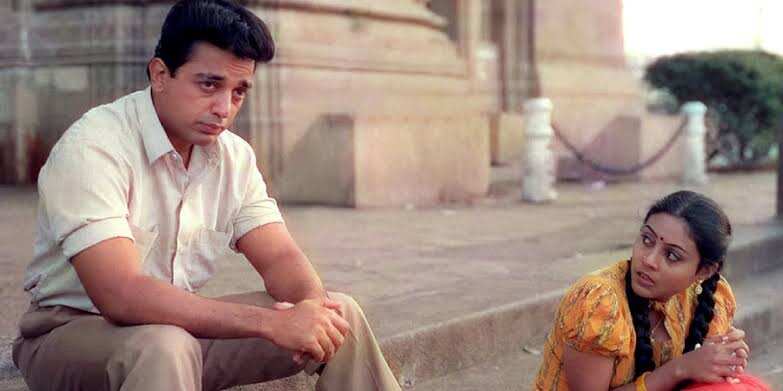
Kamal Haasan in Nayakan.
Mudaliar died in Chennai in 1988.
The old order and its unwritten rules
The Mumbai underworld of the 1960s and 1970s was not yet the sprawling international criminal network that would emerge later.The principal businesses were smuggling, gambling, bootlegging, extortion and control over illicit markets. Weapons were relatively less prominent.Former Mumbai police officer Rakesh Maria told TOI in 2009, that in the 1960s, common crimes included theft, pickpocketing, bootlegging and gambling, with knives and other traditional weapons being used.The growth of smuggling eventually created wealthier and more influential crime syndicates.The dons also had a presence in their communities that went beyond fear.Karim Lala donated to charitable causes, Varadarajan cultivated support among Tamil migrants and Mastan developed a reputation for helping the poor.This combination of crime, community influence and public generosity as a defining feature of that generation.That did not make them legitimate figures. It made their power more complicated.
Then came Dawood
The transition from the old underworld to the new one can be traced through Dawood Ibrahim.Dawood had links with the older generation and had his “internship” under Karim Lala and Haji Mastan. But his rise was ultimately tied to a violent confrontation with Lala’s network.The turning point came after Dawood’s brother Shabir Kaskar was killed by members of the Pathan gang in 1981. A cycle of retaliatory killings followed.The violence eventually decimated the Pathan gang, with Karim Lala’s brother Rahim Khan among those killed in 1986. Lala subsequently made peace with Dawood and withdrew from the underworld.The significance of that conflict went beyond one gang losing power.It marked the decline of the old Mumbai underworld and the emergence of a younger, more aggressive generation.Maria, told TOI, that the elimination of key Pathan gang members fundamentally changed the balance of power and helped create the conditions for Dawood’s rise.
The end of an era
Karim Lala died in 2002, bringing an end to one of the last figures of Mumbai’s old-guard mafia. His death marked the end of an era when smuggling was the dominant cross-border activity associated with the city’s gangsters.Haji Mastan had died in 1994, while Varadarajan Mudaliar died in 1988.Their legacies, however, survived in an unlikely place: Bollywood.Movies like, ‘Zanjeer’, ‘Deewaar’ and ‘Nayakan’ helped turn the city’s real-life dons into cinematic archetypes — the imposing Pathan, the stylish smuggler and the feared yet benevolent local gangster.But behind cinema was a darker reality.These men built influence through criminal enterprises, intimidation and control of illicit markets. Their ability to command loyalty was often as important as their ability to inspire fear.And when their era ended, Mumbai’s underworld did not disappear. It evolved.The local gang-leaders of the docks and neighbourhoods were eventually replaced by syndicates that were more organised, more violent and increasingly international.Before Dawood became the name most associated with Mumbai’s underworld, there was already a generation of men who had shown the city what a crime boss could become.Karim Lala, Haji Mastan and Varadarajan Mudaliar were the ‘dons’ of that first era. Dawood was the gangster who transformed what came next.

Leave a Reply