
3 min readNew DelhiAug 23, 2026 03:00 PM IST
Many people opt for teeth whitening. For some, it’s simply an addition to their beauty; for others, it’s a relief from a long-standing oral issue. But does the technique yield similar results for everyone?
While whitening treatments can noticeably improve the appearance of stained teeth, they don’t work equally well for every type of discolouration. The reason lies in what’s causing the stains.
“Teeth whitening is most effective on extrinsic stains, which develop on the surface of the teeth due to foods, beverages like tea and coffee, tobacco use, and ageing,” clarifies Dr Jaineel Parekh, Orthodontist, Laxmi Dental Limited.
DISCLAIMER: This article is based on information from the public domain and/or the experts we spoke to. Always consult your health practitioner before starting any routine.
Which stains are harder to remove?
However, not all stains sit on the surface of the teeth. Some, known as “intrinsic stains”, develop from within the tooth and are much more difficult to treat with whitening alone.
These stains may result from “certain medications, dental trauma, excessive fluoride exposure (fluorosis), or developmental conditions.” As Dr Parekh explains, these types of stains may not respond well to whitening alone
In such cases, a dentist may recommend cosmetic procedures such as veneers or dental bonding after a clinical evaluation, rather than whitening alone.
Story continues below this ad
Can teeth whitening damage your teeth?
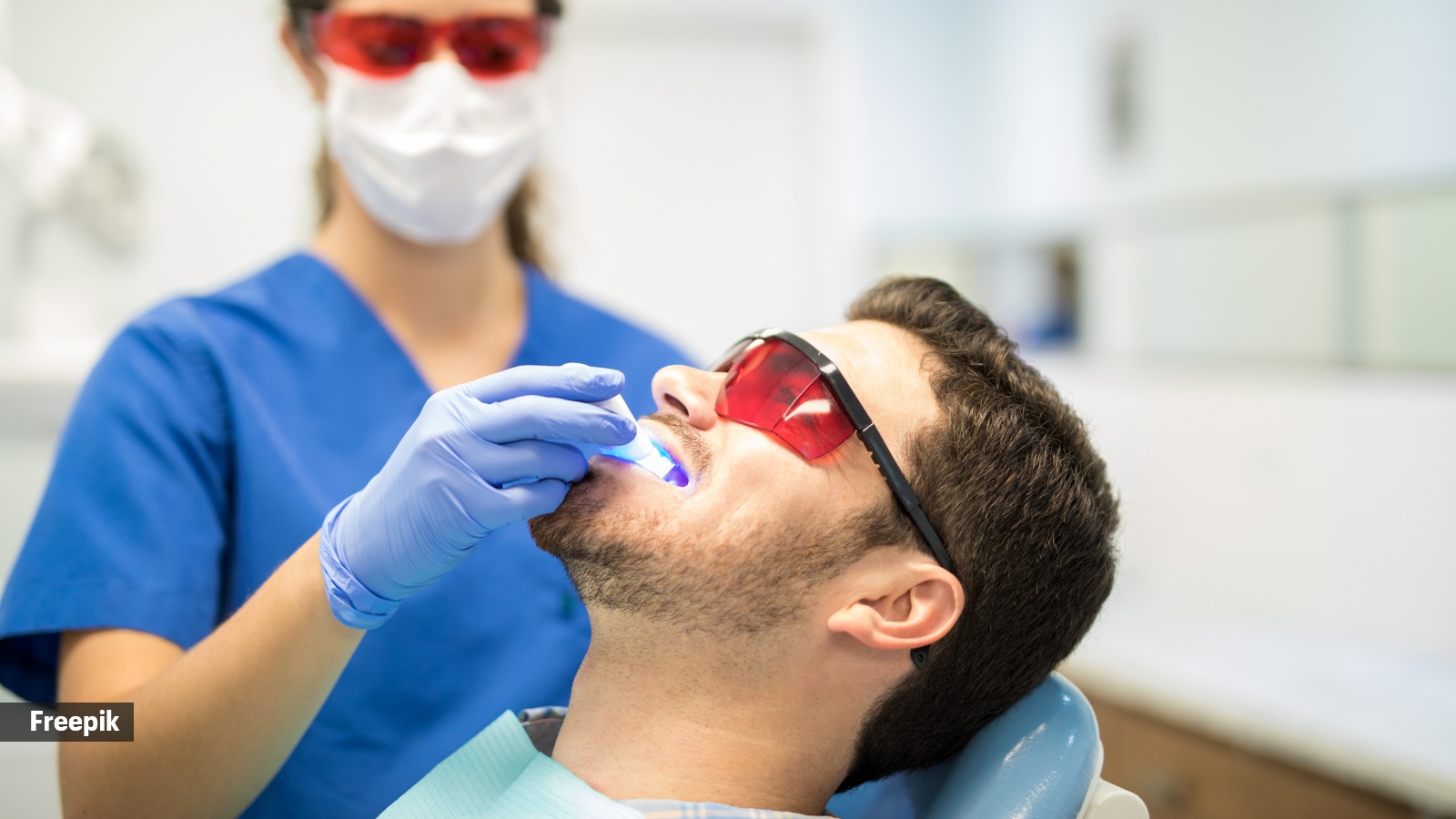
 Some experience short-term tooth sensitivity or mild gum irritation, but these usually resolve within a few days (Image: Freepik)
When done under professional supervision—or when at-home products (for mild staining) are used exactly as directed—teeth whitening is considered safe.
“Some people experience short-term tooth sensitivity or mild gum irritation, but these usually resolve within a few days,” Dr Parekh points out.
However, he cautions that “Overuse of whitening products or unregulated products without professional guidance can increase the risk of sensitivity and impact oral health.”
Additionally, teeth whitening is not as such for everyone. “Pregnant or breastfeeding women, children, people with untreated cavities, gum disease, with extensive dental restorations such as crowns or veneers,” should avoid it as these materials do not whiten like natural teeth.
Story continues below this ad
How long do the results last?
The longevity of teeth whitening varies from person to person and depends on oral hygiene, dietary habits, tobacco use and overall lifestyle.
Dr Parekh recommend limiting tea, coffee and tobacco, maintaining good oral hygiene and visiting your dentist regularly to help preserve the results. Periodic touch-up treatments may also be needed.
There is another myth, worth noting, that whitening more often will produce brighter teeth.
“Using it too often can actually make your teeth more sensitive and won’t necessarily improve your whitening results,” Dr Parekh clarifies to indianexpres.com.
Story continues below this ad
He also points out that whitening treatments do not change the colour of crowns, fillings or veneers, making a professional dental assessment important before starting treatment.
DISCLAIMER: This article is based on information from the public domain and/or the experts we spoke to. Always consult your health practitioner before starting any routine.

Leave a Reply