

Pulmonologist Dr Viny Kantroo recently mentioned in a conversation with actor Soha Ali Khan that while most people love to sleep on their tummy, for women, it may not reflect well on their skin health. “Sleeping on your belly may not be good for women because they have poorer skin health when they sleep on their tummy. You get puffy eyes because the level of circulation, which happens when you sleep on your tummy, is lower. You compare yourself to yourself sleeping on your tummy one night and on your back the other night. There is a marked difference which is seen on your face,” she told Khan on her YouTube chat show.
DISCLAIMER: This article is based on information from the public domain and/or the experts we spoke to. Always consult your health practitioner before starting any routine.
Soha also agreed with her observation and shared, “I have tried, but I find myself flat on my face most times.”
To verify, we reached out to experts.
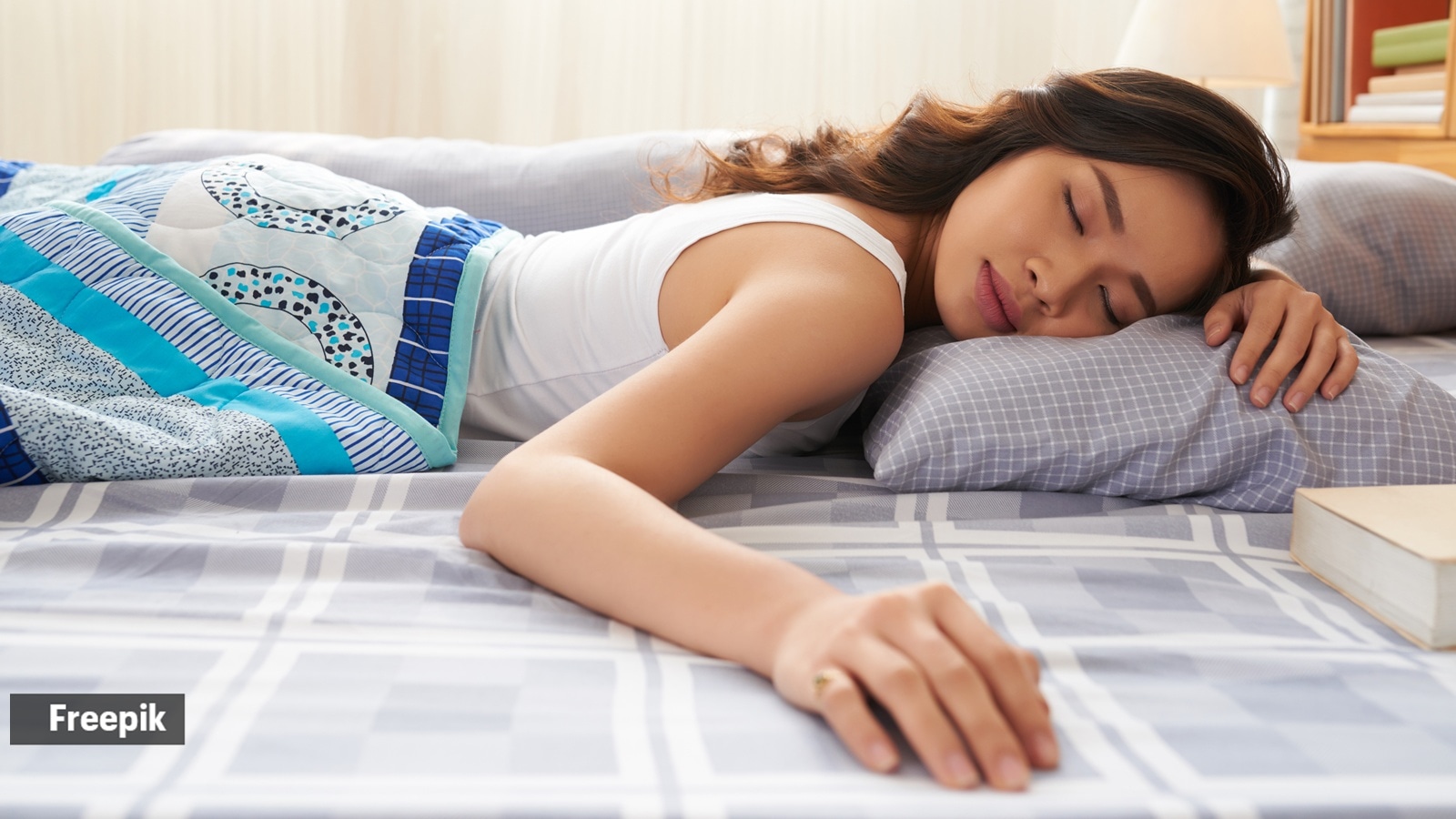 Here’s what you should consider (Photo: Freepik)
While skincare routines are important, factors like pressure and fluid distribution during sleep also affect the skin, emphasised Dr Ajay Dodeja, junior consultant, dermatology, KIMS Hospitals, Thane.
“The way your face presses against a pillow for hours can influence puffiness, creasing, and the overall look of your skin,” added Dr Dodeja.
Why is sleeping on the stomach linked to puffiness or dull-looking skin?
According to Dr Dodeja, sleeping face down puts constant pressure on the skin, which can block lymphatic drainage and cause fluid to build up, especially around the eyes. “This can lead to morning puffiness, mild swelling, and noticeable sleep lines or creases. Continuous pressure over time may make these lines more visible,” described Dr Dodeja.
Story continues below this ad
Is sleeping on the back or side a better option?
Sleeping on your back is typically the best position for your skin because it avoids directly pressing your face. “Side sleeping is better than stomach sleeping, but it can still create uneven pressure on one side of the face. Over time, consistently sleeping on one side might cause fine lines or slight asymmetry.”
Can sleeping position affect long-term skin ageing?
Yes, but the effect is gradual and subtle. “Ongoing pressure on the skin can lead to ‘sleep lines’, which are different from expression lines. As the skin loses elasticity with age, these lines may become more noticeable if the habit continues for years,” said Dr Dodeja.
What can people do if they can’t change their sleeping position easily?
Story continues below this ad
Not everyone can change their sleep position right away, and that’s okay. Small changes can help reduce the impact:
*Use a soft, clean pillowcase like satin or silk to lower friction.
*Keep the skin well-moisturized at night to support barrier function.
*Elevate the head slightly to reduce fluid buildup around the eyes.
*Practice good sleep hygiene and stick to a consistent sleep schedule.
Are puffy eyes always linked to sleeping position?
No, remarked Dr Dodeja, mentioning that under-eye puffiness can also come from factors like lack of sleep, high salt intake, allergies, sinus congestion, or dehydration. Sleeping position is just one of many factors.
DISCLAIMER: This article is based on information from the public domain and/or the experts we spoke to. Always consult your health practitioner before starting any routine.

Leave a Reply