
3 min readNew DelhiSep 10, 2026 09:00 PM IST
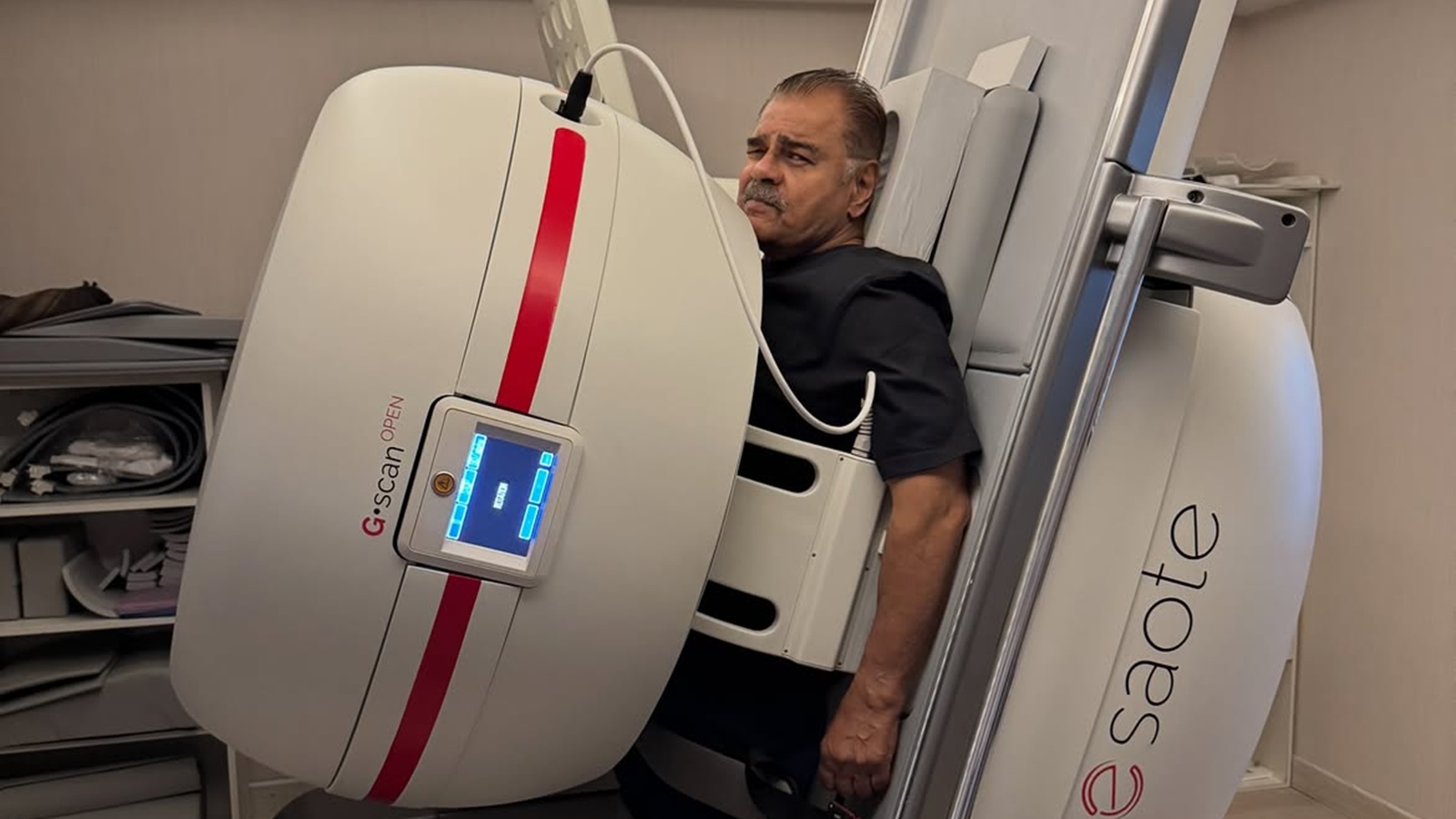
Sharat Saxena, aged 76, recently took to Instagram to share that he underwent a “standing MRI before lumbar spine surgery” at Bombay Hospital. As industry peers and colleagues wished him a speedy recovery in the comments under his post, the Son of Sardaar 2 actor replied: “My thanks to all of you who have wished me well. I hope to walk properly again and be able to work. Thank you all. Sharat Saxena”.
DISCLAIMER: This article is based on information from the public domain and/or the experts we spoke to. Always consult your health practitioner before starting any routine.
Standing vs supine MRI: What’s the difference?
Most people assume an MRI is an MRI, but Dr Tushar Arora, Senior Consultant Neuro Surgery at Fortis Hospital Jalandhar, says position changes everything when it comes to the spine.
“When you lie down on a scanning table, gravity stops pulling on your back. That’s great for looking at soft tissue in fine detail, but it also shows your spine in a relaxed, unloaded state, not how it behaves when you’re actually standing, walking or sitting through a long day,” he tells indianexpress.com. A standing or upright MRI uses an open scanner and images the spine while it’s bearing your body weight, the way it does all day, every day, he explains.
 A traditional MRI scan. (Magnific)
When is a standing MRI useful?
Dr Akshay Hari, Consultant – Neuro Surgery and Spine Surgery, Aster CMI Hospital, Bangalore, elaborates that an upright MRI is super handy, particularly for conditions such as spinal stenosis, spondylolisthesis, certain disc problems, or suspected positional narrowing.
“It may be especially useful for people whose back or leg pain becomes significantly worse when standing and improves when sitting or lying down, because the weight-bearing position may reproduce some of the mechanical changes responsible for symptoms,” he tells indianexpress.com.
Having said that, he reiterates that it is “not required for every patient undergoing lumbar spine surgery”, and there are currently no universal evidence-based recommendations saying that every surgical patient needs one.
Story continues below this ad
Limitations to note
Benefits aside, Dr Hari also notes that standing MRI scans come with their own caveats.
“Many upright scanners use lower magnetic-field strength than modern conventional MRI machines, which can result in lower image quality, and a patient may still need a conventional supine MRI for detailed surgical planning,” he shares.
Dr Hari also says the usual MRI safety rules still apply: people with certain pacemakers, implants, metal fragments, or other devices must be screened carefully to confirm the device is MRI-safe or MRI-conditional.
As a parting note, Dr Arora encourages you to think of the standing MRI as an added tool, not a replacement. “While the decision should ultimately be made by the spine surgeon and radiologist based on symptoms, examination and previous imaging rather than choosing an upright scan simply because it is newer or more specialised,” Dr Hari concludes.
Story continues below this ad
DISCLAIMER: This article is based on information from the public domain and/or the experts we spoke to. Always consult your health practitioner before starting any routine.

Leave a Reply