
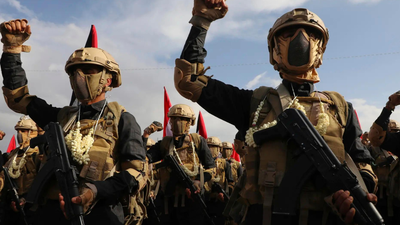
Israel and Saudi Arabia have held talks mediated by the US Central Command aimed at helping Riyadh defend itself against Houthi attacks through intelligence assistance, as cited by The Jerusalem Post.According to sources cited by JP, the Saudi request for assistance was likely focused on intelligence support to develop a broader picture of Houthi military deployments in the area and identify potential plans for future operations.The Israeli military has already demonstrated intelligence and operational capabilities in the maritime arena around the Strait of Hormuz, assisting the US in building intelligence on the locations of Iranian forces, the sources said.Separately, Bloomberg reported that Saudi Arabia had also requested British assistance to repel the Houthis from the Bab al-Mandab Strait and help defend its oil infrastructure against attacks.Burnham has agreed to send British military advisers to assist Saudi Arabia, Bloomberg reported, but had not yet committed to providing any additional aid.
Pakistan does not put boots on the ground
The developments have also revived attention on the mutual-defence pact signed by Pakistan, Saudi Arabia and Turkiye on August 7. While the Mecca pact commits the three countries to a collective response in the event of an attack, Pakistan is not preparing to deploy troops on the ground at this stage.Under the agreement, an armed attack against any one of the three countries would be treated as an attack against all, with the pact also providing for closer defence cooperation.Pakistan defence minister Khawaja Asif said on Wednesday that there should be no ambiguity over the commitment under the agreement. He said the pact’s collective-defence provisions could be activated in the event of an unprovoked attack on any member or if the conflict in Yemen spills over into Saudi Arabia.However, Pakistan’s foreign ministry later clarified that no military response under the agreement was currently under discussion.
Tensions escalate in the Middle East
The Houthi military has intensified its attacks against Saudi Arabia over the past week, including a drone strike on oil pipelines and pumping facilities that partially disrupted operations along the main pipeline.The Houthis also attacked Saudi civilians inside a mosque and nearby buildings close to the Yemen-Saudi Arabia border. Yemeni officials said the group launched a fresh wave of attacks on Saudi territory while reinforcing positions along Yemen’s western coast on the Red Sea, as Saudi Arabia held urgent discussions in Riyadh on how to respond to the advances.Meanwhile, Gulf Arab states postponed planned talks with Iran, raising concerns that the conflict could widen and threaten global oil supplies.The Houthis have also seized several strategically located islands in the Red Sea and prevented Saudi vessels from passing through the Bab al-Mandab Strait.Saudi authorities issued emergency alerts in the affected area and three other southern cities, while 13 civilians were wounded in the Houthi attacks, the Saudi-led coalition in Yemen said.The Houthi advances in recent days, including the capture of Perim Island at the mouth of the Red Sea, have added pressure on Saudi Arabia’s oil exports after an aerial attack on Thursday forced the shutdown of its east-west pipeline. Riyadh blamed the pipeline attack on Iranian-backed militias in Iraq.Saudi Arabia built the 1,200-kilometre (745-mile) pipeline across the country from the Gulf to the Red Sea in the 1980s to provide an alternative route for oil exports and bypass the Strait of Hormuz, amid threats to the waterway during the Iran-Iraq war.Traders said a prolonged shutdown of the pipeline could cut off as much as 4% of global oil supplies while the Strait of Hormuz remains largely blockaded. Riyadh has not said when operations on the pipeline are expected to resume.

Leave a Reply