
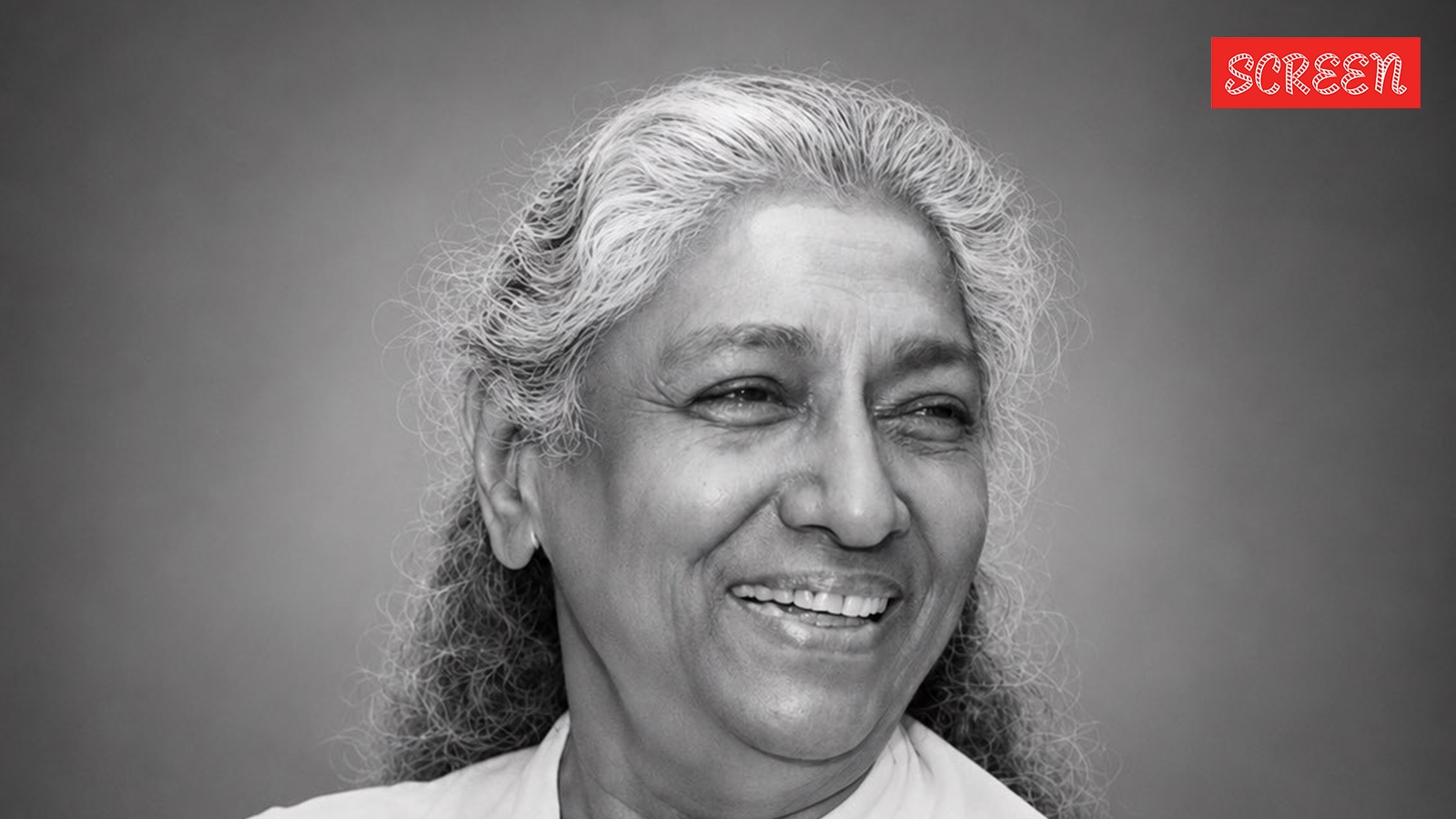
Long before her songs in various languages became a soundtrack to the lives of many, Sistala Janaki, or S Janaki as she was popularly known, was a young girl in Pallapatla, a small village south of Guntur in Andhra Pradesh, where the crackle of a boxy radio carried dreams from distant spaces.
Janaki would sit by the family radio, captivated by Lata Mangeshkar’s songs. “Lata was my first guru,” she famously said later. Those evenings by the radio in the ’40s and ’50s planted the seeds for a remarkable career, one that would span nearly six decades and transcend linguistic and cultural boundaries.
Even with her deep admiration for Mangeshkar, Janaki forged a singing style that was entirely her own. It led her to find her own path and her own journey to become the ‘nightingale of South India’ and one of its most beloved voices.
S Janaki, who recorded over 40,000 songs in multiple languages, including Tamil, Odiya, Bengali, Malayalam, Telugu, Kannada and Hindi among others, died at a private hospital in Mysuru on Saturday evening due to age-related issues. She was 88.
The announcement was made by her granddaughter. Apsara Vydyula, on Instagram. “While our hearts are heavy, we are also filled with gratitude for the extraordinary life she lived and the immeasurable joy she brought to millions through her timeless music…,” Apsara wrote.
Also Read – S Janaki (1938-2026): Vijay, Rajinikanth, Khushbu, Chiranjeevi and others pay tribute to singer
Telangana Governor Shiv Pratap Shukla, Chief Minister A Revanth Reddy, Union Ministers G Kishan Reddy, Bandi Sanjay Kumar and several other leaders and film personalities condoled the demise of the veteran playback singer.
Story continues below this ad
Kerala Chief Minister V D Satheesan said Janaki’s voice had the rare ability to express every human emotion — devotion, love, joy and sorrow — with unmatched depth and grace.
Governor Shukla described her as a golden voice that touched millions of hearts and an enduring symbol of melody, devotion and artistic excellence. CM Reddy said Janaki had left an indelible impression on the hearts of music lovers with the sweetness of her voice.
Andhra Pradesh Chief Minister N Chandrababu Naidu wrote: “A daughter of Telugu soil, she built an unparalleled musical legacy spanning over six decades, touching generations with her timeless voice. Her immense contribution to Indian music will be cherished forever.”
Janaki spent most of her childhood in the textile town of Sircilla (now in Telangana), where her uncle, a theatre person, got her to sing Mangeshkar’s songs during play intervals. It was during one of these shows that Tamil filmmaker B R Panthulu and music director T G Lingappa heard her and asked her to come to Chennai, where she recorded her debut song in Tamil film Vidhiyin Vilayattu in 1957, singing in six languages in the very first year.
Story continues below this ad
Janaki went on to collaborate with generations of significant composers, from M S Viswanathan, G K Venkatesh and Ilaiyaraaja to Rajan–Nagendra, M M Keeravani and A R Rahman. Three songs she sang for Ilaiyaraaja’s debut film Annakkili (1976) propelled Janaki to the top of the playback singing world, a position she would hold for the next two decades. Some of her notable Hindi songs include Dil mein ho tum (Satyamev Jayate, 1987) and Yaar bina chain kahan re (Saaheb, 1985), among others.
Also Read – The nightingale who sang in 20 languages: The life and legacy of S Janaki
Janaki’s husband V Ramprasad played a significant role in supporting and advancing her career .
Her ability to breathe life into the songs got her much recognition and critical acclaim, including four National Film Awards for Best Female Playback Singer and numerous state honours. In 2013, Janaki declined the Padma Bhushan, saying the recognition had come too late (she had been successfully singing for 55 years), and that she deserved nothing less than a Bharat Ratna, an honour that Mangeshkar was given in her lifetime. Janaki was also protesting for singers from South India who, she said, had long been denied the recognition they deserved. She retired from playback music and live performances in 2017.

Leave a Reply