

6 min readNew DelhiAug 31, 2026 04:57 PM IST
A heart attack may sound like a straightforward medical emergency, but not every myocardial infarction (MI) happens for the same reason. Now, four leading international cardiac organisations have introduced a new, simplified way to classify heart attacks, which doctors say could make diagnosis, treatment and communication with patients clearer. Myocardial infarction, commonly referred to as a heart attack, remains one of the world’s major cardiovascular health concerns. It can occur when the heart does not receive enough blood and oxygen, but the underlying cause can vary considerably from one patient to another.
The European Society of Cardiology, American College of Cardiology, American Heart Association and World Heart Federation have jointly developed the Fifth Universal Definition of Myocardial Infarction. “People may think of an MI as a heart attack caused by a blocked coronary artery, but there are many different causes,” said Professor Nicholas Mills, chair of the European Society of Cardiology and professor at the University of Edinburgh.
Previously, doctors used a numerical system to describe different types of myocardial infarction. However, the classification could be difficult to apply consistently in everyday clinical practice. The new approach instead focuses on why the heart attack happened, placing myocardial infarctions into three broad clinical settings: primary, secondary and procedure-related.
DISCLAIMER: This article is based on information from the public domain and/or the experts we spoke to. Always consult your health practitioner before starting any routine.
The new definition was recently presented at the European Society of Cardiology Congress 2026.
“Primary MI is one that arises spontaneously due to an acute problem in a coronary artery. A rupture of an atherosclerotic plaque most commonly causes it, but there are other causes such as a tear in the coronary wall (spontaneous coronary artery dissection [SCAD]), spasm, or a clot. Secondary MI arises from an imbalance in oxygen supply and demand in the heart caused by another condition, such as very high or very low blood pressure or a very fast heartbeat. The third setting – procedure-related MI – is one that occurs within 30 days of a cardiac procedure (such as coronary stenting) or heart operation (such as coronary artery bypass surgery),” the press statement published on The European Society of Cardiology website read.
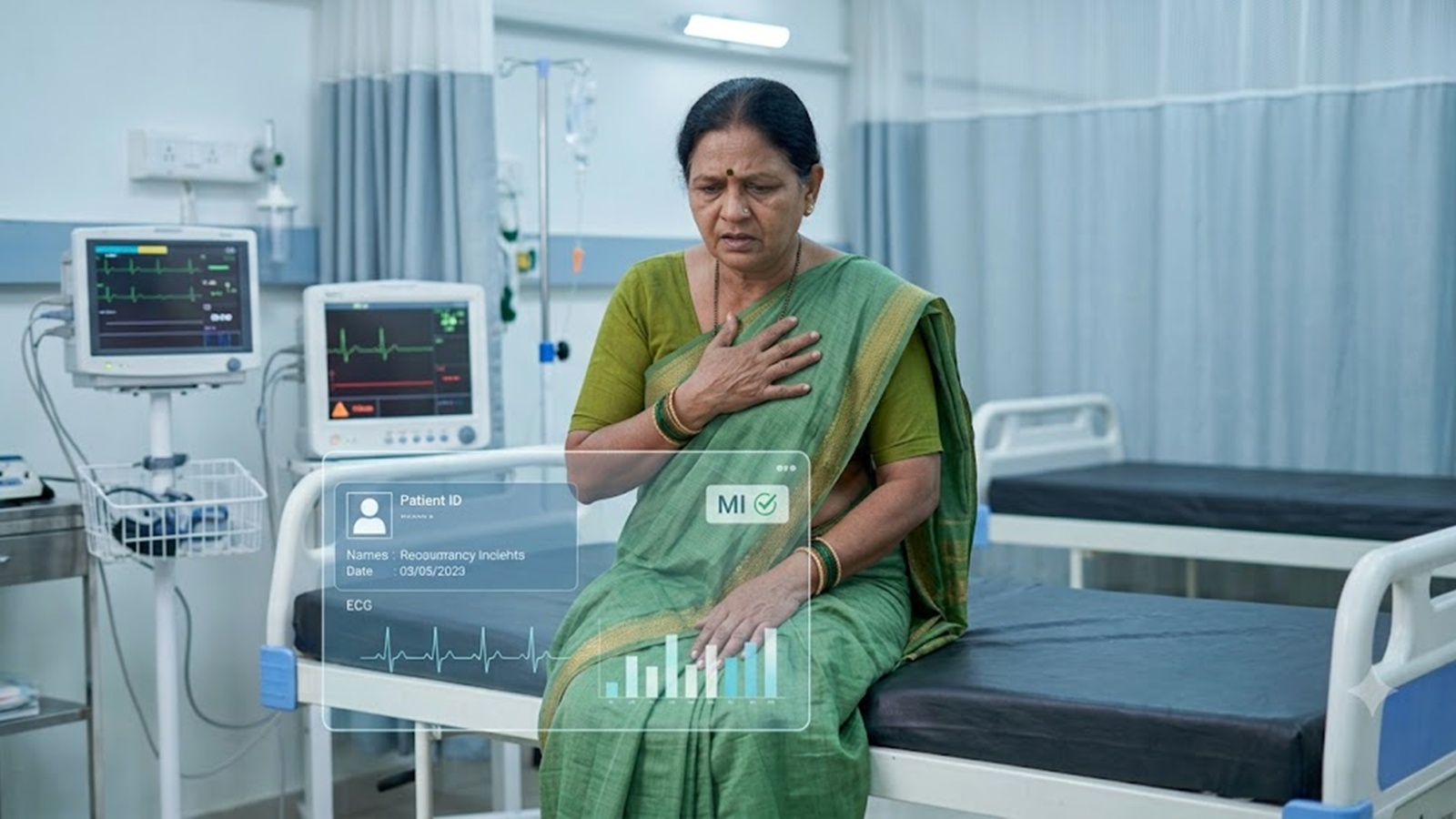 Here’s what you should consider (Photo: AI Generated)
To clarify whether the new definition is broader, we asked experts.
Story continues below this ad
Dr Parin Sangoi, consultant interventional cardiologist, Wockhardt Hospitals, Mumbai Central, told indianexpress.com that the main difference now is that rather than viewing a heart attack as a single, uniform event, we are placing greater emphasis on the reasons why the heart muscle has suffered injury. “This is important since the underlying mechanism can vary from patient to patient and women are more likely to have some of the less-recognised types of coronary disease. Having a more accurate classification will enable doctors to investigate these cases in the appropriate way rather than trying to fit all patients into the same diagnostic pathway,” elucidated Dr Sangoi.
Dr Punya Pratap Kujur, consultant cardiologist, Gleneagles Hospital, Parel, Mumbai, called the updated guideline an “important” step towards recognising that heart disease can present differently in women and that women may require a more individualised approach to diagnosis and care.
For many years the usual image of a heart attack was mainly based on a blocked coronary artery resulting from the rupture of plaque and the formation of a clot. However, women may experience heart attacks as a result of conditions such as spontaneous coronary artery dissection (SCAD), coronary artery spasm or coronary embolism. “SCAD is especially closely linked with women and can take place during or near pregnancy. These conditions do not always lead to the typical scenario of a severely blocked artery,” said Dr Sangoi.
Does that indicate that women used to be treated unfairly?
To say that all women were receiving inappropriate treatment would be too simple, clarified Dr Sangoi. “The problem lies in the fact that some of the mechanisms behind a heart attack were less likely to be recognised or given the same level of urgency in terms of classification. Since the cause is different, the treatment might also have to be different. Making that distinction is a major advance in the way cardiac care can be made more individualised.”
Story continues below this ad
What should women know regarding the symptoms of a heart attack?
One should not wait for the usual crushing chest pain when asking for help; breathlessness, severe fatigue that has no explanation, nausea, sweating, dizziness or a feeling of discomfort in the jaw, back, shoulder or arm can also occur with a cardiac event. The key point is to take new or unexplained symptoms seriously, especially when they are sudden or persistent, urged Dr Sangoi. “It is also important to understand that heart problems can occur in women even when they do not have a known history of heart disease. Prevention remains equally important. Women should regularly monitor their blood pressure, blood sugar and cholesterol, maintain a healthy weight, stay physically active, eat a balanced diet, manage stress and avoid smoking and excessive alcohol consumption. Women with conditions such as diabetes, hypertension or high cholesterol should follow their treatment regularly and not stop medicines without medical advice,” said Dr Kujur.
The extent to which these guidelines are valuable will depend on the consistency with which they are put into practice; although the definition is an important stage, awareness on the part of both doctors and patients must also increase alongside it.
DISCLAIMER: This article is based on information from the public domain and/or the experts we spoke to. Always consult your health practitioner before starting any routine.

Leave a Reply