
Polycystic ovary syndrome aka PCOS has a new name now. She goes by Polyendocrine metabolic ovarian syndrome (PMOS). Quite a mouthful, huh? According to a recent article published in The Lancet journal, the term PCOS is inaccurate, “implying pathological ovarian cysts, obscuring diverse endocrine and metabolic features”, and contributing to “delayed diagnosis, fragmented care, and stigma”, while curtailing research and policy framing.
Building on an international mandate for change, the researchers outlined a rigorous, multistep global consensus process for the name change, wherein accuracy was improved by omitting cysts and by capturing endocrine, metabolic, and ovarian dysfunction.
PCOS has long remained under-recognised in India, affecting one in eight and about 170 million women worldwide, as per Lancet. Many normalise symptoms like irregular periods, fatigue, or weight fluctuations until they become severe. As the global shift toward PMOS gains attention, the conversation is slowly beginning to move beyond fertility and ovarian health, toward larger concerns around metabolism, lifestyle, stress, and preventive healthcare.
DISCLAIMER: This article is based on information from the public domain and/or the experts we spoke to. Always consult your health practitioner before starting any routine.
For India, not only does this open up newer discussions around social media-led self-diagnosis, the growing “hormone wellness” economy, and urban lifestyles worsening hormonal conditions among young women — it also raises an important question: will PMOS help people perceive the condition as a long-term health issue rather than only a reproductive concern?
Soumyashree Mishra, a PCOS ovarian cyst survivor, says that the term Polycystic Ovary Syndrome never fully explained what the condition truly does to the body. Now, with conversations around its renaming to a broader terminology related to metabolic and reproductive dysfunction, people are asking whether changing the name will actually change the lived reality of those suffering from it.
 The reality of PCOS is not just a diagnosis written on paper, it is waking up not knowing when your periods will come, or whether they will stop at all. (Magnific)
Reality check
As someone who has lived with the condition for the last five years, the PR manager hailing from Puri, Odisha has mixed feelings about the renaming debate. On one hand, she understands why experts want a change.
Story continues below this ad
“The term “polycystic ovary syndrome” has always been incomplete and misleading. Many women diagnosed with PCOS do not even have ovarian cysts, while others suffer deeply from hormonal imbalance, insulin resistance, inflammation, weight fluctuation, mood instability, anxiety, fatigue, painful cycles, excessive bleeding, acne, hair fall, fertility issues, and emotional burnout,” says Mishra.
However, from the perspective of someone actually living through it every single day, Mishra doesn’t think a name alone changes the struggle.
Dr Suparna Bhattacharya, Fertility Specialist, Nova IVF Fertility, Kolkata agrees, explaining that the whole condition is way more complex than that name suggests. It ties in hormonal imbalance, irregular ovulation, insulin resistance, metabolic dysfunction, acne, changes in body weight and then longer term reproductive effects plus cardiovascular implications.
“If the conversation keeps leaning too hard on the word “cyst,” the older terminology kind of caused needless fear and general confusion for many patients, but also it sorts of narrowed the issue down to a strictly gynaecological problem, like, as if nothing else mattered,” she tells indianexpress.com.
Story continues below this ad
Rushali Shettigar has been dealing with PCOS for the last 2 years, and during our interaction, calls her journey “haywire”. Despite taking medications regularly and trying to maintain a healthier lifestyle through diet, exercise and stress management, she still experiences irregular periods that are sometimes two or three months late — which is the “biggest challenge” faced by the account head at Aria Communication, Mumbai.
“The delay in the cycle can be quite frustrating and it often causes very bad mood swings, a disturbed sleep cycle and emotional shifts. This affects me not just physically but also mentally because it requires active management and adjustment, which can be exhausting,” she recalls.
Prof. Ketoki Mazumdar, Faculty of Psychology, FLAME University, Pune highlights how the shift also validates the often-overlooked mental health burden associated with the condition, including “anxiety, depression, body image distress”, and the emotional exhaustion of navigating a condition many women feel is misunderstood or minimised.
While she realises that merely changing the name won’t be a solution in itself, Shettigar says it “signals a positive shift in how PCOS is understood and hence managed”.
Story continues below this ad
Garima Ranjan echoes a similar sentiment. Even though she feels this renaming is a “positive step”, she is not convinced that changing the name alone will significantly change the lived experience of people with the condition.
According to her, the biggest challenges aren’t just about terminology, but actually about “awareness, timely diagnosis, access to healthcare, and the stigma surrounding symptoms like weight gain, acne, excess hair growth, infertility, and irregular periods”.
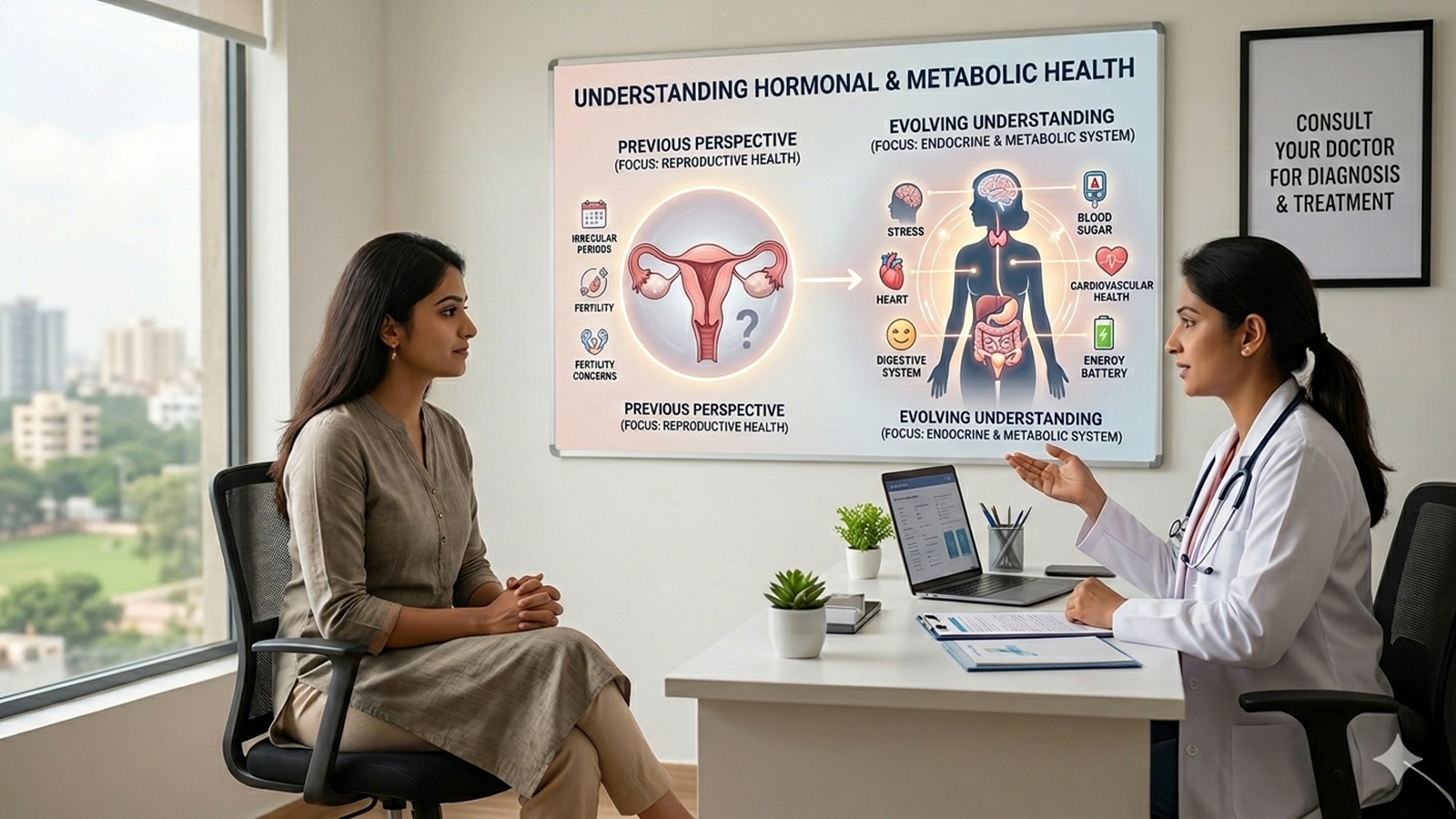 PCOS gets renamed to PMOS. (AI generated)
What needs to change
From a medical lens, Dr Bhattacharya supported the girls’ claims, stating that a name change by itself is unlikely to reshape outcomes unless awareness, and medical education, evolve alongside it. “The actual upside will arrive when women are identified earlier, when symptoms that go past fertility are taken more seriously, and when care becomes more personalised and preventive,” she mentions.
Richi Agarwal, Nutritionist and Founder, of Nutrition By Richi elaborates that for decades, the first line of treatment handed to young girls was an oral contraceptive pill (OCP), with no conversation about insulin, inflammation, food, sleep, or stress.
Story continues below this ad
“An OCP masks symptoms while the root cause keeps running in the background. If PMOS pushes clinicians to investigate metabolic markers from day one fasting insulin, cortisol, inflammation and to bring nutrition in as a primary intervention rather than an afterthought, that is when women’s lives will genuinely change,” she tells indianexpress.com.
Agarwal reiterates that nutrition and lifestyle are not optional add-ons with PMOS — they are the foundation.
“You cannot pill your way out of a metabolic condition. In my practice, when women address blood sugar regulation, gut health, and inflammation through food and targeted supplementation, their hormonal and reproductive symptoms follow,” she says.
Why the renaming matters culturally
Dr Runali Kelwalkar, Homeopath and Diabetes Management Coach, believes a term like PMOS can help people see that this condition is not about reproductive health alone but about their whole body. “The emphasis shifts from periods and ultrasounds to treating metabolic issue, like how the body handles insulin, deals with inflammation and controls weight, sleep and handles stress,” she shares.
Story continues below this ad
Dr Monika Gupta, IVF and Fertility Doctor at Kailash IVF, Noida, says that PCOS is socially stigmatised owing to its connection with the reproductive system. As such, PMOS will allow for the problem to be viewed differently and thus normalize discussions, even in socially conservative environments.
It could also help lower the cultural stigma and taboo that a lot of women feel, especially in places where menstrual and fertility related issues are still being judged hard, or simply not understood properly, she adds.
But having said that, Mishra and Shettigar believe officially renaming the condition as PMOS (Polyendocrine Metabolic Ovarian Syndrome) will hopefully better describe the complexity of the condition, leading to more accurate and timely diagnosis and more holistic care.
“Shifting the focus from the ovaries to the entire body can lead to a better conversations. I hope we will also see more research into women’s hormonal health and better support for women living with this condition,” Shettigar tells indianexpress.com.
Story continues below this ad
For Ranjan, the name change is not the solution, but an opportunity. “Whether it creates real change depends on what follows after the rebranding,” says the SEO writer at AcquireX, a Pune-based business management consultant firm.
Language shapes care
The name PMOS finally creates the clinical language to have that conversation with patients from day one, rather than after every other option has failed. And Professor Mazumdar believes this renaming is deeply important from public health and social justice perspectives because “language shapes care”.
Ultimately, this shift is more than merely updated wording. It’s an attempt to bring medical language in step with scientific insights, while also making discussions about women’s hormonal health more precise, warmer in tone, and less stigmatising, she elaborates.
Years of fighting your own body while balancing professional and personal life is not weakness; it is resilience. And for some, survival itself feels like the biggest victory.
Story continues below this ad
DISCLAIMER: This article is based on information from the public domain and/or the experts we spoke to. Always consult your health practitioner before starting any routine.

Leave a Reply