
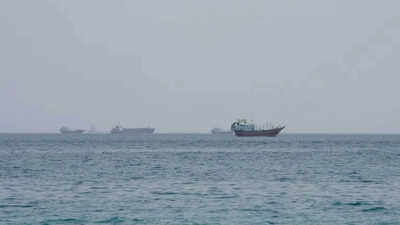
Oil prices remained largely unchanged in early trade on Monday as a sharp drop in vessel movements through the Strait of Hormuz heightened concerns over supplies, while efforts to end the US-Iran conflict showed no sign of progress.Brent crude gained 0.42% to $88.89 per barrel while WTI crude rose 0.21% to $82.57 as of 7:20 am.The slowdown comes after both benchmarks surged more than 5% last week, following attacks on tankers operated by Abu Dhabi National Oil Company in the Strait of Hormuz and a separate attack on a Saudi Aramco refinery.In the Middle East, Iran and the United States remained at odds over talks to resolve the conflict. Iranian foreign minister Abbas Araqchi said that Tehran is yet to decide whether to resume negotiations with Washington. US President Donald Trump, meanwhile, told Americans to accept somewhat higher gasoline prices for as long as the conflict continues.Trading activity through the crucial oil passage of the Strait of Hormuz came to a near halt over the weekend. Kpler’s shiptracking data showed that only five commodity vessels crossed the strait on Saturday, while no such vessels were recorded on Sunday, compared with 31 crossings during the previous weekend.Among the vessels recorded entering the waterway on Saturday was an empty Very Large Crude Carrier whose Automatic Identification System was switched off. An Indian-flagged Very Large Gas Carrier also entered using the Iranian route, while a small tanker carrying Iranian fuel oil was recorded leaving the strait, Reuters reported.The slowdown followed attacks on three ADNOC-operated vessels in the waterway last week. The United Arab Emirates said a third vessel operated by ADNOC was attacked while passing through the strait on Friday, according to the Emirati state news agency WAM. The UAE had earlier blamed Iran for two other incidents involving ADNOC vessels on Thursday evening.Although ships with their transponders switched off may not have been captured by tracking data, the recorded traffic was still a fraction of the more than 130 vessels that crossed the Strait of Hormuz each day before the war launched by the US and Israel on Iran in February.The United States has said it could maintain a naval blockade of Iran indefinitely. Araqchi said on Saturday that Washington would need to meet Iran’s conditions concerning the strait before shipping could resume.The waterway carried a fifth of global crude oil and liquefied natural gas shipments before the war.Traffic was also lower at the Bab el-Mandeb strait, where Yemeni Houthis declared a naval blockade on Saudi Arabia on July 20. Kpler recorded 49 commodity vessel transits over the weekend, compared with 55 the previous week. No Saudi oil shipments were tracked.

Leave a Reply