
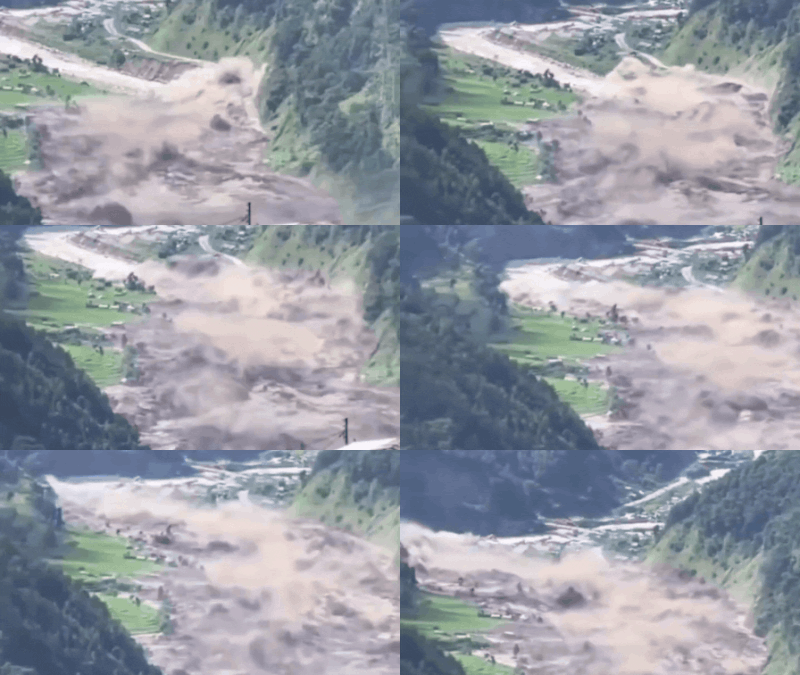
Whistles and shouts became the last line of warning along stretches of Trishuli and Bhote Koshi river on Wednesday as the Nepal-Tibet flood tore downstream, forcing residents to scramble up the banks while the river rose by nearly 30ft in just 30 minutes at one monitoring point.The speed of the rise left little margin for delay. ICIMOD said Trishuli at Galchhi rose by as much as nine metres — nearly 30ft — within 30 minutes, while Malekhu recorded a seven-metre rise over a similar period. Several monitoring stations were damaged or swept away as the flood moved downstream.Nepal’s warning system began sending alerts after authorities learnt of the flood, but the upper-basin network failed to provide advance notice. Binod Parajuli, senior divisional hydrologist at Flood Forecasting Division, said automatic stations in upper Bhote Koshi stopped transmitting before they could alert officials. “None of the stations was able to send us an alert,” he said.More than 600,000 SMS alerts were later sent to riverbank communities in Rasuwa, Nuwakot, Dhading and Chitwan. Officials said those warnings helped many people farther downstream, but residents in some locations still had to rely on what they could see and hear around them. Parajuli acknowledged the uneven outcome. “We failed in Rasuwa,” he said. “But we sent warnings to Nuwakot and downstream areas, and possibly several hundred people were able to save their lives.”He said Nepal needed denser real-time monitoring and faster cross-border information sharing for sudden Himalayan hazards. “If we can install sensors extensively in the mountains and receive information as soon as an event occurs, we can give people downstream enough time to move to safety,” he said.————–Box——————-Chinese Embassy rejects claims it failed to issue timely warningChinese Embassy in Kathmandu on Thursday rejected allegations that China failed to provide timely warning about the devastating flood in Rasuwagadhi-Kerung border area, calling claims circulating in Nepal “fake news” and “misleading”. The embassy disputed two allegations — that Nepal suffered heavy casualties because China did not issue an early warning, and that a geological disaster dam on the Chinese side collapsed and caused widespread destruction downstream in Nepal.It said the sequence of events was different and maintained that a landslide triggered by an earthquake or an earthquake-like tremor occurred on the Nepali side on the morning of Aug 26, 2026. The clarification came amid questions in Nepal over whether timely upstream information could have reduced casualties.Chinese Embassy urged both countries to concentrate on search, rescue and relief operations instead of assigning blame. “Blame solves nothing; cooperation saves lives,” it said.

Leave a Reply