

American entrepreneur Bryan Johnson, who is touted to be the ‘world’s most measured human’, recently revealed that he has an autoimmune disease that about 2-5 per cent of people or more also have. “Bad news #1: I have an autoimmune disease. My stomach is eating itself. Bad news #2: 2–5% of people have this, too. Likely more, because it hides,” he said in a post on X, adding that the “good news” is that he is “going to try and solve it”.
DISCLAIMER: This article is based on information from the public domain and/or the experts we spoke to. Always consult your health practitioner before starting any routine.
He then mapped his childhood and adult diet trajectory in detail. “As a kid, I ate sugar cereal, drank sugary soda, and gobbled down fast food. I had a few healthy years in my early 20s, but then became a young father of three and began building a business. Juggling that stress and grind, I let my health slip and gained 40 lbs. Within a few years, I’d fallen into a deep, chronic depression. Somewhere in that timeline, my body began developing an autoimmune process affecting my thyroid and then my stomach lining. It’s called Autoimmune Gastritis (AIG). My hypothyroidism got diagnosed when I was 21 years old with a routine blood draw. That enabled me to begin proactive management, supplementing levothyroxine and Armour Thyroid. They are the hormones my body should be producing on its own but wasn’t. By taking these pills daily, my body was able to operate as though my thyroid was functioning properly. What I didn’t know was that something else was going on inside my body: my stomach had begun attacking itself. But there was no routine test to find out, and I didn’t have any symptoms,” said the 48-year-old.
Adding that the diagnosis came in May this year, he continued: “I’m unsure how long I’ve had it. AIG causes irreversible damage: nutritional deficiency, anemia, and over a long horizon, elevated cancer risk. When AIG is discovered today, standard medical care concedes defeat, stating that nothing can be done except managing the condition, no matter how awful or lethal the effects. Looking back over the past few years, I can now see the early signals we were picking up in measurement but hadn’t connected the dots. For 11 years, I’ve had low ferritin, without anemia. We continually tried to raise my iron levels with food and supplementation but nothing would work. We chased the obvious solutions first. A plant-based diet means all my iron is the hard-to-absorb, non-heme kind. Hard training, sauna, and hyperbaric oxygen all raise the body’s demand for iron. But none of them explained the core failure: despite me taking iron orally, trialing every formulation, and using every timing trick, none of the iron would stick.”
Bad news #1:
I have an autoimmune disease. My stomach is eating itself.
Bad news #2:
2–5% of people have this, too. Likely more, because it hides.
Good news:
I’m going to try and solve it. Will share all.
As a kid, I ate sugar cereal, drank sugary soda, and gobbled down… pic.twitter.com/EbJ8a916uS
— Bryan Johnson (@bryan_johnson) June 30, 2026
To understand better, we asked experts.
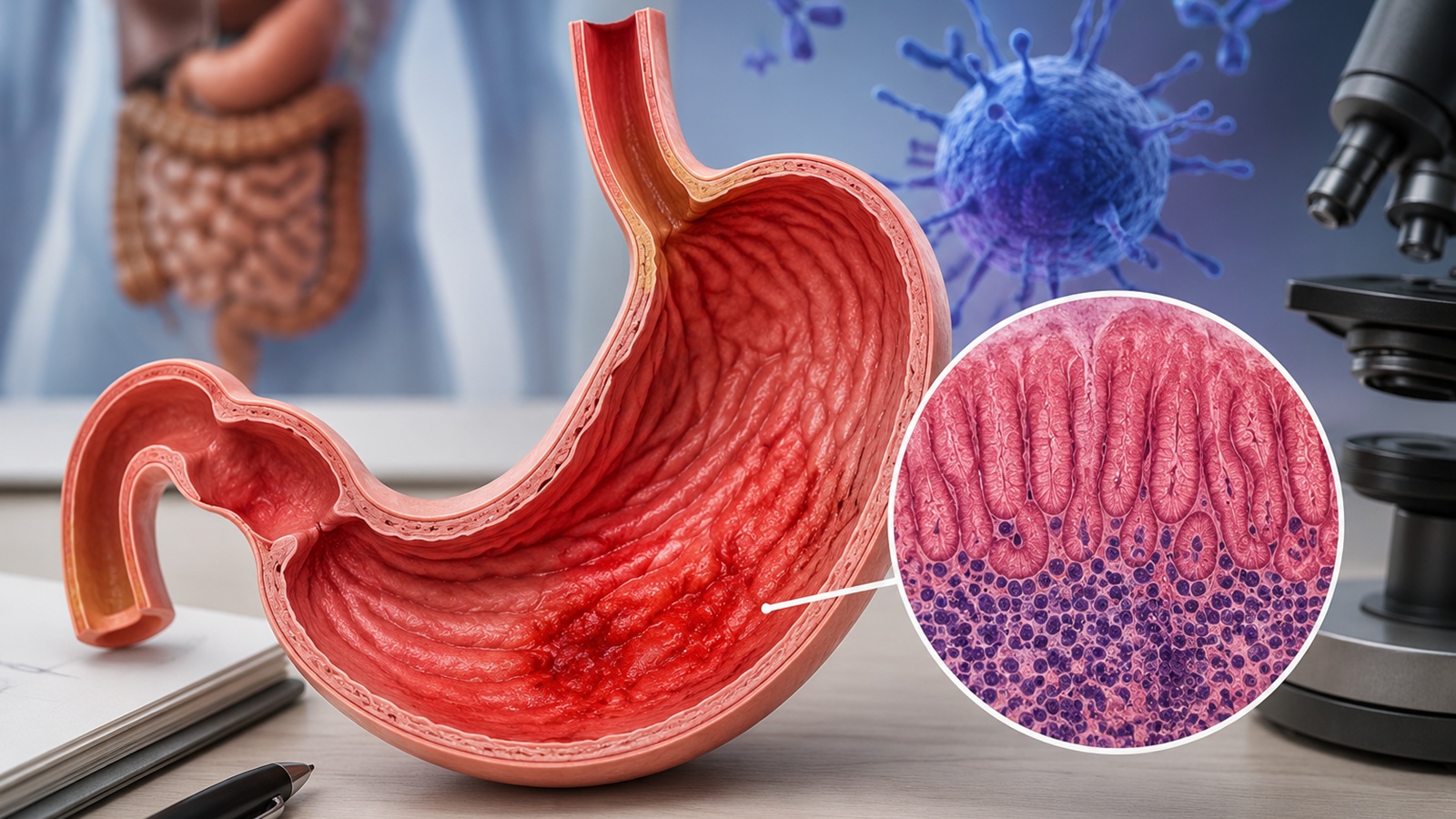
Dr Ruby Taparia, associate consultant, rheumatology, KIMS Hospitals, Thane, explained that autoimmune gastritis is a condition where the immune system mistakenly attacks the stomach’s acid-producing cells. “The problem is that it usually develops quietly. Many people don’t show clear digestive symptoms in the beginning, so it often goes unnoticed for years. In fact, the first signs might appear outside the stomach, like ongoing fatigue, low iron levels, vitamin B12 deficiency, or unexplained weakness,” said Dr Taparia.
Concurring, Dr Manjusha Agarwal, consultant, internal medicine, Gleneagles Hospital Mumbai, said over time, the condition damages the stomach lining and reduces the production of stomach acid and a protein called intrinsic factor, which is essential for absorbing vitamin B12. “If left untreated, it can lead to vitamin B12 deficiency, anemia, and, in some cases, increase the risk of stomach-related complications. The exact cause is not fully understood, but it is linked to autoimmune diseases, where the immune system attacks healthy tissues. People with conditions such as thyroid disorders, type 1 diabetes, or vitiligo may have a higher risk of developing autoimmune gastritis. Symptoms often develop slowly and may include tiredness, weakness, pale skin, abdominal discomfort, bloating, nausea, loss of appetite, indigestion, numbness or tingling in the hands and feet due to vitamin B12 deficiency, and difficulty concentrating,” the expert told indianexpress.com.
Is there a link between autoimmune thyroid disease and autoimmune gastritis?
Yes, affirmed Dr Taparia, elucidating that autoimmune diseases often occur together. “People with one autoimmune condition, especially autoimmune thyroid disorders, have a greater chance of developing another autoimmune disease, including autoimmune gastritis. This connection is so well-known that it’s often called ‘thyrogastric syndrome’. Therefore, when someone with autoimmune thyroid disease has unexplained nutritional deficiencies, it should encourage doctors to look further than the obvious,” said Dr Taparia.
Story continues below this ad
 Here’s what you should consider (Photo: AI Generated)
Why shouldn’t low ferritin levels be ignored, even without anaemia?
Ferritin shows the body’s iron stores. “A person can have significantly low iron levels while their haemoglobin stays normal. Ongoing low ferritin, especially when it doesn’t improve with diet or supplements, needs attention. It may signal that something is disrupting iron absorption. Finding the underlying cause early can help avoid long-term issues and nutritional deficits,” said Dr Taparia.
Diagnosis usually involves blood tests to check vitamin B12 levels, anemia, and autoimmune antibodies, along with an upper gastrointestinal endoscopy when needed.
Can autoimmune gastritis be cured?
According to Dr Taparia, currently, there is no known cure for autoimmune gastritis. “The focus is on early diagnosis, monitoring for nutritional deficiencies, replacing missing nutrients, and regular check-ups for patients at higher risk of complications. However, our understanding of autoimmunity is changing quickly. Developments in precision medicine and immunology are leading to new research, providing hope that future treatments may go beyond managing symptoms and more effectively target the disease,” said Dr Taparia.
Dr Agarwal said that management focuses on treating vitamin B12 deficiency through supplements or injections, correcting iron deficiency if present, monitoring stomach health regularly, and managing associated autoimmune conditions. “A balanced diet, regular follow-up with an internal medicine specialist, and early diagnosis can help prevent long-term complications and maintain overall health,” said Dr Agarwal.
Story continues below this ad
What to note?
Just because there are no symptoms doesn’t mean there is no disease. “Ongoing fatigue, unexplained low iron levels, or nutritional deficiencies should not be dismissed as lifestyle issues. Sometimes, small abnormalities are early signs of an underlying autoimmune process that needs prompt evaluation,” said Dr Taparia.
Bryan Johnson has been trending on Google for the past 24 hours
DISCLAIMER: This article is based on information from the public domain and/or the experts we spoke to. Always consult your health practitioner before starting any routine.

Leave a Reply