
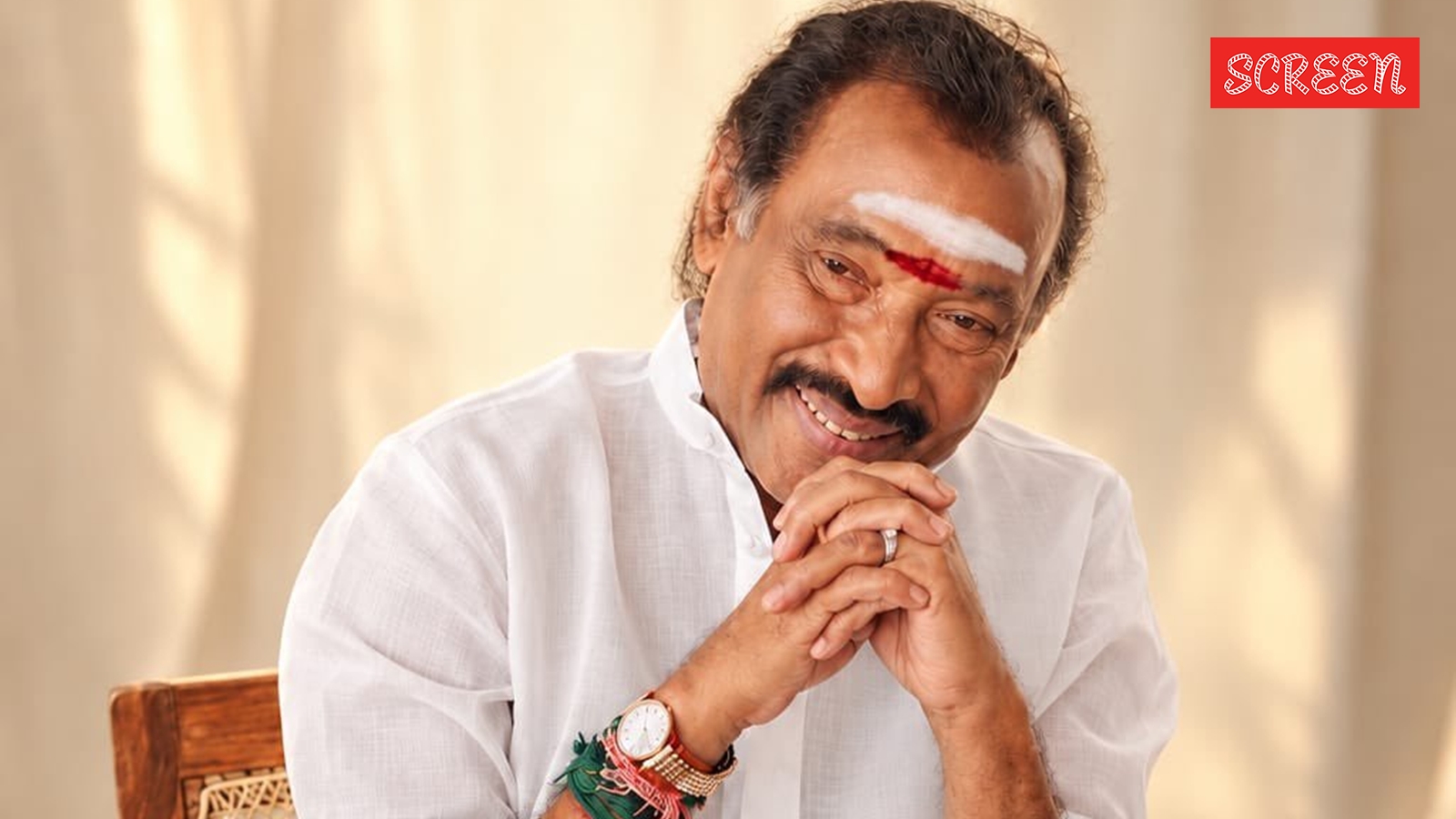
Devanesan Chokkalingam, known as Deva , the music composer who gave Rajinikanth the Annamalai and Baashha soundtracks, scored the albums that helped establish both Ajith Kumar and Vijay as leading men and brought North Chennai’s gaana music into the mainstream of Tamil cinema, passed away in Chennai on Saturday following a heart attack. He was 75.
Known to the industry as Deva and to audiences as Thenisai Thendral, a title given to him by legendary composer M.S. Viswanathan in 1985, he composed music for over 400 films across Tamil, Telugu, Kannada and Malayalam cinema in a career that began in 1986 and never fully stopped. His death marks the end of a musical legacy that shaped how an entire generation heard Tamil cinema.
Deva was admitted to a private hospital in Kodambakkam around 8:30 AM on Saturday and was declared dead shortly after.
Also Read: Tamil cinema mourns Deva: Rajinikanth arrives in tears, Kamal Haasan remembers ‘dear brother’
How Annamalai changed everything
In 1992, producer K Balachander reportedly had a misunderstanding with Ilaiyaraaja, the composer who had scored virtually every major Rajinikanth film for over a decade. Balachander needed a new composer for his upcoming production Annamalai. One evening, Balachander called and told Deva he wanted him to compose the music for his next film. Just before hanging up, he mentioned the hero: Rajinikanth.
Both the superstar and director Suresh Krissna were reportedly worried about the choice. They did not know if Deva could deliver what a Rajinikanth film demanded.
What Deva delivered was the Annamalai soundtrack. It eventually became a complete musical identity that fused with Rajinikanth’s screen persona so completely that 34 years later, when the Annamalai theme plays in a theatre during a re-release, the audience still erupts. Annamalai went on to become the highest-grossing Tamil film of 1992, the same year A.R. Rahman made his debut with Roja.
Story continues below this ad
He continued the Rajinikanth collaboration with Baashha and Arunachalam, completing a trilogy that redefined the musical template for what a Rajinikanth film sounds like: high-energy introductions, folk-inflected mass numbers and background scores built to amplify the superstar’s physical presence on screen.
The composer who built two rival superstars
What makes Deva’s career unusual is not just the Rajinikanth connection. It is what happened next. In the five years between 1995 and 2000, Deva composed the albums that accompanied the rise of both Ajith Kumar and Vijay, the two actors who would go on to dominate Tamil cinema for the next two decades and whose fan bases would split the audience into camps that have never reconciled. Both were musically raised by the same man, in the same studio, during the same years.
For Ajith, the timeline is specific. Aasai, produced by Mani Ratnam, was Ajith’s first major breakthrough. Deva composed the music and won the Tamil Nadu State Film Award for Best Music Director for it. Kadhal Kottai, directed by Agathiyan, ran for over 275 days at the Tamil Nadu box office and established Ajith as a romantic hero. Songs like ‘Kaalamellam Kadhal’ shaped how the public saw Ajith: soft, emotionally accessible, romantic. Deva’s music positioned Ajith as a romantic star years before he reinvented himself as an action hero.
Story continues below this ad
For Vijay, the connection runs just as deep. In 1995, Deva composed a film literally called Deva starring Vijay. In 1997, he scored Nerrukku Ner, directed by Vasanth, which featured both Vijay and a young Suriya before either of them had fully arrived. ‘Aval Varuvala’ from that film remains one of the most recognised Tamil songs of the 1990s. Then came Priyamudan, Ninaithen Vandhai and Kushi, directed by SJ Suryah, starring Vijay and Jyothika. Kushi became one of the biggest romantic comedies in Tamil cinema history. Its album was among the best-selling of its era. Deva won the Tamil Nadu State Film Award for Best Music Director for it. The film cemented Vijay’s image as a youthful, energetic, accessible star, and Deva’s music was the vehicle that carried that image to the audience.
The gaana revolution
Beyond the stars, Deva’s most significant cultural contribution was bringing gaana into the mainstream. Gaana is the street folk form that originated in the working-class neighbourhoods of North Chennai. Before Deva, it lived on the margins of Tamil film music. The industry considered it too raw, too local, too rough for polished commercial cinema.
Deva did not use gaana as a novelty. He built his entire sound around it. He took the rhythms, the vocal texture, the unpolished energy of a form that belonged to tea shops and street corners and made it the foundation of film soundtracks that reached audiences across Tamil Nadu and beyond. By making gaana commercially successful in mainstream cinema, he gave a working-class art form a legitimacy the industry had denied it for decades.
Also Read: Rajinikanth reveals an unknown fact about Deva
“It is because of gaana that I became known around the world,” he said in a 2024 interview.
Story continues below this ad
The title Thenisai Thendral, meaning “breeze of sweet music,” was given to him by M.S. Viswanathan at a felicitation event at the Tiruverkadu Temple in Chennai in 1985, where Deva was being honoured for composing a large number of devotional albums. Viswanathan told the industry: “He has the potential to make a significant impact.” Within months, Deva had his first major film opportunity.
Still composing at 75
Deva never stopped working. He composed for the Tamil film Charukesi in 2026. In a June 2026 interview, four months before his death, he spoke about wanting to explore classical music and how Charukesi had helped fulfil that long-standing ambition. In March 2026, he performed at a concert in Penang, Malaysia. In 2023, he sang for the video game Venba, a Tamil cultural project about cooking and immigrant identity that brought his voice to a generation that may never have seen Annamalai or Baashha. He was 75 and still thinking about what he had not yet done.

Leave a Reply