
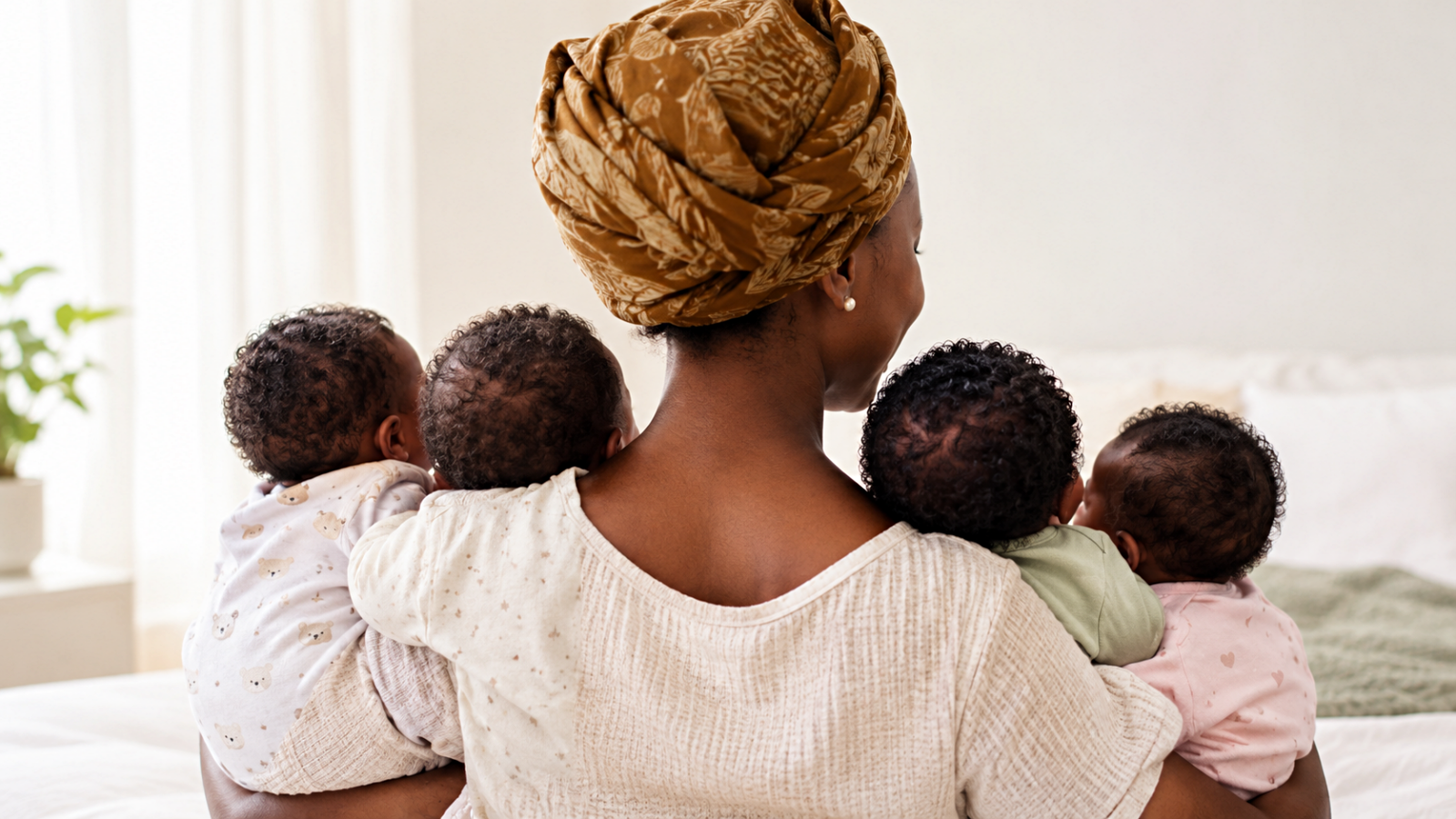
Olusola Olonade married at 48 and became a mother to four babies at 50 after undergoing in vitro fertilisation (IVF). Her story is drawing attention after BBC Africa shared a video of her speaking about her journey to motherhood, her faith and her hopes for her children’s future.
In the video, Olonade says she did not expect to have four babies at once. She explains that her faith and her family’s history of fertility gave her confidence about becoming a mother, before she eventually opted for IVF. She also acknowledges that the treatment does not always succeed.
Looking ahead, she hopes to watch her children grow up and become parents themselves. “By the grace of God, I’ll live to be a great-grandmom,” she says.
While her experience highlights the possibilities of reproductive medicine, pregnancy at 50, particularly with quadruplets, involves significant medical challenges. We spoke to Dr Aswati Nair, Clinical Director and Fertility Specialist at Nova IVF Fertility, Rajouri Garden, Delhi, about how rare such a pregnancy is, the role of IVF and the risks involved.
DISCLAIMER: This article is based on information from the public domain and/or the experts we spoke to. Always consult your health practitioner before starting any routine.
How rare is it to have quadruplets at 50?
 The likelihood of complications is higher, and such pregnancies require specialised care and close monitoring throughout pregnancy.
“Pregnancy at 50 is uncommon, and delivering quadruplets at this age, especially during a first pregnancy, is an exceptionally rare occurrence,” Dr Nair tells indianexpress.com.
Explaining why conception becomes more difficult with age, she explains, “Female fertility declines with age due to a reduction in both the number and quality of eggs. By the age of 50, natural conception is extremely unlikely, and most women have reached menopause or are approaching it.”
IVF may make pregnancy possible for some women at this age, often with the help of donor eggs or embryos, depending on individual circumstances. However, without detailed clinical information about the treatment and circumstances of conception, the exact rarity of Olonade’s case cannot be established.
Story continues below this ad
Dr Nair also cautions against viewing such a case as a predictable outcome of fertility treatment. “While this case demonstrates the possibilities of modern reproductive medicine, it should not be interpreted as a typical or predictable outcome of fertility treatment.”
What are the risks of pregnancy at 50, especially with quadruplets?
Pregnancy at an advanced maternal age carries a higher risk of complications, and carrying four babies adds further challenges.
“A pregnancy at 50 carries increased risks of high blood pressure, pre-eclampsia, gestational diabetes, blood clots and delivery complications,” Dr Nair explains.
She adds that carrying quadruplets increases the risks for both the mother and babies. “Carrying quadruplets further increases the likelihood of premature birth, low birth weight, fetal growth problems and the need for prolonged neonatal intensive care.”
Story continues below this ad
Multiple pregnancies also place additional strain on the mother’s cardiovascular system and other organs. There may be a greater likelihood of Caesarean delivery and postpartum complications.
Dr Nair says such pregnancies require close supervision by a multidisciplinary team, including fertility specialists, obstetricians, maternal-fetal medicine experts and neonatologists, to manage potential complications and improve outcomes for both mother and babies.
How does pregnancy at 50 differ from pregnancy in your 20s, 30s or 40s?
 IVF can help overcome certain fertility challenges, but it cannot eliminate the health risks associated with advanced maternal age
Age affects fertility, the likelihood of conception and the risks associated with pregnancy. Women in their 20s and early 30s generally have a better ovarian reserve and higher egg quality, with lower risks of miscarriage and chromosomal abnormalities.
During the late 30s and 40s, fertility declines, conception may take longer, and the chances of pregnancy-related complications increase.
Story continues below this ad
By 50, natural conception is extremely uncommon, particularly after menopause. “Pregnancy at this age carries higher risks of gestational diabetes, high blood pressure, pre-eclampsia, blood clots and cardiovascular complications,” Dr Nair says.
The risks of premature birth and other newborn complications may also increase, especially in multiple pregnancies. Women considering pregnancy at an advanced age therefore need detailed pre-pregnancy counselling, comprehensive health screening and close monitoring by fertility specialists and obstetricians.
Can women have a baby at 50 through IVF?
IVF may offer a route to pregnancy for selected women in their 50s, often using donor eggs or embryos. However, whether treatment is suitable depends on a woman’s overall health, uterine condition and medical assessment.
Dr Nair stresses the importance of evaluating a woman’s health before starting treatment. This includes assessing blood pressure, blood sugar levels and heart health, as well as whether she can safely carry a pregnancy.
Story continues below this ad
“IVF can help overcome certain fertility challenges, but it cannot eliminate the health risks associated with advanced maternal age,” she says.
She adds that women considering pregnancy at this age should receive detailed counselling about success rates, maternal health risks and potential challenges for their babies.
Olonade’s experience highlights what reproductive medicine may make possible, but it does not guarantee the same outcome for others. Pregnancy at 50, particularly with quadruplets, requires careful planning, realistic expectations and close medical monitoring to support the health of both mother and babies.
DISCLAIMER: This article is based on information from the public domain and/or the experts we spoke to. Always consult your health practitioner before starting any routine.

Leave a Reply