
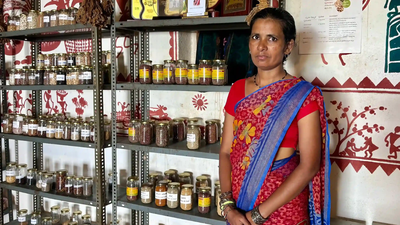
In 2018, Bibijaan Maulasaab Halemani brought together 14 women from her village in Karnataka with a common goal: to save traditional crop seeds that were disappearing from local farms. Eight years later, the small women’s collective has grown into a community-led agricultural initiative working across 30 villages, helping farmers revive millet cultivation and preserving hundreds of indigenous seed varieties.The group, known as the Bibi Fatima Women’s Self-Help Group (SHG), has now been selected for the Plant Genome Saviour Community Award, instituted by the Protection of Plant Varieties and Farmers’ Rights Authority (PPVFRA) under the Union Ministry of Agriculture and Farmers’ Welfare. The award carries a cash prize of ₹10 lakh, a certificate and a memento. The award ceremony is scheduled to take place in New Delhi on November 12, 2026.As reported by The New Indian Express, the group was recognised for conserving indigenous crop varieties, protecting traditional seeds and promoting sustainable farming practices. For Halemani, however, the work began with an interest she inherited from her father and a concern that crops familiar to earlier generations were slowly disappearing from the fields.
Her father’s seed-saving practice inspired her
Halemani, who belongs to Teertha village in Kundgol taluk of Karnataka’s Dharwad district, grew up watching her father conserve seeds. His practice stayed with her and eventually influenced her own decision to preserve traditional varieties.She and 14 other women initially began collecting indigenous seeds from different places. Their intention was to make good-quality traditional seeds available to farmers and encourage the cultivation of crops suited to local conditions. The initiative received guidance and support from Sahaja Samrudha, an organisation working to promote organic farming and sustainable agriculture.The women also noticed that millet cultivation had declined in their region. Farmers were increasingly moving towards crops such as maize, cotton and rice, while several traditional millet varieties were becoming less common.In a March 2026 report by the Good Food Movement, Halemani had observed this change after 2007. Farmers were moving away from millets partly because they did not find cultivation profitable and found cleaning the grains after harvesting difficult.
From a small seed bank to hundreds of traditional varieties
The group established its community seed bank in 2018 in a space next to Halemani’s house. Initially, the women focused on collecting and distributing millet seeds. Gradually, the collection expanded to include pulses, oilseeds, paddy and vegetables. The seed bank also developed a system in which farmers could borrow seeds and return a larger quantity after harvesting.According to The New Indian Express, the group now preserves more than 250 varieties of seeds, including millets, pulses, paddy and vegetables. Its collection includes 70 varieties of finger millet, 25 varieties of little millet, two varieties of browntop millet, 25 varieties of horse gram, 10 varieties of chickpea and 25 varieties of paddy. It also preserves foxtail millet, green gram, oilseeds and several indigenous vegetables.The group gives farmers access to indigenous seeds, with particular attention to varieties that can withstand changing weather conditions. Many of the traditional millets are adapted to local agro-climatic conditions and can tolerate variations in rainfall.
How the women persuaded farmers to grow millets again
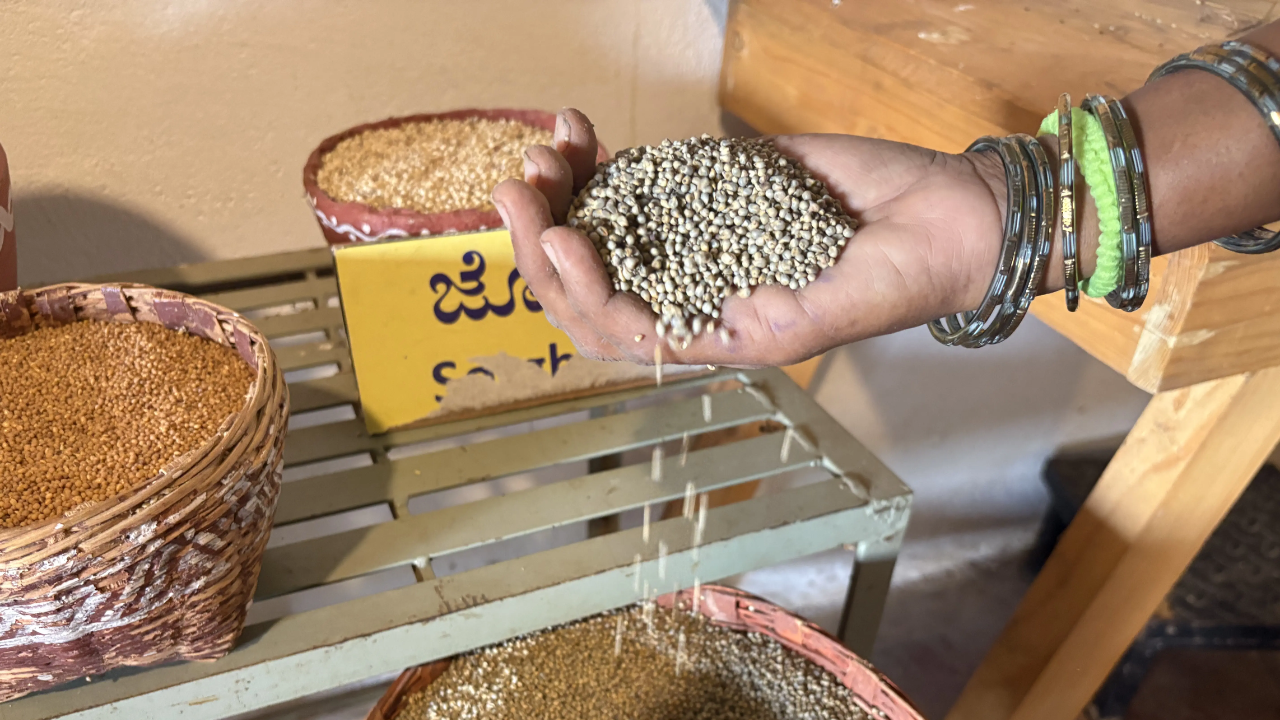
Photo credit: Good Food Movement
Building the seed bank was only one part of the group’s work. The women also had to convince farmers to return to crops that many had stopped cultivating. In its early years, the group visited farms in different taluks, spoke to cultivators and explained the benefits of millet farming. Farmers were initially sceptical and did not always attend their meetings.The women then began distributing Navdanya kits supplied by Sahaja Samrudha. Each kit contained nine types of millet seeds that could be cultivated on a one-acre plot, giving farmers an opportunity to experiment with different varieties. Gradually, more cultivators became interested.The group’s efforts have contributed to the revival of millet-based mixed cropping systems in 30 villages in rainfed farming areas.
The women also built a millet processing business
The group’s work gradually expanded beyond conserving seeds. One problem they noticed was that farmers found it difficult to clean and process millets after harvesting. This made cultivation less attractive despite the availability of traditional seeds. To address this, the women established a millet processing unit in Teertha in 2022, with support from Sahaja Samrudha, the Indian Institute of Millets Research in Hyderabad and the CROPS4HD project.The unit is run by the women themselves. The SELCO Foundation provided solar power to help reduce electricity expenses, while the Millet Foundation in Bengaluru trained the members to operate the machinery. The organisation helps farmers process and market millet products while reducing their dependence on middlemen.
From being mocked to receiving international recognition
The group’s journey was not without resistance. In the early years, members faced scepticism from people in their village, who did not take their work seriously.Halemani recalled that even carrying a shoulder bag for work invited remarks from some villagers. The women also faced difficulties while trying to open a bank account for their collective work. Halemani recalled being treated disrespectfully by a bank manager when she took a phone call during the process.Over time, the group’s work began receiving recognition. Now, its selection for the ₹10 lakh Plant Genome Saviour Community Award adds another national recognition to the group’s work.

Leave a Reply