
4 min readNew DelhiJul 10, 2026 03:56 PM IST
Injectable cholesterol-lowering therapies are gaining attention as an option for people whose cholesterol levels remain stubbornly high despite medication. Unlike cholesterol-lowering tablets, however, these injections are not meant for everyone. In a recent Instagram post, Delhi-based cardiologist Dr Naveen Bhamri explained that these treatments are recommended only for select groups of patients and should always be prescribed after proper medical evaluation.
Explaining who may benefit, Dr Bhamri said, “Yes, injections are available, but they are mainly for people who cannot tolerate statins, those who don’t reach their target LDL levels despite taking statins, patients with high-risk heart disease and recurrent heart attacks, or those with familial hypercholesterolemia. In these four categories, we can use injectable therapy.” Familial hypercholesterolemia is an inherited condition that causes very high cholesterol levels from an early age, significantly increasing the risk of cardiovascular disease if left untreated.
DISCLAIMER: This article is based on information from the public domain and/or the experts we spoke to. Always consult your health practitioner before starting any routine.
Dr Bhamri also highlighted that there are currently two injectable therapies that target the PCSK-9 pathway to lower LDL cholesterol. “One is a PCSK-9 inhibitor, which blocks the PCSK-9 protein and helps reduce LDL cholesterol. It is given as a subcutaneous injection, and one dose is typically needed every two to three weeks,” he explained. He added that another option is “Inclisiran, which also inhibits PCSK-9, although its mechanism is slightly different. It is long-acting, and only two or three injections are needed in a year.”
While these treatments have shown promise, Dr Bhamri stressed that they are not a substitute for medical advice or lifestyle measures. “If you’re not able to control your cholesterol with tablets, injectable therapy can be a game-changer. It is safe, effective, and helps reduce the risk of heart attack,” he said. But how do these injections actually work, who is most likely to benefit from them, and what should patients know before considering them? We asked an expert.
How cholesterol-lowering injections work
Dr Rahul Mehrotra, Chief, NIC & Clinical Cardiology, Artemis Hospitals, tells indianexpress.com, “Cholesterol-lowering injections work differently from statins because they increase the liver’s removal of ‘bad’ LDL cholesterol from the blood. Most shots target a protein known as PCSK9, which enables the liver to remove LDL cholesterol more efficiently.”
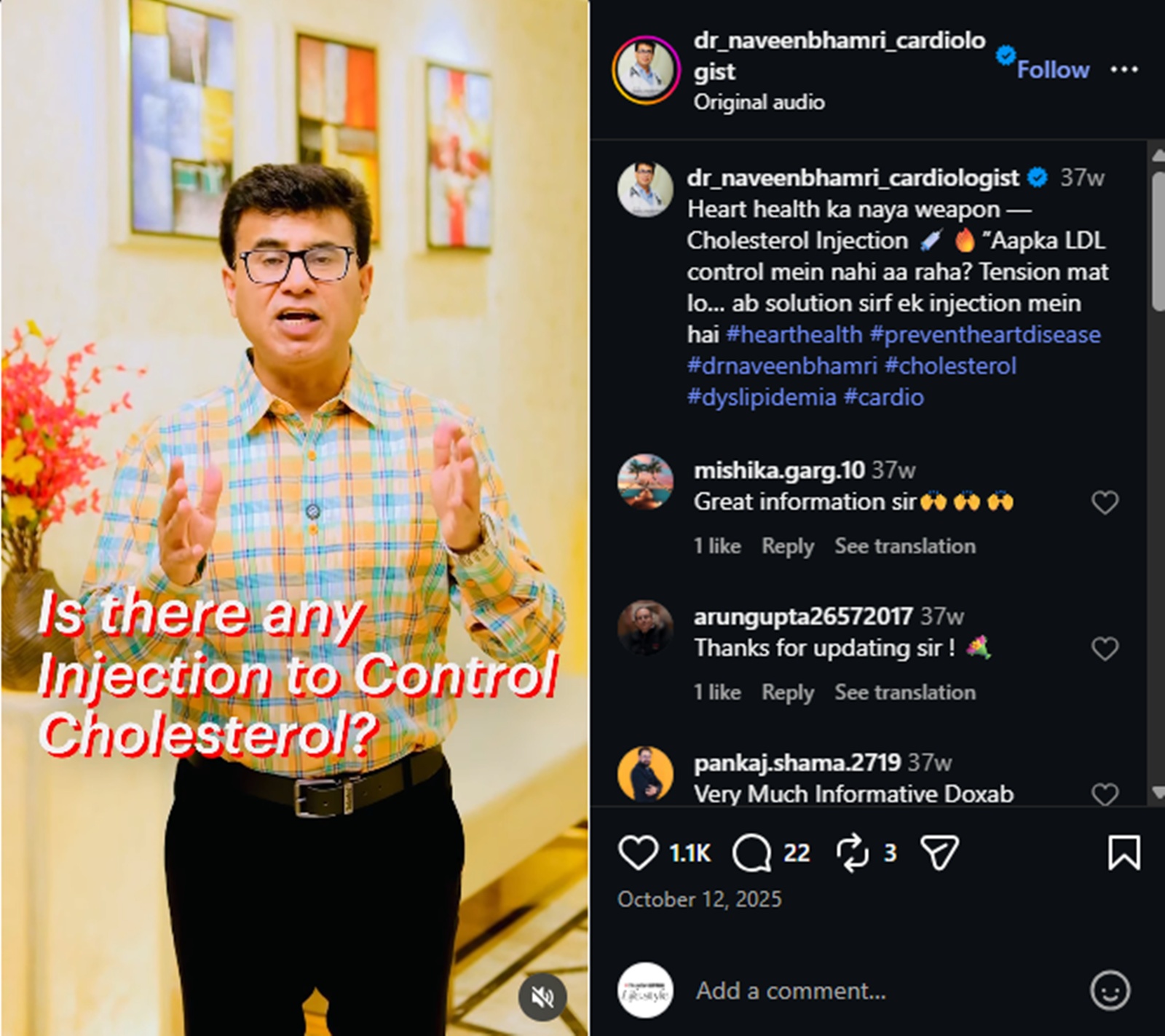 Who should consider cholesterol-lowering injections? (Source: Instagram/Dr Naveen Bhamri Cardiologist)
He adds that statins mainly work by reducing the amount of cholesterol that the body produces. These injections are particularly useful for those with inherited high cholesterol, individuals with heart disease and patients whose cholesterol stays high despite taking the highest dose of statins they can tolerate and who cannot tolerate statin-related side effects.
Story continues below this ad
Lifestyle habits that remain essential
Dr Mehrotra stresses that cholesterol injections work best in conjunction with a heart-healthy lifestyle. Eating more fruits, vegetables, whole grains, legumes, nuts and healthy fats and eating fewer fried foods, processed snacks, and sugary drinks helps to improve cholesterol levels.
He notes, “Regular exercise, such as brisk walking for at least 30 minutes most days, strengthens the heart. Just as important as lowering cholesterol and risk of heart attacks are maintaining a healthy weight, quitting smoking, limiting alcohol, managing stress and getting enough sleep.”
Is a cholesterol injection right for you?
Click each point to learn what you should discuss with your doctor before starting treatment:
💉 Possible side effects
Mild side effects may include redness, swelling or pain at the injection site, flu-like symptoms and muscle aches.
Story continues below this ad
💰 Long-term considerations
These medicines require regular injections and can be expensive, which may affect long-term access and adherence.
🩺 Questions to discuss with your doctor
Review your cholesterol levels, heart disease risk, previous response to statins, other medical conditions, current medicines, pregnancy plans, treatment costs and the need for regular follow-up.
✅ Key takeaway
Cholesterol-lowering injections are not suitable for everyone. The decision should be based on an individual assessment of your cardiovascular risk, treatment goals and overall health.
DISCLAIMER: This article is based on information from the public domain and/or the experts we spoke to. Always consult your health practitioner before starting any routine.

Leave a Reply