
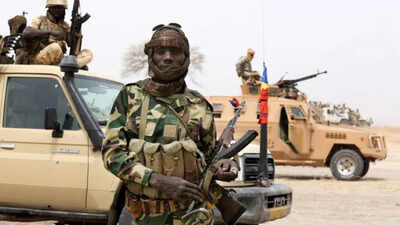
Artificial intelligence is increasingly moving beyond its everyday uses in writing, research and answering questions, and a new research has highlighted how the technology is also being exploited by armed groups.Boko Haram fighters have been using AI chatbots from major technology companies to seek technical advice, plan attacks and troubleshoot problems during combat, according to study by the University of Cambridge.The findings are based on interviews with 27 former members of the group’s two factions: Islamic State West Africa Province (ISWAP) and Jama’at Ahl as-Sunnah lid-Da’wah wa’l-Jihad (JAS), according to AL Jazeera.Several former members told researchers they routinely used OpenAI’s ChatGPT, Anthropic’s Claude, Google’s Gemini, xAI’s Grok, Meta AI and China’s DeepSeek for technical and military advice before, during and after attacks.Separately, material obtained by Al Jazeera showed supporters of the wider ISIL (ISIS) movement discussing ways to bypass AI safety controls and obtain weapons-related information.Researchers from Tech Against Terrorism found such discussions on a pro-ISIL online technical forum. The findings come amid growing concern over the use of emerging technologies by extremist groups.UN officials warned the Security Council in February about increased use of advanced AI by ISIL and its affiliates, while researchers and technology experts have raised concerns that AI capabilities are advancing faster than safety measures.“There is nothing we haven’t received an answer on,” a former ISWAP commander told the researchers.
How are they turning AI into battlefield tools
The Cambridge research describes an organised effort to introduce AI tools to senior members of ISWAP.According to former fighters, operatives travelled to ISWAP-controlled areas to train senior members in using AI systems. Fighters were gathered around laptops and projectors and shown how to interact with chatbots and get around safeguards designed to prevent dangerous responses.“The white guys came and taught us,” one former commander recalled, AL Jazeera reported. “They assembled the top people in a room and used a projector to show how it works on a big screen,” he added.Former fighters said trainers provided laptops equipped with privacy and encryption tools and helped members set up accounts and paid subscriptions to multiple AI platforms.The research suggests that AI use went beyond individual fighters occasionally consulting ChatGPT. Both ISWAP and JAS reportedly developed dedicated AI units involving people with technical and operational expertise, including engineers, weapons specialists and bomb-makers.One former JAS commander described a 23-member unit working from a solar-powered room, where members answered questions, analysed information and trained senior commanders.“‘Ask how can I build a bomb?’ and then it tells you how,” a former Boko Haram commander said. “It is like a human robot. We used it a lot.” “God has helped us, and so will AI,” another former member added.
AI as an on-demand technical adviser
Antonia Juelich, who authored the Cambridge study, told Al Jazeera that about 10 of the 27 people interviewed discussed using AI in connection with explosives.Juelich said the concern was not simply that AI could provide information about weapons, much of that information was already available through manuals and online sources. The greater concern, she said, was the ability of AI systems to respond to specific problems and provide follow-up answers.Former fighters described consulting chatbots while working with limited materials and returning to the systems when they encountered difficulties.Researchers also heard accounts of AI being consulted in connection with unexploded military ordnance and the adaptation of commercially available drones for attacks.
How to operate firearms: ‘Just ask Grok’
The reported use of AI extended beyond explosives and into other aspects of combat. In one account, a fighter used a body-mounted camera to send images back to his base.A commander then uploaded the footage to ChatGPT to analyse the situation and relay instructions to fighters on the ground.Former fighters also described consulting AI when they encountered unfamiliar weapons. In one instance, when commanders asked an AI specialist how to operate newly acquired firearms, the response was, “Just ask Grok.”AI was also reportedly consulted after government forces changed battlefield tactics, including digging trenches around bases to prevent motorcycle attacks. Former fighters said commanders used AI to explore possible ways around such obstacles.According to another former ISWAP member, commanders also used AI to assess battlefield tactics after suffering heavy losses in an operation. Former members said they continued consulting chatbots after failed operations, explaining what had happened and asking the systems to help identify possible reasons for failure.
How ISIL supporters are bypassing AI safeguards
The use of AI is not limited to fighters operating on the ground. Tech Against Terrorism researchers who accessed a pro-ISIL technical forum found supporters discussing ways to circumvent the safeguards built into AI systems to prevent dangerous requests.One supporter compared the process to modifying a car.“It’s like removing the speed limiter of the car,” the user wrote. “The car still works but now it’s become more useful and it can go way faster than the manufacturer intended.”Lucas Webber of Tech Against Terrorism said researchers were seeing growing discussion around attempts to “jailbreak” AI systems, a term used for efforts to make models ignore their safety restrictions.“This is the tip of the iceberg,” he said. Juelich said requests for information that could facilitate bomb-making should fall clearly outside AI companies’ permitted uses.“They are jailbreaking, circumventing the restrictions,” she said, arguing that increasingly powerful AI systems may require stronger regulation.Major AI companies say they have safeguards intended to prevent their systems from being misused for terrorism, violence and weapons development.The debate comes as concerns grow over whether AI safety measures are keeping pace with the rapid development of increasingly capable systems.The Cambridge interviews largely describe AI use by Boko Haram factions during 2023 and 2024. Juelich told Al Jazeera that the findings were particularly concerning because AI systems have advanced significantly since then.She was worried about what the same fighters might now be capable of doing with more advanced AI systems available in 2026.

Leave a Reply