
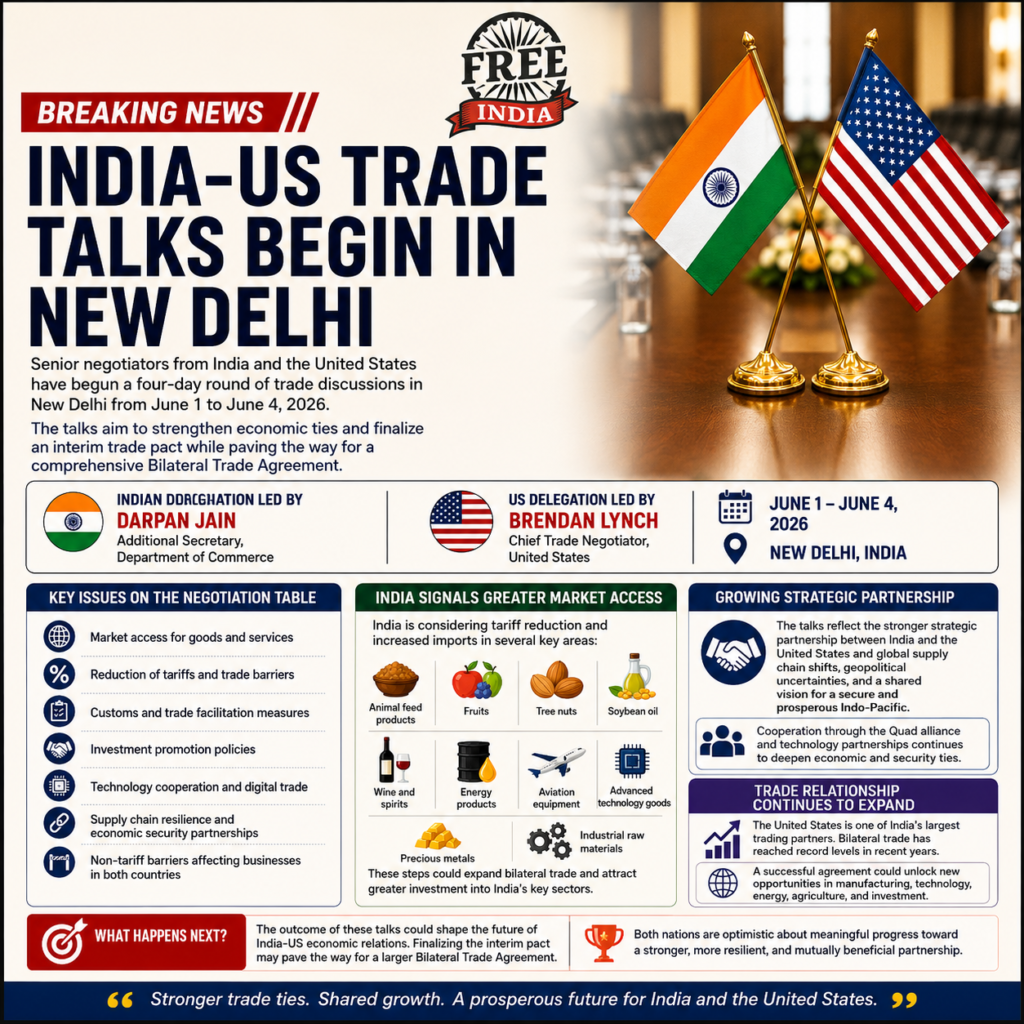
India and the United States have launched a crucial four-day round of trade negotiations in New Delhi, marking another significant step toward strengthening economic ties between the world’s largest and fifth-largest economies. Senior officials from both nations are meeting from June 1 to June 4 to finalize details of an interim trade agreement while advancing discussions on a broader Bilateral Trade Agreement (BTA).
The Indian delegation is being led by Darpan Jain, Additional Secretary in the Department of Commerce, while the US team is headed by chief trade negotiator Brendan Lynch. The discussions are expected to address several long-standing trade issues and create a roadmap for deeper economic cooperation.
Key Issues on the Negotiation Table
One of the primary objectives of the talks is to finalize the legal framework of the proposed interim trade pact that was first outlined earlier this year. Negotiators are expected to discuss:
- Market access for goods and services
- Reduction of tariffs and trade barriers
- Customs and trade facilitation measures
- Investment promotion policies
- Technology cooperation and digital trade
- Supply chain resilience and economic security partnerships
- Non-tariff barriers affecting businesses in both countries
The talks are also expected to focus heavily on emerging sectors such as artificial intelligence, semiconductor manufacturing, advanced technology collaboration, and digital governance frameworks. Both countries view technology cooperation as a critical pillar of future economic growth.
Trade Agreement Faces New Challenges
The negotiations come after major changes in US trade policy. Earlier discussions had included plans for significant tariff reductions on selected Indian exports. However, recent legal and policy developments in Washington, including changes to tariff structures, have forced both sides to revisit parts of the original framework. As a result, negotiators are expected to recalibrate several provisions of the proposed agreement.
India Signals Greater Market Access
India has reportedly indicated its willingness to reduce tariffs on several American industrial and agricultural products. Items under discussion include animal feed products, fruits, tree nuts, soybean oil, wine, and spirits. New Delhi is also exploring increased imports of US energy products, aviation equipment, advanced technology goods, precious metals, and industrial raw materials.
Such measures could help expand bilateral trade volumes while attracting greater foreign investment into India’s manufacturing and technology sectors.
Growing Strategic Partnership
Beyond trade, the discussions reflect the broader strategic partnership between India and the United States. Both nations are seeking closer cooperation amid shifting global supply chains, geopolitical uncertainties, and efforts to reduce dependence on single-country manufacturing hubs. Recent engagements through the Quad alliance and technology partnerships have further strengthened economic and security cooperation.
Trade Relationship Continues to Expand
Despite occasional disagreements over tariffs and trade policies, economic ties between the two countries continue to grow. The United States remains one of India’s largest trading partners, with bilateral trade reaching record levels in recent years. Policymakers on both sides believe a successful trade agreement could unlock new opportunities in manufacturing, technology, energy, agriculture, and investment.
What Happens Next?
The outcome of the New Delhi talks could shape the future of India-US economic relations for years to come. If negotiators successfully finalize the interim pact, it would pave the way for a larger and more comprehensive Bilateral Trade Agreement, potentially boosting trade, creating jobs, and enhancing investment flows between the two countries. Officials from both nations remain optimistic that the ongoing discussions will produce meaningful progress toward a stronger and more resilient economic partnership.

Leave a Reply