
Major Boost for India’s Defence Modernisation and Make-in-India Vision
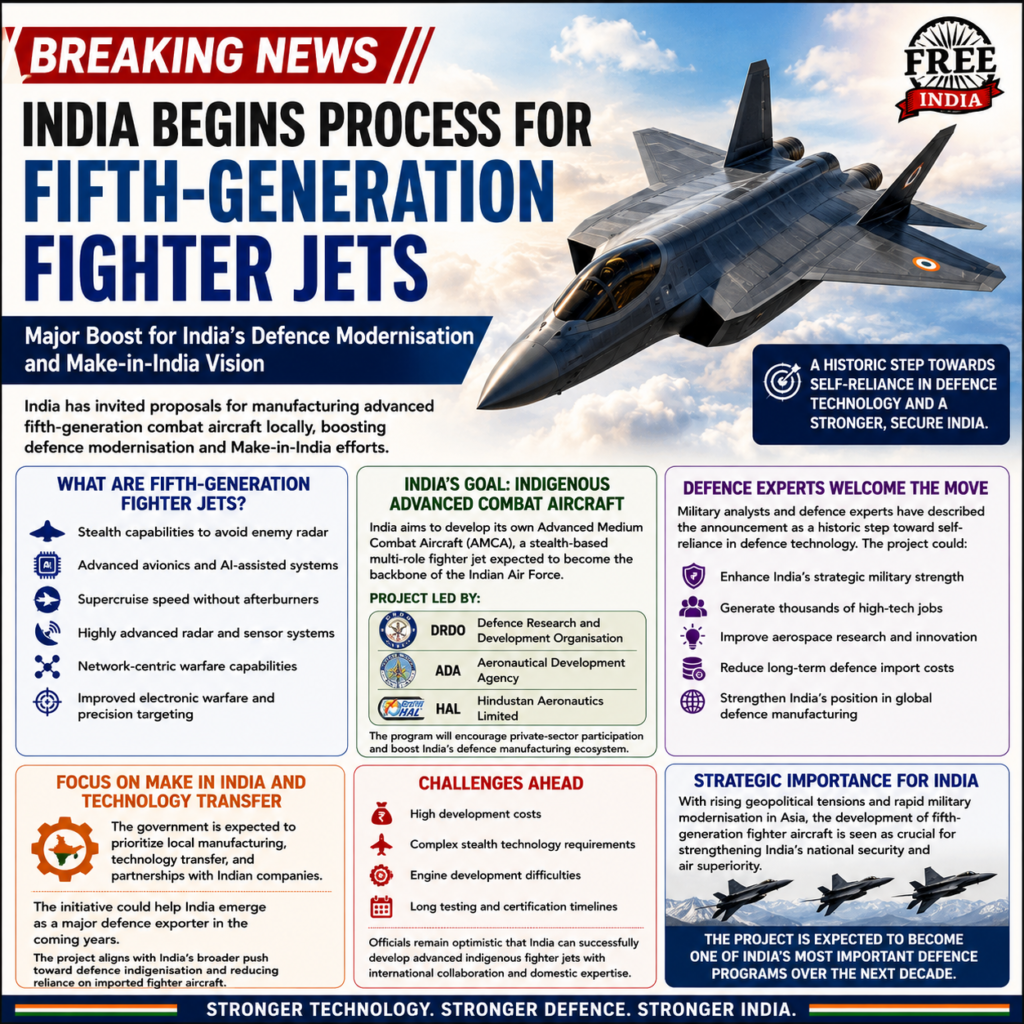
India has officially started the process of developing and manufacturing advanced fifth-generation fighter jets within the country, marking a major milestone in the nation’s defence and aerospace ambitions. The move is expected to strengthen India’s air power, reduce dependence on foreign military imports, and accelerate the government’s “Make in India” initiative.
The Defence Ministry has reportedly invited proposals from domestic and international defence companies to participate in the ambitious next-generation combat aircraft program.
What Are Fifth-Generation Fighter Jets?
Fifth-generation fighter aircraft are among the most advanced combat jets in the world. These aircraft are designed with cutting-edge technology, including:
- Stealth capabilities to avoid enemy radar
- Advanced avionics and AI-assisted systems
- Supercruise speed without afterburners
- Highly advanced radar and sensor systems
- Network-centric warfare capabilities
- Improved electronic warfare and precision targeting
Countries like the United States, China, and Russia already operate or are developing such advanced fighter aircraft.
India’s Goal: Indigenous Advanced Combat Aircraft
India aims to develop its own Advanced Medium Combat Aircraft (AMCA), a stealth-based multi-role fighter jet expected to become the backbone of the Indian Air Force in the future.
The project is being led by:
- Defence Research and Development Organisation (DRDO)
- Aeronautical Development Agency (ADA)
- Hindustan Aeronautics Limited (HAL)
Officials say the program will encourage private-sector participation and boost India’s defence manufacturing ecosystem.
Defence Experts Welcome the Move
Military analysts and defence experts have described the announcement as a historic step toward self-reliance in defence technology.
Experts believe the project could:
- Enhance India’s strategic military strength
- Generate thousands of high-tech jobs
- Improve aerospace research and innovation
- Reduce long-term defence import costs
- Strengthen India’s position in global defence manufacturing
Focus on Make in India and Technology Transfer
The government is expected to prioritize local manufacturing, technology transfer, and partnerships with Indian companies. Officials believe the initiative could help India emerge as a major defence exporter in the coming years.
The project also aligns with India’s broader push toward defence indigenisation and reducing reliance on imported fighter aircraft.
Challenges Ahead
Despite the excitement, experts say the project will face major challenges, including:
- High development costs
- Complex stealth technology requirements
- Engine development difficulties
- Long testing and certification timelines
However, officials remain optimistic that India can successfully develop advanced indigenous fighter jets with international collaboration and domestic expertise.
Strategic Importance for India
With rising geopolitical tensions and rapid military modernisation in Asia, the development of fifth-generation fighter aircraft is seen as crucial for strengthening India’s national security and air superiority.
The project is expected to become one of India’s most important defence programs over the next decade.

Leave a Reply