
4 min readNew DelhiApr 25, 2026 10:00 PM IST
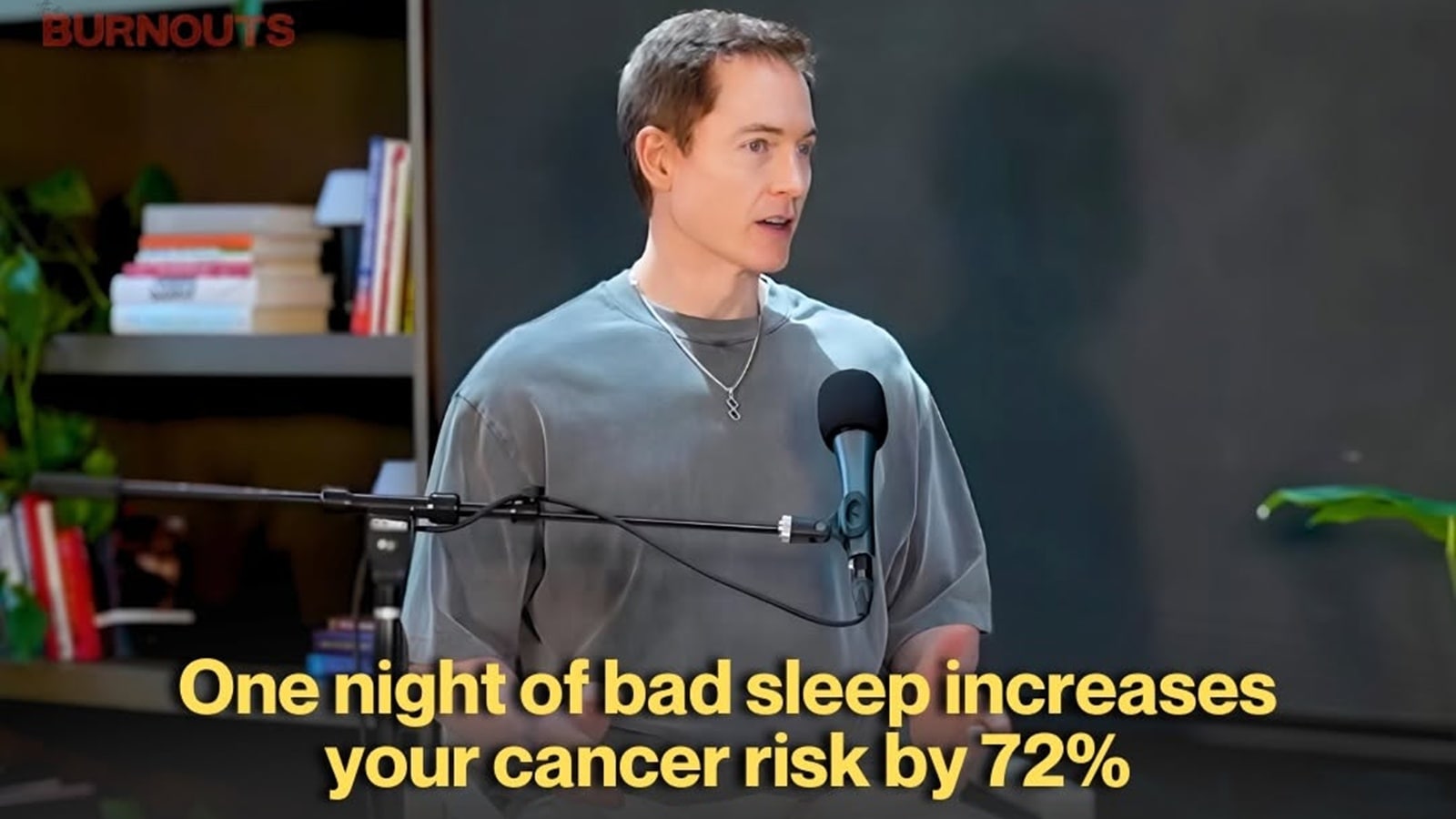
During a recent episode of The Burnouts podcast, American biohacker Bryan Johnson shared a valuable piece of advice for health enthusiasts: “One night of bad sleep increases your cancer risk by 72%. Let’s say you sleep only 4 hours; your immune system stops looking for cancer cells. Your body is already working overtime to function. Now imagine living like that every time. And yet, people do that every week and say, ‘It’s fine, I’ll just catch up on sleep this weekend’.”
The longevity entrepreneur further added, “It’s not just cancer. You’re 400% more likely to get sick, too, without good sleep. Sometimes it takes the body several years to recover from one night of bad sleep.”
Dr Sibasish Dey, Head of Medical Affairs, South Asia, ResMed, explained that during the various sleep cycles, individuals shift between REM (rapid eye movement) and non-REM sleep stages. “Note that memory consolidation occurs during the REM stage, and biochemical renewal occurs during the NREM stage, notably throughout a phase known as ‘slow wave sleep’, which impacts how our body functions,” said the doctor, adding that some risk factors for cancer, including the effects of sleep on hormones, metabolism, and inflammation, may influence the aggressiveness of cancer.
Agreeing with him, Dr Pooja Babbar, Consultant, Medical Oncology, CK Birla Hospital, Gurugram, added that lack of sleep has an “indirect relationship” with cancer.
 Sleep-related issues can differ for every person based on the type of cancer, treatment, and general health. (Source: Freepik)
Understanding the connection
“First of all, lack of sleep depresses the immune system and this has long-term effects on the human body. There is a shift in cytokine and inflammatory marker production in the body because of which the risk of cancer increases. Secondly, due to less sleep, the melatonin level is less. Melatonin is helpful in suppressing cancer cells inside the body. So it suppresses the initial phase of tumour formation and it inhibits the proliferation of human cancer cells,” she explained. Hence, if there is a problem in the sleep duration, this particular substance reduces in the body.
Dr Babbar also mentioned how sleep deprivation is linked to chronic stress. This in turn can impact cancer incidence as depression is one of the most common risk factors for cancer progression.
“Sleep deprivation also alters your appetite-stimulating hormones. It also leads to increased appetite and obesity and obesity has a direct link with cancer. There is a certain rhythm of sleep, so when that rhythm is disturbed, that also promotes mitosis and tumour proliferation,” she elaborated.
Story continues below this ad
Talking about the possible reasons for sleep disturbances in cancer patients, Dr Dey attributed to pain or discomfort brought on by treatment, gastrointestinal or urinary issues brought on by cancer or its treatment. To add to that, he said that stress, anxiety or depression that cancer patients may experience, coupled with drug side effects, such as those associated with painkillers, might make patients sleepy, can interfere with obtaining a restful night of sleep.
She added that the sleep-related issues can differ for every person based on the type of cancer, treatment, and general health, including any co-morbid diseases.
Lastly, sleep deprivation in a patient may hamper their treatment and recovery journey. “Loss of circadian control can affect the efficacy of anticancer treatment and might lead to early mortality amongst patients with cancer. A disrupted cycle can also increase the risk of recurrence among cancer patients,” Dr Walia said.
DISCLAIMER: This article is based on information from the public domain and/or the experts we spoke to. Always consult your health practitioner before starting any routine.

Leave a Reply