
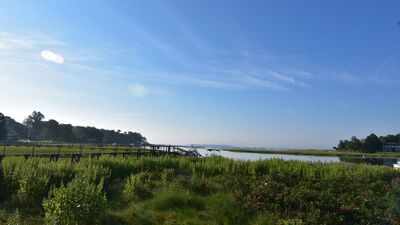
For more than a century, a small concrete dam stood in the way of a river’s natural flow. Built to serve industries that no longer exist, the Temple Street Dam in Duxbury, Massachusetts, had long outlived its purpose. It blocked fish from reaching their spawning grounds, trapped sediment, created a maintenance burden for the town and disrupted the natural hydrology of the South River. In 2012, conservationists began working to change that. Fourteen years later, in 2026, demolition finally started. The removal of the Temple Street Dam is set to reconnect more than 7 miles of stream, restore 6 acres of open water wetland and bring the South River one step closer to the free-flowing ecosystem it once was, as shared by Town of Duxbury Massachusetts’ website.A dam with no purposeThe Temple Street Dam, also known as the Boys & Girls Club Dam #2, is located on the South River in Plymouth County, Massachusetts. Like many small dams across the state, it was built to support local industry; in this case, a mill that operated in the 19th and early 20th centuries. But those industries are long gone, and the dam now serves no functional purpose.Instead, it creates problems. The structure blocks all fish migration upstream, preventing species such as river herring, American eel and wild brook trout from reaching critical habitat. It traps sediment, which can degrade water quality and alter the river’s natural flow. And it requires ongoing maintenance from the Town of Duxbury, which owns the dam and is responsible for its upkeep.For years, the dam was simply accepted as part of the landscape. But as awareness of the ecological impacts of obsolete dams grew, so did the movement to remove them.A long road to removalThe push to remove the Temple Street Dam began in earnest in 2012, when the North and South Rivers Watershed Association (NSRWA) and local partners started exploring the possibility. The South River originates in the red maple swamps of Duxbury and flows to Massachusetts Bay in Marshfield. It is a vital waterway for migratory fish, wildlife and the surrounding communities.In 2016, the Massachusetts Division of Ecological Restoration (DER) identified the South River Restoration Project as a priority. The project includes the potential removal of three dams along the river: Temple Street, Chandler Pond and Veterans Memorial Park. The goal is to restore fish passage, improve habitat and reduce the maintenance burden on the towns of Duxbury and Marshfield.The first dam to come down was the Veterans Memorial Park Dam, removed in January 2025. The Temple Street Dam is the final barrier on the South River, and its removal marks the culmination of more than a decade of planning, permitting and community engagement.What the removal will achieveThe removal of the Temple Street Dam is expected to deliver significant ecological benefits. By eliminating the barrier, the project will:Reconnect an additional 7 miles of stream, allowing fish and other aquatic species to move freely upstream and downstreamRestore 6 acres of open water wetland, creating habitat for wildlife and improving water qualityRestore natural hydrology, reducing the risk of flooding and improving the river’s resilience to climate changeEliminate the ongoing maintenance burden on the Town of DuxburyThe project also includes the construction of a three-step riffle/pool stream segment to replace the dam. This will ensure passage for fish and other aquatic species, restore ecological processes and maintain natural hydrology while avoiding downstream flood impacts to infrastructure.A collaborative effortThe Temple Street Dam Removal Project is the result of collaboration between multiple partners, including the Town of Duxbury, the North and South Rivers Watershed Association, the Massachusetts Division of Ecological Restoration and MassBays. Funding has come from state grants, including a $150,000 award from the Healey-Driscoll Administration in 2026 to support construction.Public engagement has also been a key component. In October 2023, NSRWA and project partners held public information sessions to present the current design for the removal and gather feedback from the community. The project team has worked closely with local residents, conservation groups and government agencies to ensure the removal is done safely and effectively.A model for river restorationThe removal of the Temple Street Dam is part of a broader movement to restore rivers and wetlands across Massachusetts. Over the past two decades, more than 100 dams have been removed in the state, reconnecting thousands of miles of stream and restoring critical habitat for fish and wildlife.These projects are not just about removing barriers. They are about reconnecting landscapes, restoring natural processes and building resilience to climate change. Healthy rivers and wetlands provide a range of ecological services, including floodwater storage, water filtration and habitat for biodiversity.The South River Restoration Project is a prime example of what can be achieved when communities, conservationists and government agencies work together. It is a model for how obsolete infrastructure can be replaced with living, breathing ecosystems that benefit both people and nature.A river rebornAs demolition of the Temple Street Dam begins, the South River is on the cusp of a transformation. For the first time in more than a century, fish will be able to swim freely up and down the river. Wetlands will be restored, water quality will improve and the natural flow of the river will be re-established.The project is a reminder that even small actions, like removing a single dam, can have big impacts. It is a testament to the power of persistence, collaboration and a shared vision for a healthier, more resilient future.In 2012, conservationists began working to remove an obsolete dam. Fourteen years later, that work is finally bearing fruit. And when the last piece of concrete is removed, the South River will flow freely once again, a living symbol of what is possible when we choose to restore rather than restrict, to reconnect rather than divide.

Leave a Reply