
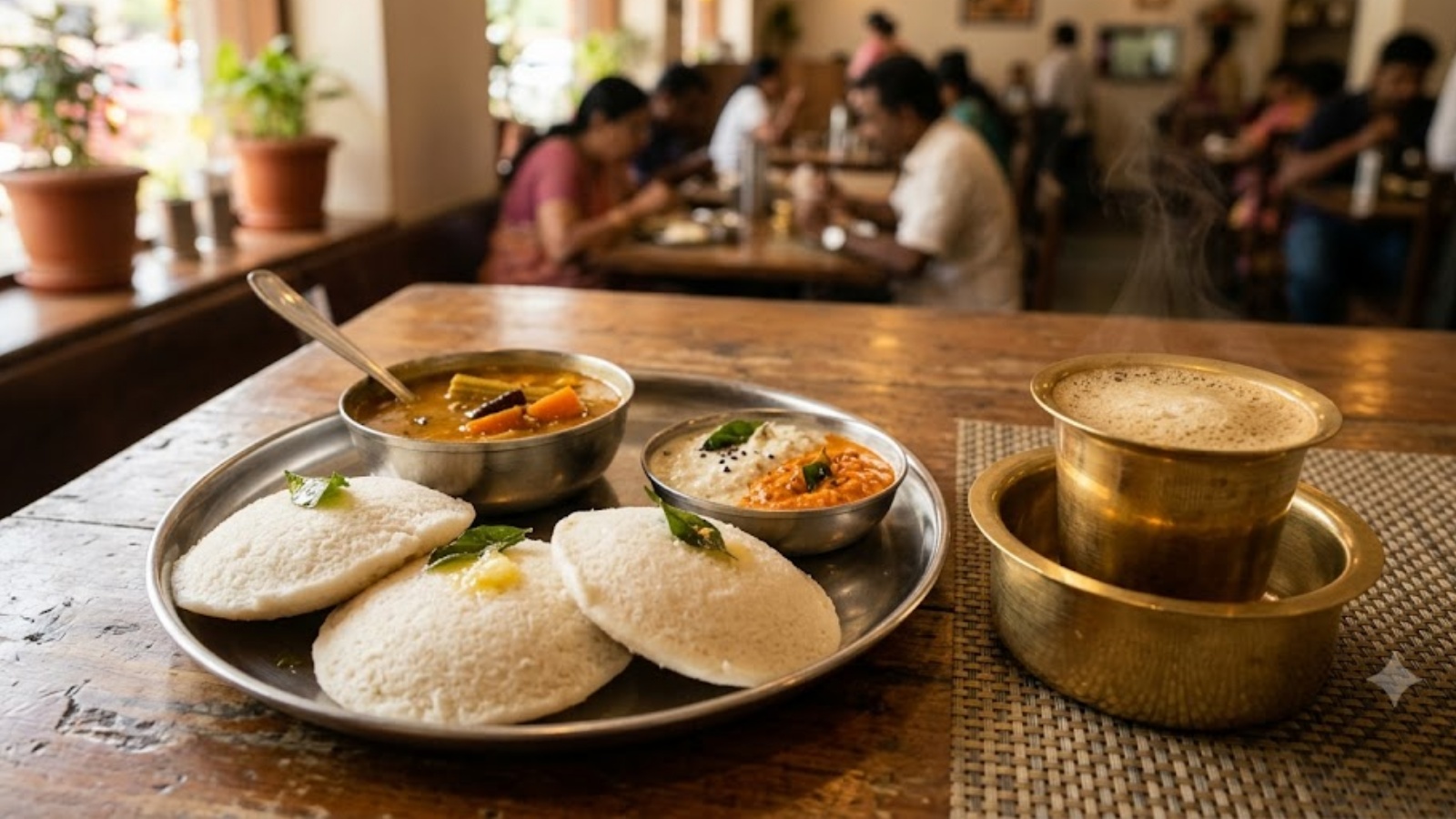
Few breakfast combinations are as familiar in South India as soft, steamed idlis served alongside a cup of filter coffee. Idli is light, easy to prepare, and made from fermented batter, while coffee provides the caffeine boost many people seek to start their day. But how nutritious is this combination, and can it keep you energised until lunch?
According to Kanikka Malhotra, Consultant Dietician and Certified Diabetes Educator, idli has several nutritional advantages because of its ingredients and preparation method.
“Idli is steamed, so it carries no added oil, and a medium idli has only about 50 calories,” she says.
The combination of rice and urad dal also improves the meal’s protein quality. Rice is relatively low in lysine, an essential amino acid, while urad dal provides more. Eating them together improves the overall amino acid profile compared with consuming either ingredient alone.
Fermentation further changes the batter’s nutritional properties. “Overnight fermentation raises B vitamins like folate and riboflavin, and reduces phytic acid, a natural compound that blocks mineral absorption, so iron and zinc become easier for the body to use,” Malhotra explains.
DISCLAIMER: This article is based on information from the public domain and/or the experts we spoke to. Always consult your health practitioner before starting any routine
Does fermentation make idli easier to digest?
Fermentation is one reason idli is often considered a light breakfast. It partially breaks down starches and proteins in the batter before cooking, which may make them easier to digest.
Story continues below this ad
However, fermented food should not automatically be equated with probiotic food. “Steaming kills the live bacteria, so idli is a fermented food but not a probiotic one,” Malhotra says.
Those looking to include live cultures in their breakfast can pair idli with curd or buttermilk, as long as they are prepared and stored properly.
Coffee affects the body differently. Caffeine blocks adenosine, a brain chemical involved in signalling tiredness, which can improve alertness within about 20 to 45 minutes. It can also stimulate bowel movements, which may explain why some people feel the urge to use the bathroom after drinking coffee.
“The key distinction is that idli supplies fuel, while caffeine only masks tiredness. Without enough protein, that borrowed alertness can fade by mid-morning,” Malhotra says.
Story continues below this ad
 Can idli raise blood sugar levels? (Photo: Magnific)
Is idli and filter coffee a balanced breakfast?
“Three idlis with a cup of sweetened milk coffee come to roughly 230 calories, 8 grams of protein, over 40 grams of carbohydrate and almost no fibre,” Malhotra says.
The exact nutritional values will vary depending on the size of the idlis, the rice-to-dal ratio, the amount of milk and the sugar added to the coffee. Nevertheless, the broader concern is that the meal may not provide enough protein to keep you full for several hours.
Most adults can benefit from including a substantial protein source at breakfast, although individual requirements vary with body weight, activity levels and health needs.
The good news is that traditional accompaniments can improve the meal considerably. “The fix is already part of the South Indian tradition: sambar. A generous bowl adds protein and fibre from dal and vegetables, which slows the sugar rise from the rice,” Malhotra explains.
Story continues below this ad
She recommends pairing idli with sambar, along with peanut or coconut chutney for some healthy fats. A boiled egg or a serving of curd can provide additional protein.
“Two idlis with a big bowl of sambar will serve you better than four idlis with coffee,” she says.
Can idli raise blood sugar levels?
Malhotra advises people with diabetes to monitor their response rather than assume that a traditional breakfast is automatically suitable for everyone. “Those with diabetes should also be mindful of portion sizes, as idli is rich in carbohydrates and can raise blood glucose levels. Caffeine may further affect blood sugar in some individuals, so monitoring glucose about two hours after the meal, as advised by their healthcare provider, can help them understand their response.”
Coffee also deserves consideration. Caffeine can temporarily affect blood glucose in some people, although the response varies. The sugar added to filter coffee is another factor to account for.
Story continues below this ad
“Two cups of filter coffee with two teaspoons of sugar each can contribute a significant amount of added sugar to your daily intake. Pregnant women should limit their total caffeine consumption to less than 200 mg a day, keeping in mind that the caffeine content of filter coffee varies with its preparation and serving size,” explains Malhotra. She adds that coffee polyphenols can inhibit the absorption of non-haem iron, the type found in plant foods such as urad dal. This is particularly relevant for women and teenage girls, who are at greater risk of iron deficiency. I recommend keeping coffee about an hour away from meals and adding a squeeze of lime to your food, as vitamin C helps improve iron absorption.
“People with acidity or acid reflux may find that coffee worsens their symptoms and should pay attention to their individual tolerance,” she adds.
DISCLAIMER: This article is based on information from the public domain and/or the experts we spoke to. Always consult your health practitioner before starting any routine.

Leave a Reply