
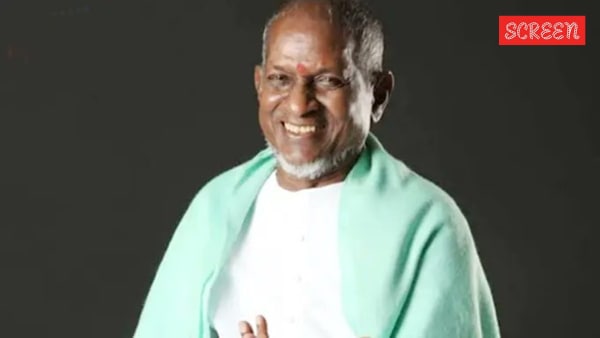
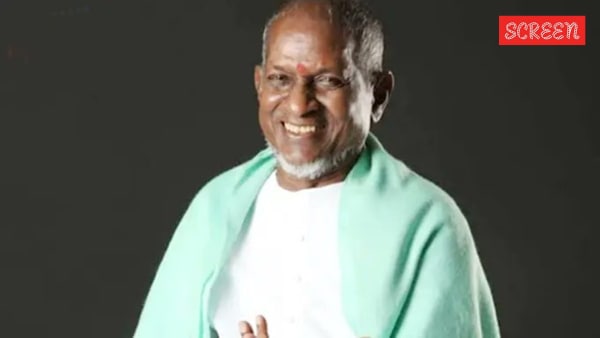
Over a career spanning nearly five decades, Ilaiyaraaja has composed music for over 1,500 films and written more than 8,000 songs. By any reasonable measure, that catalogue is one of the most commercially exploited bodies of work in Indian cinema. It has played in theatres, on radio, on television, at live concerts across the world, and more recently across every streaming platform imaginable. For much of that time, the money it generated flowed primarily to producers, music labels, and event organisers. The composer himself saw very little of it. What makes Ilaiyaraaja different from every other musician this happened to is simple: he refuses to accept it
Born Gnanathesigan on June 3, 1943, in Tamil Nadu, Ilaiyaraaja debuted as a film composer with Annakili in 1976. What followed was one of the most prolific runs in the history of Indian film music. He won five National Film Awards, three for Best Music Direction and two for Best Background Score, and received both the Padma Bhushan and the Padma Vibhushan. His admirers call him “Isaignani,” meaning the musical sage. The Royal Philharmonic Orchestra in London went further, conferring on him the title “maestro” after he became, in June 1993, the first Asian to have his symphonic work performed with the orchestra.
The accolades were significant, however, royalties were not. The problem the composer faced was entirely structural. Audio companies were holding rights and exploiting legal loopholes without paying royalties. The IPRS, which was meant to govern this, was paying composers and lyricists very little. When the digital revolution arrived, it became even more tangled, with some companies selling music on digital platforms without prior permission from the people who actually created it.
Also Read: Aamir Khan to marry for the third time, will tie the knot with Gauri Spratt on July 5
After facing this, Ilaiyaraaja decided to fight back in court. In September 2014, a single judge of the Madras High Court restrained music labels from exploiting his music, with the restraint made absolute from March 2015. During this period, Ilaiyaraaja also moved the court for contempt against the labels, alleging they continued to exploit his works in violation of the court’s order. One of the key disputes involved Agi Music, which had claimed rights over his compositions for ten years. Ilaiyaraaja contested this, arguing that under prevailing provisions, agreements with no specified period stood valid for only five years. He submitted records showing the firm owed him Rs 3.37 crore in royalties between 2007 and 2014.
He also put broadcasters on notice, stating publicly that any agreements he had signed earlier were valid for only five years, and that unless properly renewed, they could not continue using his work.
What flipped the entire conversation was in 2017, when came the moment that divided the industry most visibly. Ilaiyaraaja issued legal notices to SP Balasubrahmanyam, SP Charan, and Chithra, who were planning a world tour featuring his compositions, prohibiting performances of his songs without explicit consent and warning of legal action for unauthorised use. SPB announced publicly that he could no longer perform those songs. The industry was left divided on the issue.
Story continues below this ad
While many composers felt like a legal notice is uncalled for and a simple conversation would have smoothened the problem, experts weighed in differently. According to them, the notices were directed at the show organisers, not at SPB personally. Those organisers were large media companies charging ticket prices between $30 and $250 per seat, with venues seating thousands.
The disputes did not stop there. Ilaiyaraaja sent a legal notice to Sun Pictures after discovering that his 1983 composition from Thangamagan, originally featuring Rajinikanth, had been used in the teaser of Coolie without his permission or payment of royalty. The notice also named director Lokesh Kanagaraj, stating he had been repeatedly and intentionally exploiting Ilaiyaraaja’s musical works across multiple films, including compositions from the 1986 film Vikram.
Around the same time, he raised a copyright dispute against the producers of the Malayalam blockbuster Manjummel Boys for using his composition originally from the 1991 film Guna without authority. The producers claimed they had paid the music recording companies who held the rights, while Ilaiyaraaja maintained that no money had reached him.
A settlement was eventually reached in his dispute with Mythri Movie Makers over the unauthorised use of five tracks across two films, Good Bad Ugly and Dude. The production house agreed to pay Rs 50 lakh, with the amount transferred via RTGS after deducting statutory tax. The three compositions used in Good Bad Ugly were ordered to be removed in compliance with an interim injunction, while the songs in Dude were permitted to remain on the OTT platform where the film was streaming.
Story continues below this ad
The legal complications, however, have not always gone his way. The Delhi High Court passed an interim order restraining Ilaiyaraaja from commercially exploiting several sound recordings and musical works across a catalogue covering more than 130 films, after music label Saregama argued that the copyrights were vested with the company. The court referred to the Copyright Act, 1957, which states that the film producer is generally the first owner of copyright unless a contract says otherwise. This remains one of the central tensions in his legal battles: the conflict between a composer’s moral rights over his own creations and the contractual frameworks that historically handed those rights to producers and labels.
Also Read: Vijay’s son Jason Sanjay ‘hardworking,’ says Sudeep Kishan: ‘He knows a lot about patience’
As the string of ongoing disputes demonstrates, composers and lyricists in India still face significant resistance when they attempt to enforce even the most basic rights available to them under copyright law.
What makes Ilaiyaraaja’s position historically significant is not any single legal notice or court appearance, it is the consistency of the battle. For over a decade, across multiple courts, multiple films, and multiple adversaries including some of his closest collaborators, he has refused to treat the exploitation of his work as simply the cost of doing business in Indian cinema. No other composer of his stature has pursued this with the same persistence and public visibility.
Story continues below this ad
A biopic titled Ilaiyaraaja was officially launched in 2024, with actor Dhanush set to portray the composer on screen. The film is directed by Arun Matheswaran, marking their second collaboration after Captain Miller, with pre-production already completed.

Leave a Reply