
3 min readNew DelhiOct 1, 2026 09:30 AM IST
HbA1c, or Hemoglobin A1C (HbA1C) Test, is a simple blood test that measures your average blood sugar levels over the past two to three months, but it is not calculated by taking an average of your fasting and post-meal sugar readings. “It is a laboratory measurement of how much glucose has attached to haemoglobin in your red blood cells. Since red blood cells circulate for roughly three months, the HbA1c value gives us an idea of a person’s average blood glucose over the preceding two to three months,” Dr Pranav Ghody, consultant endocrinologist and diabetologist, Wockhardt Hospitals, Mumbai Central, told indianexpress.com.
DISCLAIMER: This article is based on information from the public domain and/or the experts we spoke to. Always consult your health practitioner before starting any routine.
What exactly happens during the test?
A blood sample is analysed to determine the proportion of haemoglobin that has become glycated, or attached to glucose. “The result is generally reported as a percentage. For example, an HbA1c of 7 per cent means approximately 7 per cent of the measured haemoglobin is glycated. “It is important to understand that this does not mean the person’s blood sugar was 7 per cent or that it stayed at one particular level throughout the day,” said Dr Ghody.
Does HbA1c simply represent the average of the last 90 days?
Not exactly. “HbA1c is a weighted average, meaning recent blood glucose levels have a greater influence on the result than readings from three or four months earlier. So, if someone’s sugar levels have improved significantly over the last few weeks, that improvement can begin to show in the HbA1c even before a full three months have passed,” said Dr Ghody.
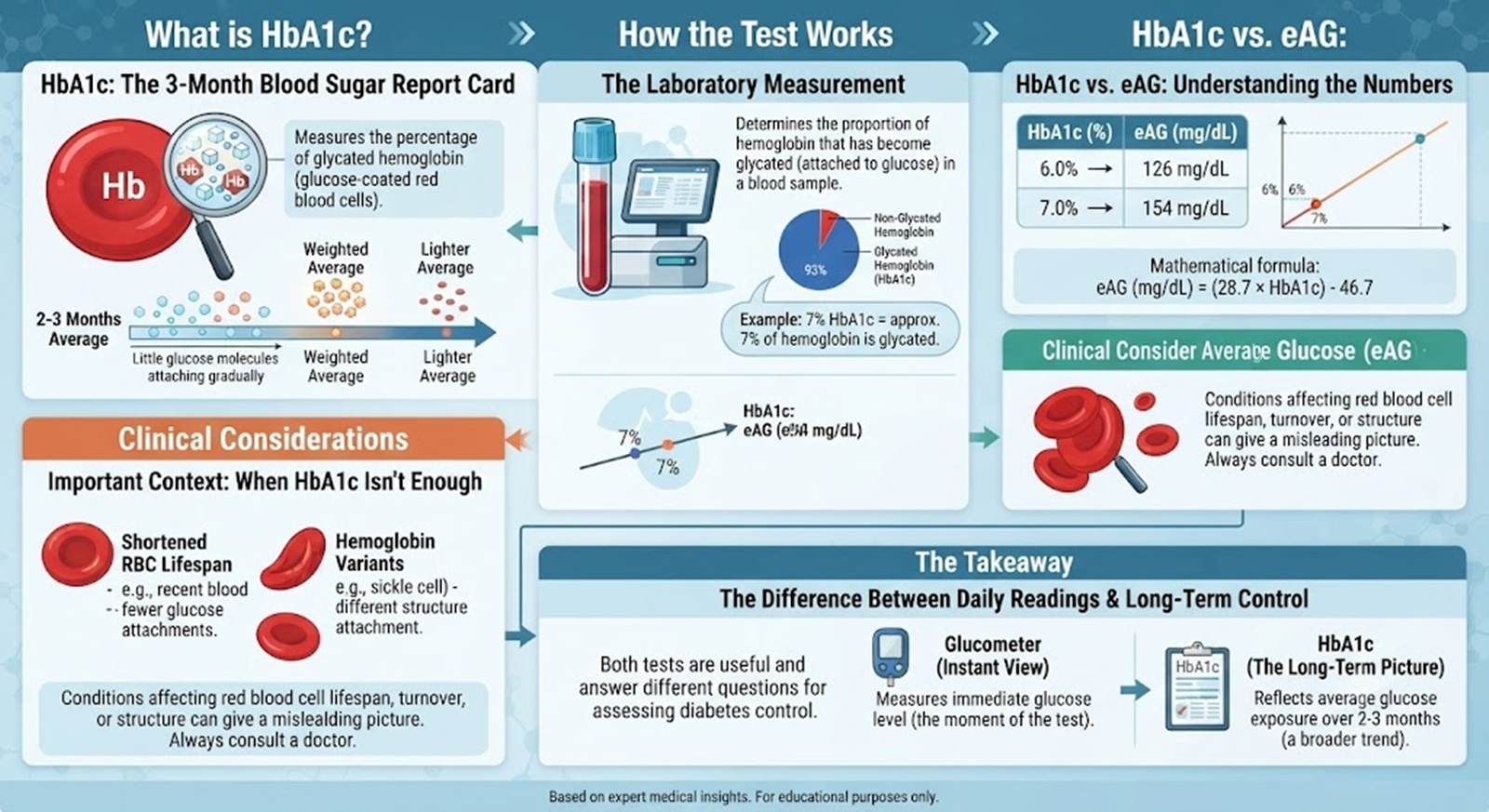 HbA1c of 7 per cent means approximately 7 per cent of the measured haemoglobin is glycated (Photo: AI Generated)
How is HbA1c converted into an estimated average blood sugar?
An established mathematical relationship links HbA1c to estimated average glucose (eAG). The commonly used equation is:
eAG (mg/dL) = 28.7 × HbA1c – 46.7
Using this relationship, an HbA1c of 6 per cent corresponds to an estimated average glucose of about 126 mg/dL, while 7 per cent corresponds to about 154 mg/dL.
Can HbA1c ever give a misleading picture?
Yes. “HbA1c is extremely useful, but it should not always be interpreted in isolation. Conditions that alter the lifespan or turnover of red blood cells, certain haemoglobin variants, recent blood loss or transfusion, and some other medical conditions can affect the result. In such situations, a doctor may correlate HbA1c with glucose readings or use other tests,” said Dr Ghody.
Story continues below this ad
So, what should people remember about HbA1c?
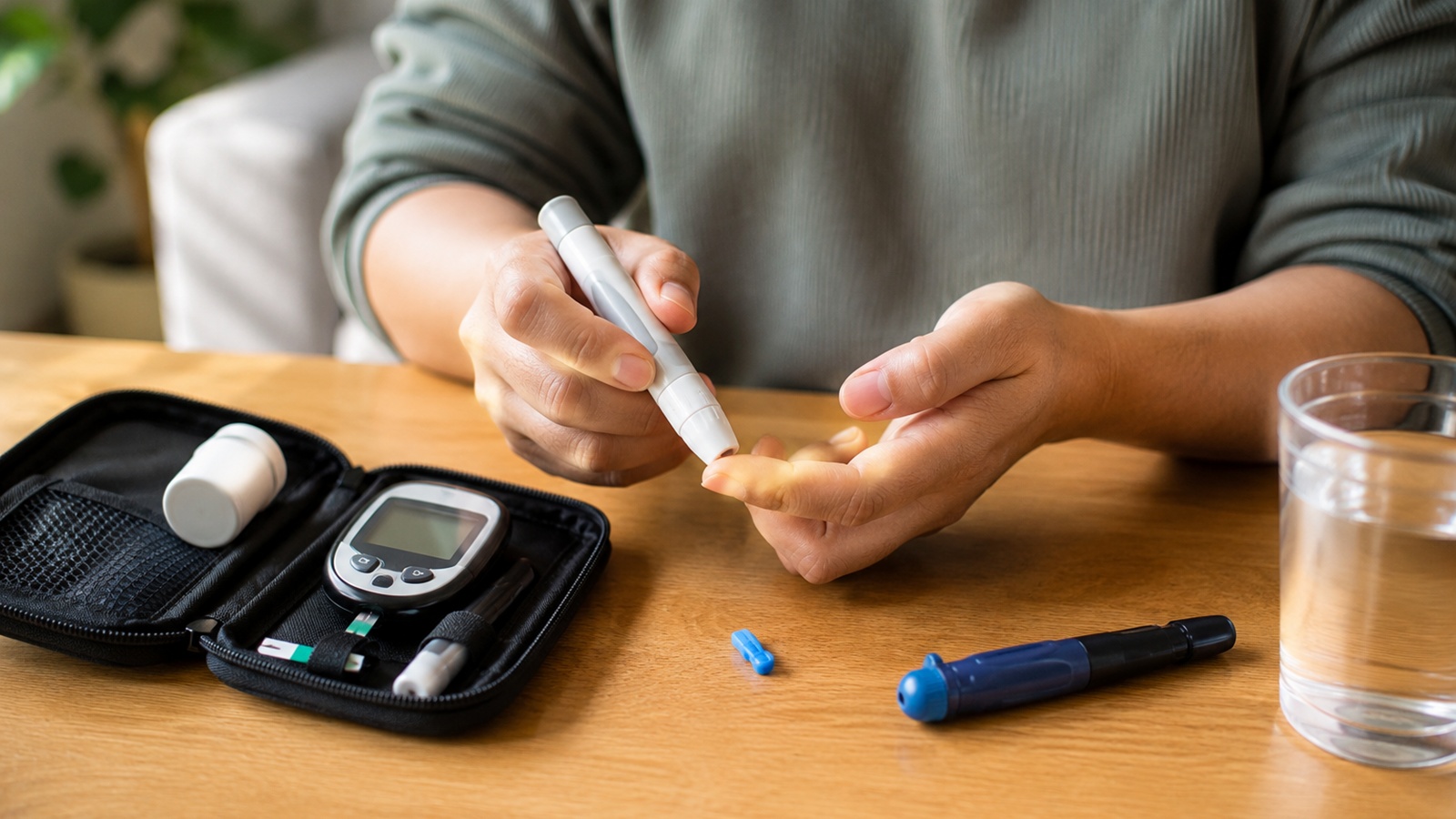
Think of HbA1c as a longer-term glucose report card rather than a single sugar reading. “A glucometer tells you what your glucose is at a particular moment, whereas HbA1c provides a broader picture of glucose exposure over several weeks to months. The two tests answer different questions, and both can be useful when assessing diabetes control.”
DISCLAIMER: This article is based on information from the public domain and/or the experts we spoke to. Always consult your health practitioner before starting any routine.

Leave a Reply