
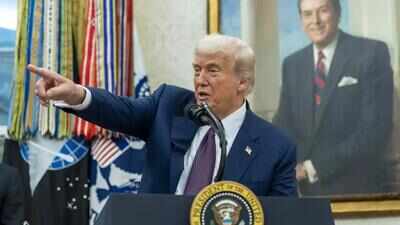
US President Donald Trump on Thursday rejected suggestions that the conflict with Iran exposed limits to American power, declaring that there were ‘no limits’ to what the United States could achieve.His remarks came after the United States and Iran formally entered into a peace agreement by digitally signing a memorandum of understanding (MoU) aimed at ending months of hostilities and reopening the Strait of Hormuz.Speaking in an interview with Axios, Trump was asked what he had learned from the war about the limits of his ability to exert power.“I haven’t learned that lesson yet. I know there are, but there are no limits,” Trump said.The comments came after Trump entered the conflict demanding Iran’s ‘unconditional surrender’ but ultimately agreed to a more limited memorandum of understanding to end the fighting.
Trump nevertheless insisted that the outcome represented a military victory for Washington and argued that the agreement itself amounted to a form of surrender by Tehran.“We defeated them totally militarily,” he said, adding that the MoU ‘probably is unconditional surrender’.The US president also argued that the conflict had demonstrated American military strength rather than its limitations.“Who else could have done a blockade like that? I did a naval blockade where not one ship was able to get through. Some tried. It didn’t last very long,” Trump said.At the same time, he acknowledged that prolonging the conflict could have had serious consequences for the global economy.Responding to critics who argued that he should have taken a tougher approach towards Iran, Trump said extending the military campaign would have risked disrupting global oil supplies.“The only way I can get tougher is if I go in there for another two or three weeks and continue to bomb the hell out of ’em. Right? But what does that get us? The Strait of Hormuz will not be open,” he said.“We wouldn’t have oil for months. As long as you’re dropping bombs, that thing is automatically closed,” Trump added.Warning about the wider economic impact of a prolonged conflict, he said: “This is the kind of thing that could cause a worldwide depression.”
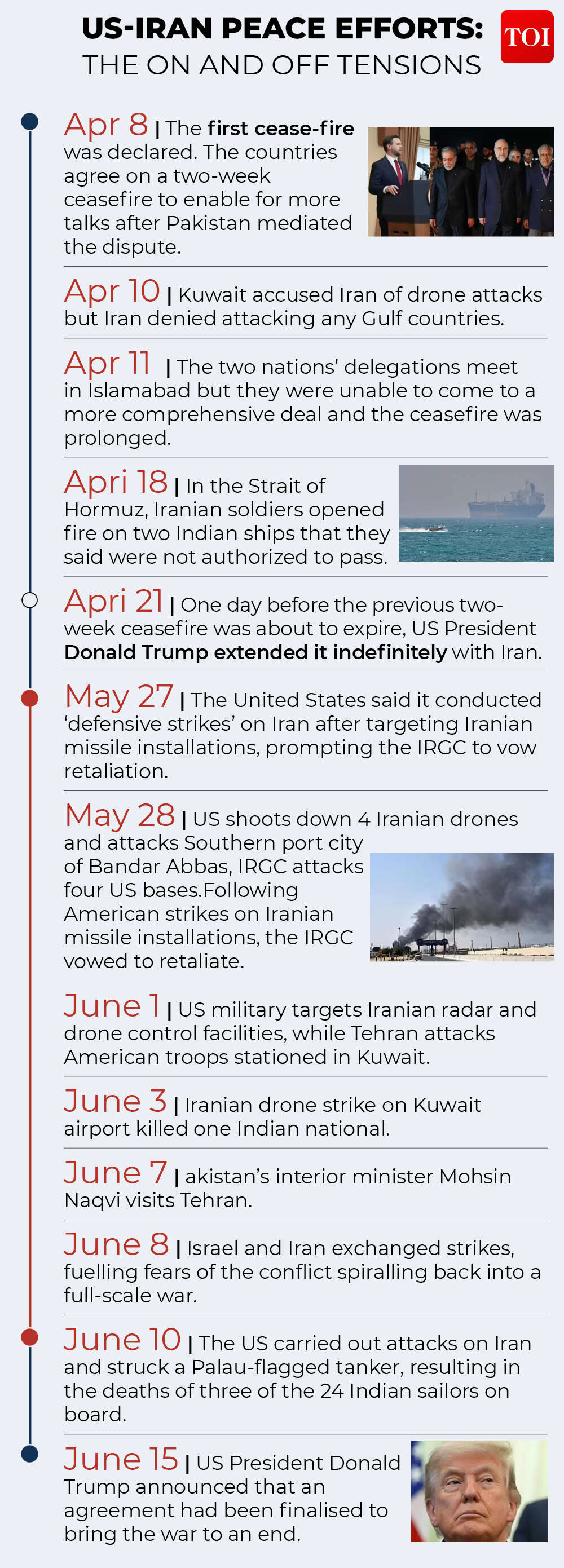
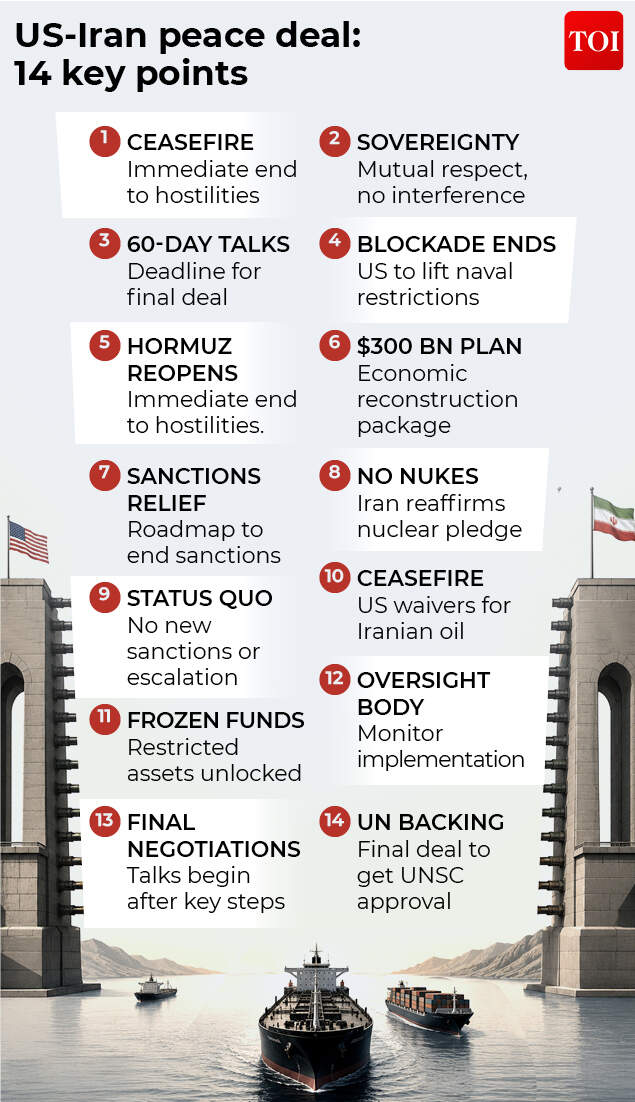
Trump’s remarks offered a glimpse into the considerations behind the agreement reached with Tehran after months of military confrontation.However, critics and several analysts have argued that the agreement reflects how far Washington has retreated from its original demands. Before the conflict, the US had insisted that Iran end most domestic uranium enrichment activities, transfer its enriched uranium stockpiles abroad and dismantle key elements of its nuclear programme.Under the new memorandum, Iran retains the right to continue uranium enrichment under agreed conditions, while discussions over its stockpiles and future nuclear activities are set to continue. The agreement also includes phased sanctions relief and economic incentives aimed at encouraging further negotiations.Analysts have argued that the deal falls short of the objectives outlined by Washington before the war and amounts to an acknowledgement that military pressure alone could not secure all of the US demands.Under the deal, both sides agreed to halt hostilities, reopen the Strait of Hormuz and begin negotiations on a broader framework covering sanctions relief, economic cooperation and Iran’s nuclear programme.The agreement also includes a phased process for easing restrictions on Iranian oil exports and discussions on the future of Iran’s enriched uranium stockpiles under international supervision.The memorandum was digitally signed by Trump and Iranian President Masoud Pezeshkian and came into force immediately after both leaders approved the document.While defending the agreement, Trump maintained that it reflected the strength of the United States rather than any retreat from his earlier objectives.“The war demonstrated the breadth of our power, not its limits,” he argued during the interview.

Leave a Reply