
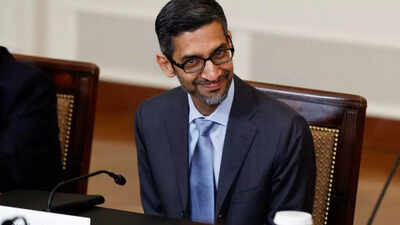
At a time when artificial intelligence (AI) is reshaping the global job market, and various executives have predicted massive job cuts, Google CEO Sundar Pichai has a reassuring message for the entry-level graduates: the economic future is still bright. In a recent interview, Pichai addressed growing concerns about how AI will impact new graduates entering the workforce. Rather than destroying career opportunities, Pichai argues that AI will serve as a powerful equaliser.
New starting point for careers
When asked to make his case for why young professionals should remain optimistic, Pichai pointed to the massive boost in personal capability the technology provides.“There’s an aspect of this that is just going to change the starting point for many, many people,” Pichai said. He compared AI technology’s arrival to the invention of the digital spreadsheet, sayings that he wasn’t around when digital spreadsheets were first introduced and couldn’t imagine how financial analysis was done before them. He pointed out that the technology fundamentally changed what ordinary people could achieve.Pichai believes AI will do the same for software development. “Even coding — if you fast forward the progress we are seeing there, so many more people are going to be able to code in the world,” he explained, suggesting that technical skills will become far more accessible to non-technical graduates.
AI will help reduce workplace burnout
The Google executive also highlighted how AI will tackle productivity and workplace burnout, particularly in high-stress fields like healthcare. Using doctors as an example, Pichai noted that many medical professionals suffer from high burnout rates because administrative burdens prevent them from doing what they love: caring for patients. He argues that AI will take over the paperwork and allow doctors to spend more face-to-face time with the people they treat.“The radiologist analogy has been fascinating. It’s been running for a decade now. I look at myself and say, Well, I have gotten a lot more scans in my life than my dad ever did. And each of the scans has 10 times the amount of information than his scans had, because they were constrained by printing film versus us being digital,” Pichai noted.While Pichai remains highly optimistic, he didn’t shy away from the challenges ahead, acknowledging that every major technological shift brings real disruption. However, he urged graduates not to give in to the doom-and-gloom narratives surrounding the tech. “Every technological shift brings disruption with it, and there will be disruption. As a society, we need to be super serious about it and engage. But there are many positive dimensions to it that are maybe not being talked about, and there is an overly deterministic, dire scenario that I don’t quite agree with,” he added.

Leave a Reply