
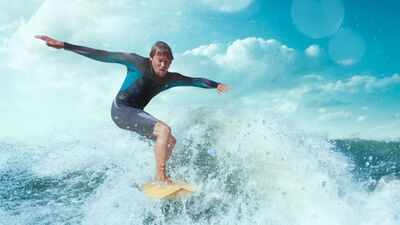
A major new attraction is moving forward in Wesley Chapel, Florida, bringing the possibility of ocean-style surfing to a community located miles from the coast. According to the Pasco County Community Website, Pasco County commissioners voted 3-0 in September to approve a comprehensive plan amendment and rezoning connected to the Two Rivers development. The approval clears an important land-use hurdle for Peak Surf Park, a proposed $100 million-plus project expected to include a 35-acre destination, a six-acre artificial wave lagoon and a half-mile sandy beach. Developers are targeting a late 2027 opening, although additional permits and construction milestones still need to be completed. Read on to know more here:
A surf park in Wesley Chapel
Peak Surf Park is planned along State Road 56 near U.S. 301, on the eastern side of the large Two Rivers development closest to Zephyrhills. Although the attraction would be far from the Gulf of Mexico, its central feature is designed to create the feeling of surfing at the beach. Visitors would enter a large artificial lagoon where mechanical equipment would generate waves for people with different levels of experience.The project would use Surf Lakes technology, developed in Australia. At the centre of the lagoon, a large plunger would move up and down to push waves outward in several directions at the same time. This design is intended to create different surf breaks around the lagoon, allowing beginners and experienced surfers to use the same facility during a session.Project details reviewed during the county approval process indicate that the lagoon could accommodate as many as 200 surfers per hour. Each surfer is expected to catch about 10 waves per session. That would give visitors more opportunities to practise than they might find at a crowded natural beach, where wave conditions can change quickly and access is often limited.

Representative image
More than a wave pool
The proposed attraction would be designed as a complete entertainment and lifestyle destination rather than a facility focused only on surfing. Plans call for a half-mile sandy beach around the lagoon, along with restaurants, bars, retail shops, fitness facilities and wellness spaces. An outdoor venue for concerts and other events is also included in the broader concept.The lagoon alone would require roughly eight million gallons of water. According to the project information, the water would be pumped into the facility over a period of two to three weeks. That detail has become one of the most closely watched parts of the proposal, especially because Pasco County faced water-use restrictions during an extreme water shortage earlier this year.Developer Tony Miller, a longtime Tampa-area surfer, has reportedly spent about two years working to secure the site and move the concept through the approval process. The project is being promoted as a way to bring consistent surfing conditions to the Tampa Bay region, which has warm weather and a large population but no dependable natural surf.
Concerns over water and growth
The approval was not without opposition. During public meetings, residents raised concerns about water consumption, flooding, traffic, wildlife habitat and the loss of open land. More than a dozen people spoke against aspects of the proposal at a July planning hearing, questioning whether the surf park and the wider Two Rivers expansion could place too much pressure on local roads and utilities.The surf park is part of a much larger development plan covering 3,405 acres along State Road 56 between Morris Bridge Road and Gall Boulevard. Earlier versions of the plan included thousands of homes, apartments, townhomes and villas, as well as a hotel, an assisted living facility and approximately 1.3 million square feet of retail space.That scale means the future attraction cannot be viewed separately from the wider growth of the area. A popular surf park could bring visitors, jobs and new businesses, but it could also contribute to traffic and increase demand for water and public services. How those pressures are managed will likely remain a major issue as the project moves through later stages.
Housing linked to the project
County commissioners attached a condition to the approval that connects a portion of the proposed housing to the surf park’s progress. Under the condition, the developer may add up to 240 garden-style apartments, but construction on those units cannot begin until Peak Surf Park receives its certificate of occupancy or three years have passed after the land-use amendment takes effect, whichever comes first.The condition gives the county a way to tie residential development to the delivery of the promised attraction. In practical terms, the project must reach a defined stage before the developer can move ahead with that part of the housing plan. Supporters may view the requirement as a safeguard, while opponents may argue that it does not address all of the broader infrastructure concerns linked to the Two Rivers buildout.
Technology still facing a major test
Although Surf Lakes has operated its wave-generating system at a lake in Yeppoon, Queensland, the technology has not yet been used at a fully operational commercial surf park where customers pay to ride. That makes the Wesley Chapel proposal particularly significant for the company and the emerging surf-park industry.Peak Surf Park could become one of the first paying venues to rely on the system. The success of the attraction will depend not only on the quality and consistency of the waves, but also on construction costs, safety, operating expenses and whether visitors are willing to pay for repeated sessions.County approval establishes the land-use framework, but it does not mean construction has begun. Developers still need to complete additional permitting and design work before breaking ground. The late 2027 opening target remains possible, although the schedule could change depending on approvals, financing, construction progress and the performance of the wave technology.If completed as planned, Peak Surf Park would give residents and visitors a place to surf without travelling to the ocean. It could become a distinctive new destination for Wesley Chapel and the wider Tampa Bay region, while also testing whether artificial wave attractions can succeed in rapidly growing communities far from the coast.

Leave a Reply