

4 min readNew DelhiMay 7, 2026 01:00 PM IST
Actor Dipika Kakkar recently opened up about her cancer diagnosis and treatment during a conversation with Bharti Singh and Harsh Limbachiyaa, shedding light on a medical test that helped doctors detect cancer in her body.
Speaking about her treatment journey on the couple’s podcast, Dipika shared, “FAPI scan is like a CT scan, jo mainly aapki body mei cancer cells detect karne ke liye kiya jaata hai..Kuch bhi malignant hota hai toh surgery ya treatment se pehle ek baar FAPI zaroor karwate hei, ye dekhne ke liye kaha kaha faila hua hai.. mera cancer was only in the tumour, jab pichle baar humne FAPI kiya toh aur kahi pe body pe uske cells us waqt nahi the. Toh 22% liver ka hissa kaat ke nikala, which was like 11 cm, aise bada tukda tha, toh tumour nikal gaya.”
DISCLAIMER: This article is based on information from the public domain and/or the experts we spoke to. Always consult your health practitioner before starting any routine.
What exactly is a FAPI scan, and why are doctors increasingly considering it a promising advancement in cancer imaging?
According to Dr Puneet Gupta, Chairman- Oncology Services, Asian Hospital, a FAPI scan can play a critical role in understanding how far cancer has spread before surgery or treatment begins. “When a FAPI scan shows cancer confined only to the tumour, it usually means that the disease is in an earlier stage and that surgery is a better treatment option,” he explains.
However, he cautioned that imaging alone does not determine a patient’s prognosis. “In such cases, while outcomes usually get better, the prognosis still depends on multiple factors like the biology of the tumour and the overall health of the patient, and is not determined solely by imaging. FAPI primarily gives greater confidence with respect to the staging of cancer,” he said.
How does the liver recover after a portion is removed?
Dipika also revealed that nearly 22% of her liver had to be surgically removed to eliminate the tumour. While that may sound alarming, Dr Miglani says the liver is one of the few organs in the human body capable of regenerating itself. “The liver can regenerate itself due to the rapid division of its own cells, and can usually replace its lost volume and function.”
That said, recovery is still a delicate process and comes with possible complications. “There are potential risks, including bleeding, infection, bile leaks, and temporary liver malfunction. Ultimately, how well the liver heals depends upon the overall health of the remaining liver and the amount of reserve function prior to surgery,” he added.
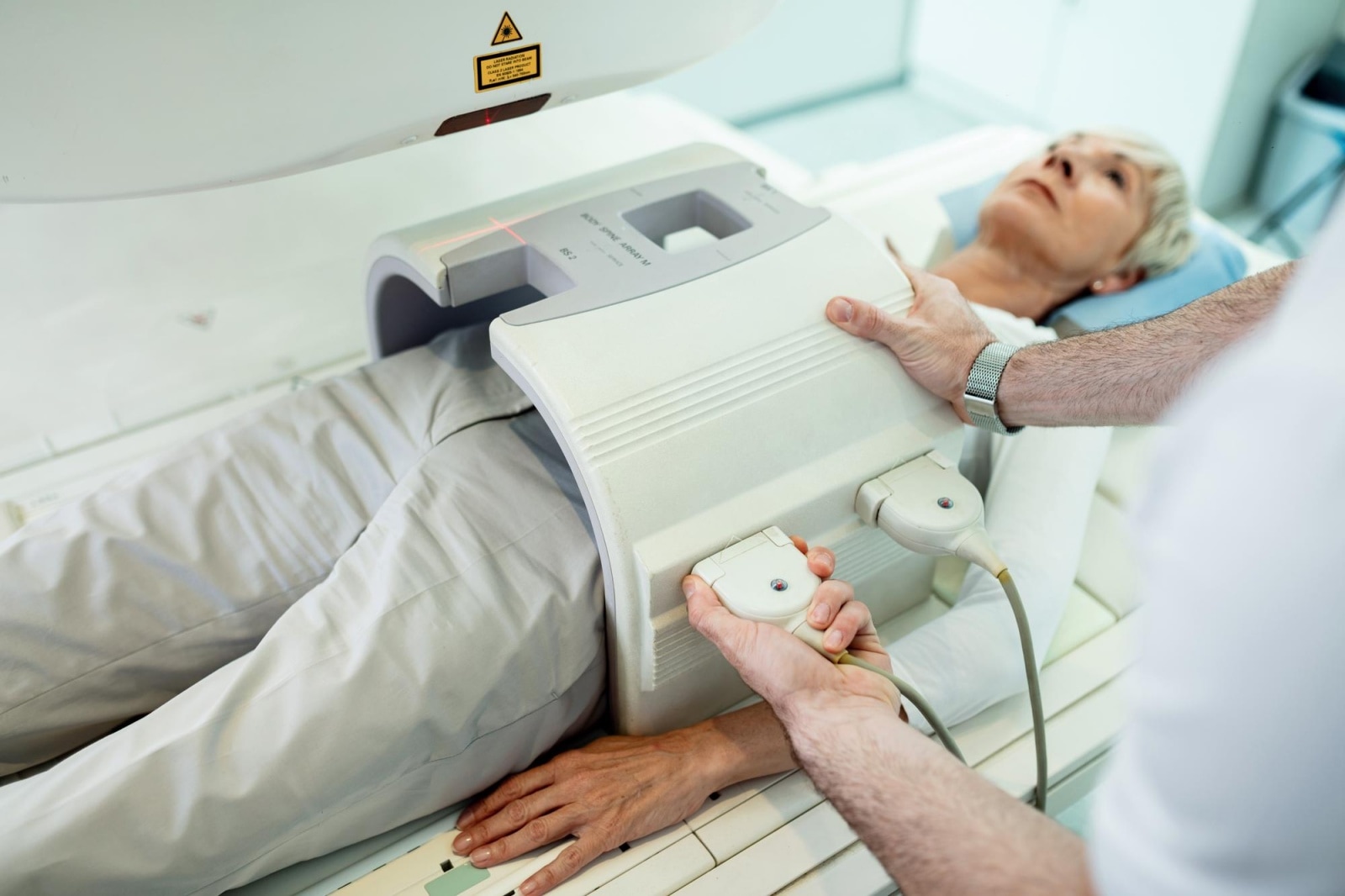 What’s a FAPI scan/representational pic (Photo: Freepik)
Why are FAPI scans being called a breakthrough in cancer detection?
“FAPI scans measure the presence of cancer-associated fibroblasts as opposed to measuring glucose metabolism,” explained Dr Miglani. This difference, he said, allows doctors to obtain clearer images with less background interference.
Story continues below this ad
“This provides an image with improved clarity due to having low background noise surrounding the tumour, resulting in higher tumour-to-background contrast, which assists in defining the tumour, particularly in cancers where FDG-PET does not perform well for detection,” he said.
Can cancer still remain hidden despite a clean scan?
“No, even with advanced imaging modalities like FAPI PET, microscopic spread of the disease can remain hidden,” Dr Miglani explained. “There may not yet be visually apparent disease spread at a cellular level. Therefore, it is common for physicians to combine surgery with other treatments or maintain close follow-up, even when there is no visible evidence of disease spread on imaging.”
DISCLAIMER: This article is based on information from the public domain and/or the experts we spoke to. Always consult your health practitioner before starting any routine.

Leave a Reply