
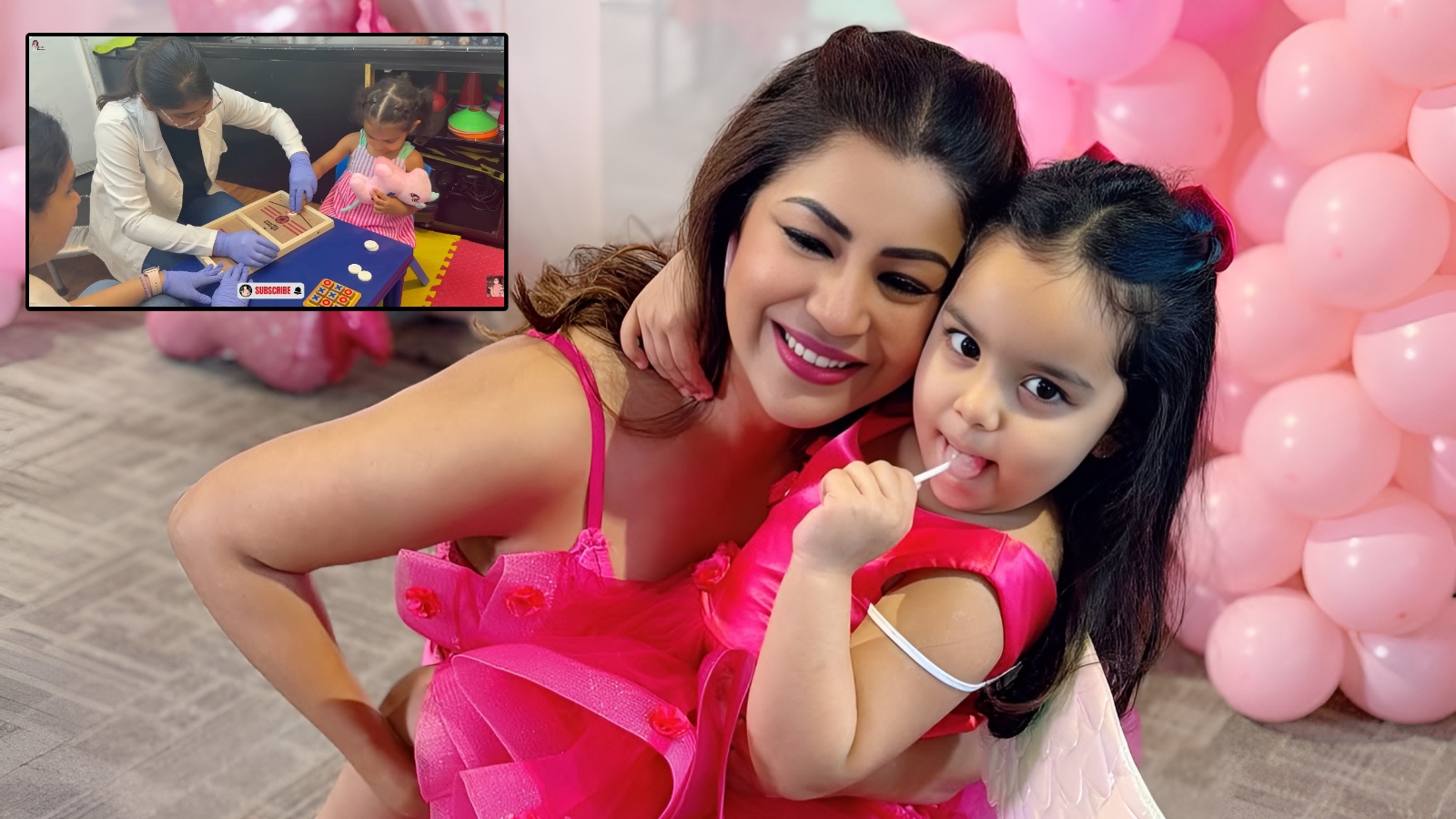
TV actor Debina Bonnerjee recently took her 3.5-year-old daughter to a speech therapist, sharing a glimpse of the visit in one of her vlogs. But why? Bonnerjee shared that, like other kids, her daughter mispronounces words at times or may speak incorrectly. The actor pointed out that when guardians simply scold them without proper guidance, it might lower a child’s confidence.
Which is why she decided to take her daughter to a speech therapist, so that she could get the correct guidance. As Debina says, it is not necessarily about “fixing” a problem, but more about understanding a habit and learning how to guide her child.
“Mujhe aisa lagta hai ki hamesha koi problem ko fix karne ki zarurat nahi hai kyunki yeh koi problem nahi hai. It’s a habit which can be corrected aur sahi mayne mein correction karna bahut zaroori hai. Aisi raah chalte hum log ghar pe kabhi bachchon ko correct kar dete hain. Aisa nahi aise aise nahi aise. Use na kabhi-kabhi bachche mein confidence kam ho jata hai. Mujhe aisa lagta hai. The right way of correcting is very different. Yeh jo aage aap dekhne wale hain, it’s a visit to the speech therapist. It’s more of guidance, less of therapy. Maine apne aap se promise kiya.” (I feel that there is not always a need to fix a problem because this is not a problem. It’s a habit which can be corrected, and correcting it in the right way is very important. Sometimes, casually, we end up correcting children at home. ‘Not like this, like this, not like this, like this.’ Sometimes, that can lower a child’s confidence. I feel that the right way of correcting is very important. What you are going to see ahead is a visit to the speech therapist. It’s more of guidance, less of therapy. I made a promise to myself.)
DISCLAIMER: This article is based on information from the public domain and/or the experts we spoke to. Always consult your health practitioner before starting any routine.
How much unclear speech is normal at 3.5?
Children develop speech at different rates, and struggling with certain sounds at this age does not automatically mean something is wrong.
Dr Nehal Shah, Consultant – Paediatric Medicine at Narayana Health SRCC Children’s Hospital, says parents should look at the bigger picture. “Parents should pay attention if their child is difficult to understand for their age… if their child consistently mispronounces sounds… if their child becomes frustrated while communicating.”
Story continues below this ad
By around 3½ years, unfamiliar listeners should generally be able to understand much of what a child says, he adds. If speech remains significantly unclear, a speech-language therapist can help determine whether it is part of normal development or needs intervention.
Dr Shah also notes that tongue tie is one of the factors that may need to be looked at when assessing speech delays or difficulties.
There are also some useful age markers. Neha Agarwal, Senior Consultant Pediatrics, Regency Health Lucknow further weighs in, “As a general guide, unfamiliar listeners should understand about half of a two-year-old’s speech, three-quarters by age three, and nearly everything a child says by age four.”
Not every lisp needs immediate concern either. A frontal lisp, where the tongue comes between the front teeth, can be a normal part of development up to around age four. A lateral lisp, which can sound “slushy” or wet, is “never typical” and should be evaluated promptly, she says.
Story continues below this ad
If a child becomes frustrated or starts avoiding talking because they are being misunderstood, Dr Agarwal recommends not waiting too long to seek help.
Don’t keep correcting every word
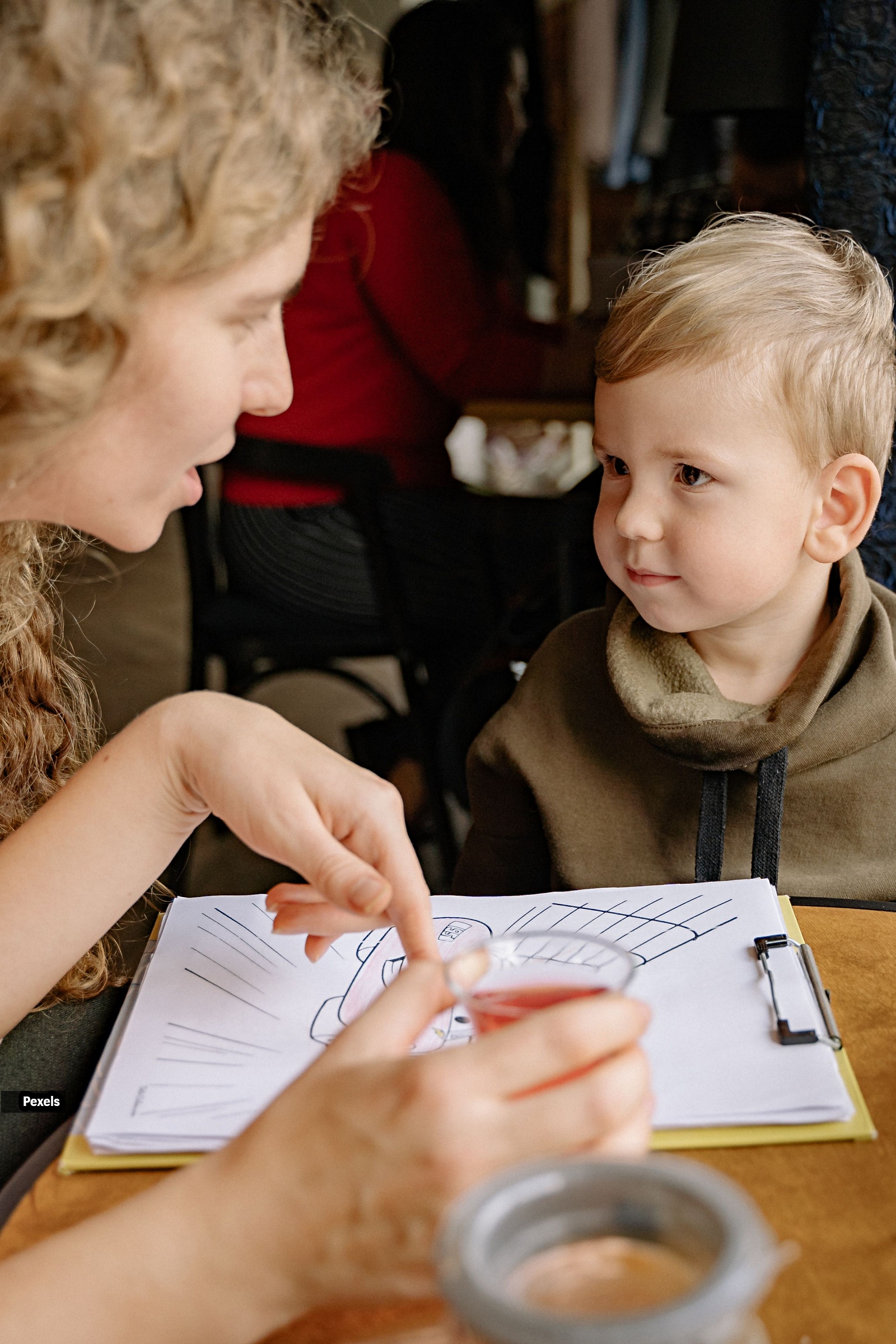 If speech therapy has been recommended for your child, consistency is important (Image: Pexels)
This is perhaps where Bonnerjee’s approach is especially relevant. Rather than turning every mispronunciation into a correction, experts recommend modelling the right pronunciation naturally.
Dr Shah advises parents to “speak slowly and clearly”, read aloud with their children and encourage them to communicate without fear of making mistakes. He also advises parents not to repeatedly correct the child’s speech at home.
Dr Jagdish Kathwate, Consultant Neonatologist & Paediatrician, Motherhood Hospital Kharadi Pune, echoes this and stresses that parents should similarly avoid putting pressure on a child. “Parents should also avoid repeatedly correcting or making fun of the child’s pronunciation.”
Story continues below this ad
Instead, parents can practise the sounds and activities recommended by the therapist during everyday conversations and play. The goal, he says, should be clear and confident communication rather than comparing the child with other children.
For a 3.5-year-old actually attending speech therapy, Dr Agarwal says the experience should be positive. “At this age, therapy is entirely play-based, gentle, and engaging.” She suggests treating visits as fun sound games rather than correction sessions and practising therapist-guided activities for just five to 10 minutes a day.
Early help can build more than clear speech
 Parents should also watch for associated signs such as persistent mouth breathing, loud snoring, nasal blockage or difficulty hearing
Speech therapy is not only about getting a child to pronounce a particular sound correctly.
“Early speech therapy can be very beneficial,” says Dr Shah. A speech-language therapist can assess articulation difficulties and use age-appropriate, play-based exercises to improve clarity, while also helping children develop confidence and communication skills.
Story continues below this ad
Dr Agarwal adds that young brains are highly adaptable, which is why early intervention can be particularly useful. Teaching correct tongue placement early may prevent poor oral-motor habits from becoming harder to change later. Clear speech can also support phonological awareness for reading and help children communicate more confidently with peers.
At the same time, Dr Ravi Bhatia, Director – ENT & Cochlear Implant, Sarvodaya Hospital Sector-8, Faridabad, points out that it is important to understand why a child’s speech is unclear.
“If a child’s speech remains consistently unclear beyond the expected stage of speech development, or if unfamiliar people struggle to understand what the child is saying, it is worth seeking an assessment,” he tells indianexpress.com.
He also recommends ruling out hearing difficulties, recurrent ear infections, enlarged adenoids or tonsils, chronic nasal blockage, and structural issues involving the tongue, palate or mouth. Parents should particularly mention persistent mouth breathing, loud snoring, nasal blockage or difficulty hearing.
Story continues below this ad
So, while a 3.5-year-old getting a few sounds wrong is not necessarily cause for alarm, persistent unclear speech, frustration while communicating or difficulty being understood deserves attention.
And as Bonnerjee’s experience suggests, getting that guidance does not have to make a child feel like there is something “wrong” with the way they speak. Sometimes, it is simply about learning how to help without making them afraid to make mistakes.
DISCLAIMER: This article is based on information from the public domain and/or the experts we spoke to. Always consult your health practitioner before starting any routine.

Leave a Reply