
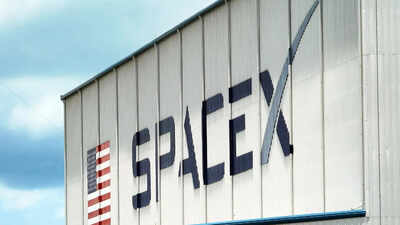
Elon Musk barely waited for the IPO confetti to settle. Days after taking SpaceX public in the largest stock market debut ever, his company confirmed on Tuesday that it is buying Anysphere, the startup behind the AI coding tool Cursor, for $60 billion in an all-stock deal. It is the biggest acquisition of a venture-backed startup on record, beaten only by Musk folding his own xAI into SpaceX earlier this year. Nobody is shocked it happened.Musk had set its eyes back in April, with SpaceX securing an option to either buy Cursor outright or walk away for a $10 billion breakup fee. What turns heads is the speed. The deal, set to close in the third quarter pending regulatory approval, lands while SpaceX is still days old as a public company. Here is what pushed Musk to move now.
Grok is losing the AI race, and coding is where it hurts most
Grok keeps shrinking. The chatbot, built by xAI before the February merger, watched its mobile daily active users drop from 13.9 million in March to 12.2 million in April, falling from second place among chatbots at the start of the year to fifth, behind Claude, Gemini and DeepSeek. Coding is the rawest nerve. Musk has openly complained about how badly xAI’s coding product trails Anthropic’s Claude Code and OpenAI’s Codex. Building a rival from scratch would take years he does not have. Cursor, already in the hands of millions of developers, hands him a finished product overnight.
Cursor needed compute, and SpaceX had piles of it spare
The April partnership explains the logic. Cursor had the product and the users but kept slamming into the same wall: compute. Its in-house model, Composer, hit frontier-level performance at a fraction of rivals’ cost, yet the team admitted it was “bottlenecked by compute.”SpaceX sits on the opposite problem. It owns Colossus, xAI’s million-H100-equivalent supercomputer in Memphis, and has been renting the spare capacity out, including roughly $26 billion a year in cloud deals with Anthropic and Google. Those contracts carry 90-day termination clauses, so the moment Cursor and Grok demand picks up, SpaceX can claw the compute back for itself. The two have already been training a model together, due to land in Cursor and Grok Build soon.
The all-stock deal costs Musk next to nothing right now
This is the easy part of the equation. Paying in stock means SpaceX leans on its inflated valuation rather than the $80 billion-plus it just raised. The deal works out to 3.4% dilution at the IPO valuation, a thin sliver of equity for a $60 billion prize. And the stock has been climbing fast: up 19% on day one, another 20% on Monday, over 10% by Tuesday morning, enough to leapfrog Amazon into the five most valuable companies in the US.Billionaire Bill Ackman summed up the trick, noting the rich valuation makes the purchase cost “materially less in dilution.” With Cursor last reported raising at a $50 billion valuation, the $60 billion tag also hands its backers, Thrive, a16z, Nvidia and Google among them, a clean markup.Whether any of it pays off is the open question. Cursor’s market share has already slid from 41% in June 2025 to about 26% by May, with Anthropic’s Claude Code swallowing half the category. Every developer Musk hopes to win over is one who could just as easily walk. But for a man who reads the world in trajectories, spending borrowed altitude on a coding comeback was probably the easiest call he made all week.

Leave a Reply