
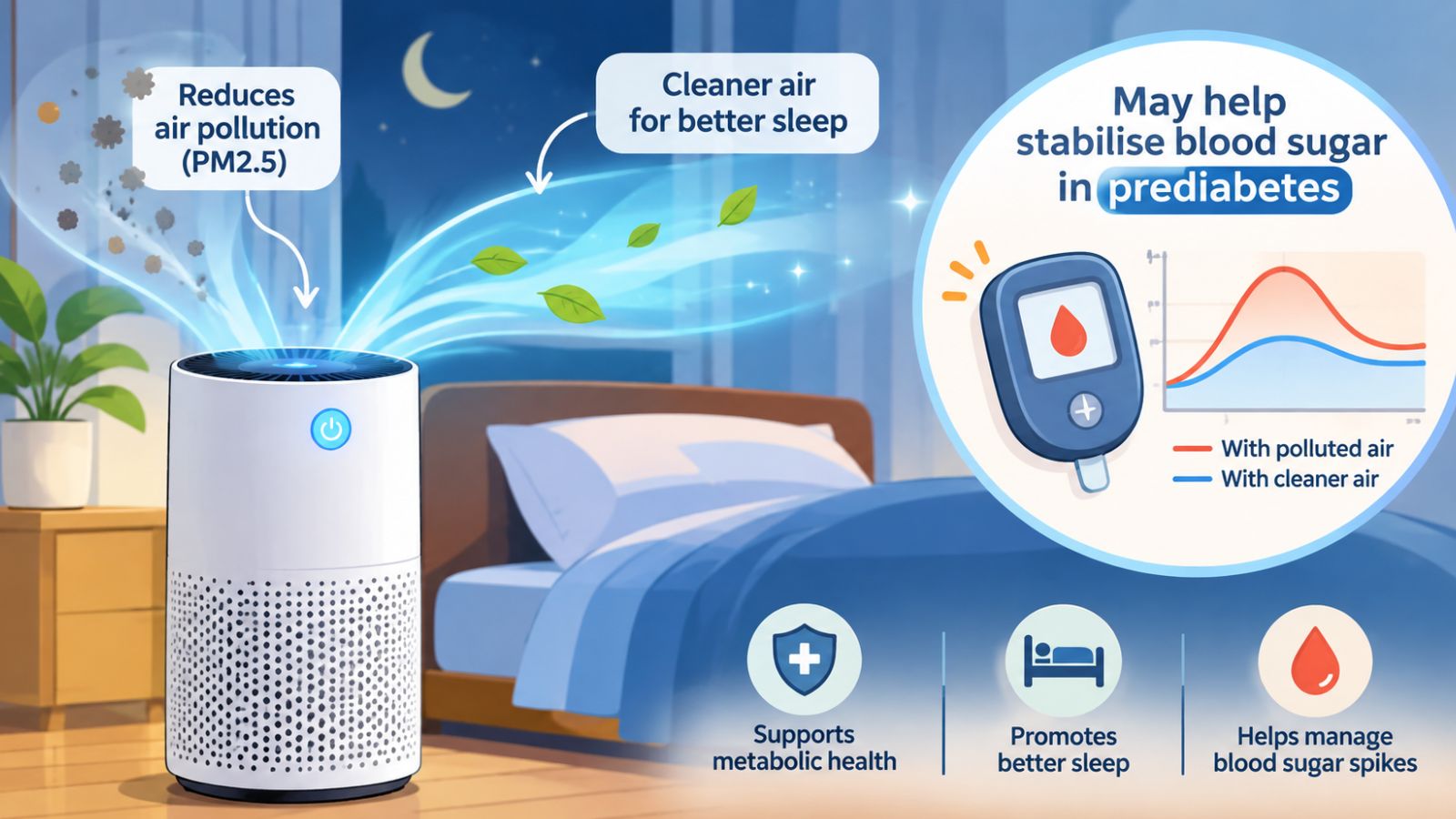
A new study suggests that using portable filters to reduce exposure to air pollution during sleep may stabilise the large spikes in blood sugar experienced by people with prediabetes. According to a PRNewswire report, researchers at NYU Langone Health led the study, which assessed more than 150 men and women with prediabetes and no known buildup of cholesterol in their arteries, a condition called atherosclerosis.
While experts have linked air pollution to both prediabetes and cardiovascular disease, until now it remained unclear whether using high‑efficiency particulate air (HEPA) filters at home could improve blood sugar control.
“Testing this for the first time in humans, scientists had half the study participants sleep with real bedroom air filters for about a month, while the other half used sham filters that did not clean air. The real filters cut levels of tiny, harmful air particles by 36 per cent,” the report says.
Study lead author and cardiologist Sharine L. Wittkopp, MD, PhD, a clinical instructor in NYU Grossman School of Medicine’s Department of Medicine and its Leon H. Charney Division of Cardiology, told PRNewswire, “Our findings suggest that cleaner air at home, especially in the bedroom, may help people with prediabetes keep their blood sugar steady and blunt morning spikes. Installing HEPA filters offers an easy, low‑cost tool to help protect heart and metabolic health along with healthy eating, regular exercise, and prescribed medications.”
DISCLAIMER: This article is based on information from the public domain and/or the experts we spoke to. Always consult your health practitioner before starting any routine.
We cross-checked this with a pulmonologist.
Does this really work?
Dr Harish Verma, Director, Pulmonology, ShardaCare – Healthcity says, “Nighttime use of air purifiers in bedrooms may offer an additional health benefit for people with prediabetes, particularly when they are exposed to high levels of air pollution.”
“Emerging research suggests that exposure to fine particulate matter (PM2.5) and other airborne pollutants can interfere with the body’s ability to regulate blood glucose levels. Inhaling polluted air can trigger inflammation and oxidative stress, which may contribute to insulin resistance, a condition in which the body’s cells do not respond effectively to insulin. This can make it harder for the body to maintain stable blood sugar levels,” he adds.
Story continues below this ad
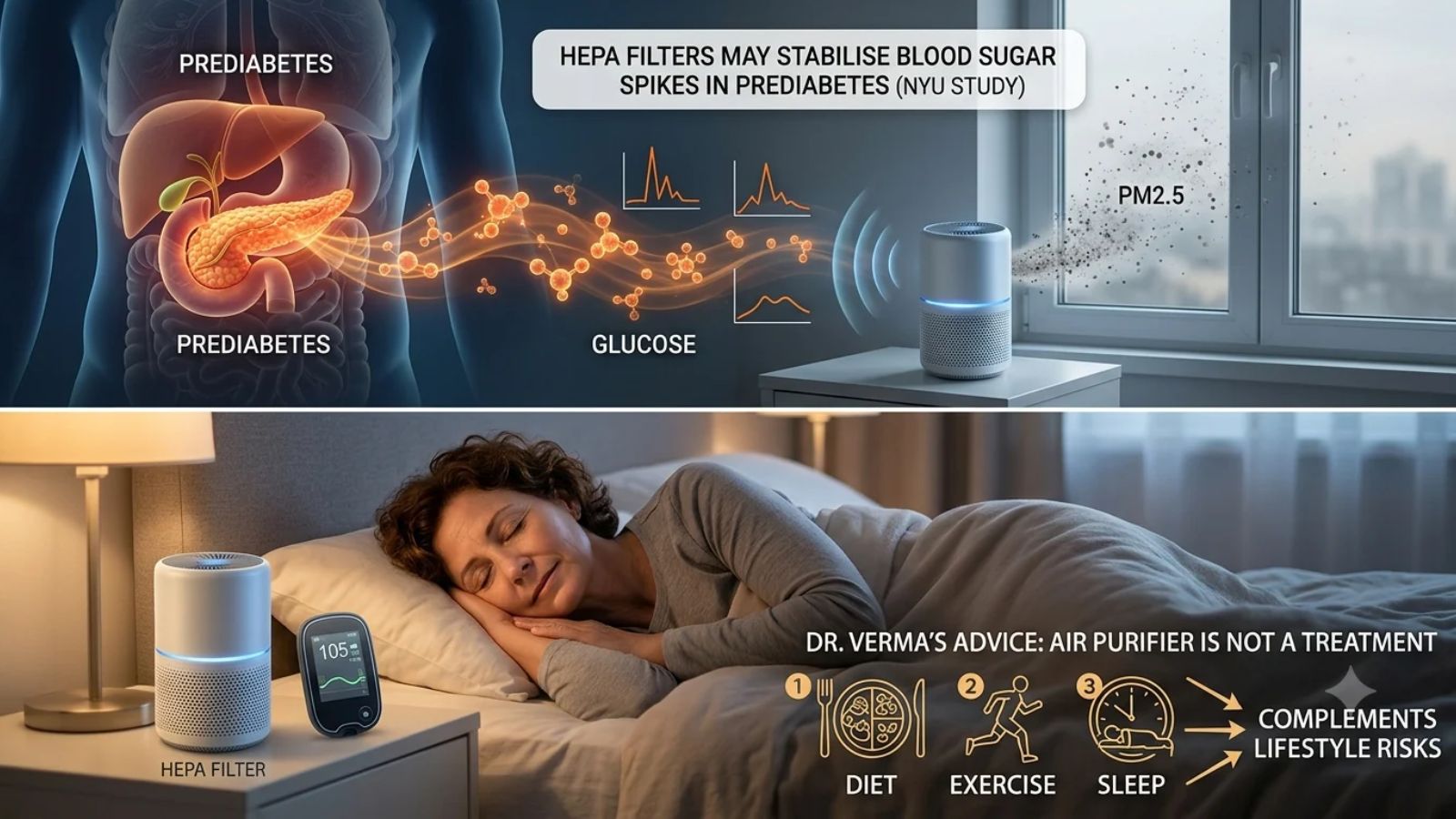 Using a HEPA air purifier in the bedroom may help reduce exposure to fine particulate matter during sleep. (AI-generated image for representational purposes only)
Using an air purifier with a high-efficiency particulate air (HEPA) filter in the bedroom at night can help reduce indoor exposure to fine particulate matter, especially when outdoor pollution levels are high.
“Since people spend several continuous hours sleeping, improving indoor air quality during this period may reduce the duration of exposure to harmful pollutants. Better air quality may also support healthier sleep, which is important because poor or disrupted sleep can affect hormones involved in glucose regulation, including insulin and cortisol,” explains Dr Verma.
He points out that for people with prediabetes, reducing exposure to air pollution could therefore be one of several supportive measures to improve overall metabolic health.
However, an air purifier is not a treatment for prediabetes, and there is currently insufficient evidence that using one at night directly prevents large blood sugar spikes or lowers glucose levels.
Story continues below this ad
“Its potential benefit is primarily through reducing exposure to airborne pollutants that may contribute to metabolic stress,” he adds.
What should be kept in mind?
Here is what Dr Verma suggests:
- People should choose appropriately sized HEPA air purifiers
- Keep bedroom doors and windows closed when outdoor pollution is high
- Maintain filters regularly
“These measures should complement, rather than replace, established preventive steps such as a balanced diet, regular physical activity, adequate sleep and routine blood glucose monitoring,” he warns.
For individuals with prediabetes, managing multiple lifestyle and environmental risk factors together is important in reducing the likelihood of progression to type 2 diabetes.
DISCLAIMER: This article is based on information from the public domain and/or the experts we spoke to. Always consult your health practitioner before starting any routine.

Leave a Reply