
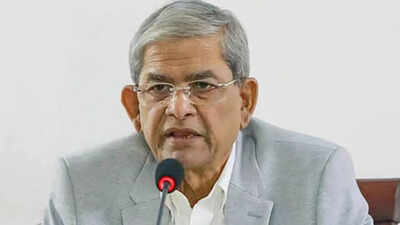
Bangladesh has elected senior Bangladesh Nationalist Party (BNP) leader Mirza Fakhrul Islam Alamgir as its 23rd president, marking a significant shift for a politician who until recently held one of the party’s top organisational posts.Alamgir secured 255 votes in Thursday’s presidential election held at the Jatiya Sangsad, Bangladesh’s Parliament. His rival, Oli Ahmed, the candidate backed by an 11-party opposition alliance led by Bangladesh Jamaat-e-Islami and the National Citizen Party (NCP), received 88 votes.The voting took place between 2 pm and 5 pm local time under the supervision of chief election commissioner AMM Nasir Uddin. Of the 349 MPs eligible to vote, 343 cast their ballots. The chief election commissioner later announced Alamgir as the winner.
A contested presidential election after 35 years
Thursday’s poll was notable because it was the first time in 35 years that more than one candidate contested Bangladesh’s presidential election. The previous presidential election involving a parliamentary vote was held in 1991.Alamgir had been nominated as the BNP’s presidential candidate last week. After receiving the nomination, he stepped down as BNP Secretary General and resigned from the party’s National Standing Committee.BNP Senior Joint Secretary General Ruhul Kabir Rizvi announced his nomination following a meeting of the party’s National Standing Committee near the Bangladesh Prime Minister’s Office at the Secretariat. Rizvi said the decision followed discussions with Prime Minister and BNP Chairman Tarique Rahman.Acting President and Speaker of the Jatiya Sangsad Hafiz Uddin Ahmed, Prime Minister Tarique Rahman and other MPs also took part in Thursday’s voting.Although the Jatiya Sangsad has 350 seats, only 349 members were eligible to vote because the election in one constituency had been suspended. Of those eligible, 343 participated in the presidential election.
Why Bangladesh needed a new president
The election was held after Mohammed Shahabuddin resigned as President on July 24, citing serious health problems.Shahabuddin had been serving as Bangladesh’s 22nd President since April 2023, when he was elected unopposed as the nominee of the then-ruling Awami League. His five-year term was originally due to end in April 2028.He submitted his resignation to then-Speaker Hafiz Uddin Ahmed, who assumed the President’s constitutional duties under Article 54 until a successor could be elected.Under Bangladesh’s Constitution, a new President must be elected by Parliament within 90 days of the office becoming vacant. Thursday’s election was therefore held within the required period, ending the temporary arrangement under which the Speaker had been performing the President’s duties.
From BNP leadership to the presidency
Alamgir’s election marks a major change in his political role. He had served as BNP Secretary General before stepping down to contest the presidential election.The result also comes at a significant point in Bangladesh’s political transition, with the BNP now holding power after years of opposition politics. Alamgir’s move from the party’s organisational leadership to the country’s highest constitutional office places a senior BNP figure at the head of state.The President’s role in Bangladesh is largely constitutional and ceremonial, while executive authority rests with the government headed by the Prime Minister.

Leave a Reply