

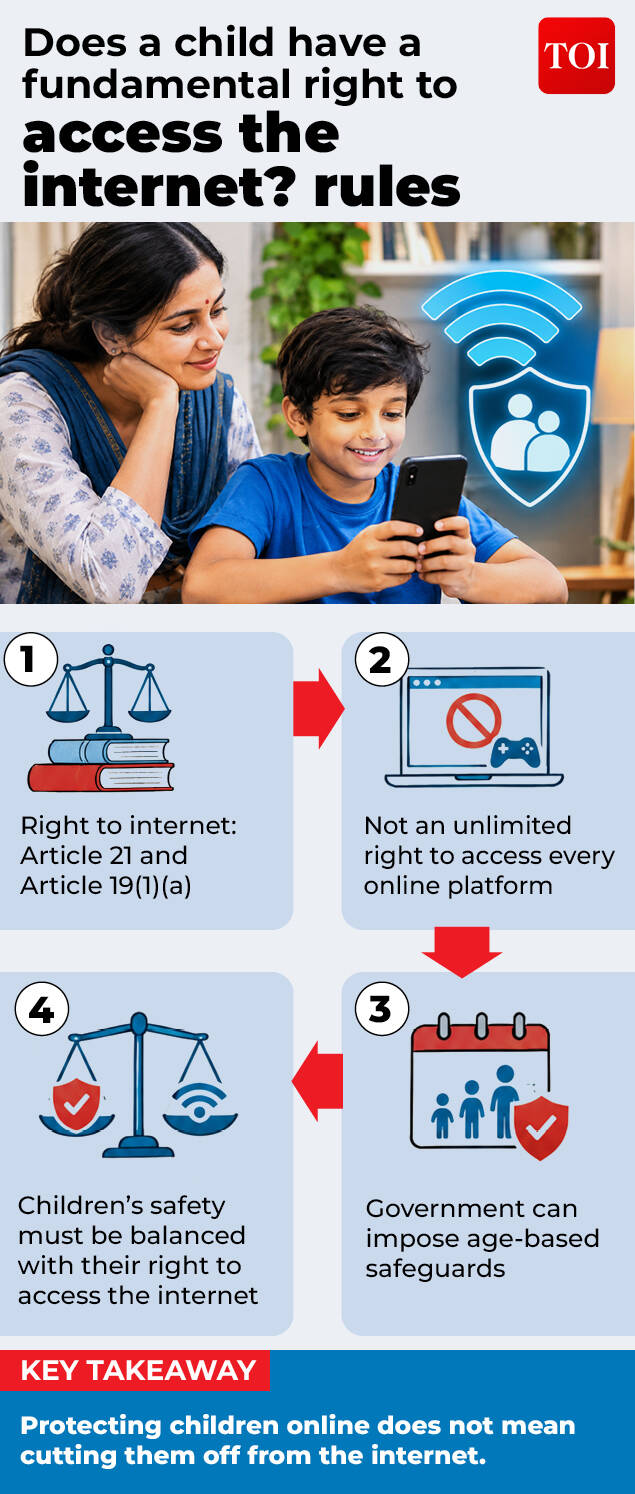
NEW DELHI: For a child, the same phone that opens a classroom can also open a chat with a stranger. The internet offers space to learn, play and build friendships, but access brings risks that children may not yet know how to recognise and parents cannot always monitor.Recent Supreme Court proceedings on children’s online safety have brought that tension into focus: How can children exercise their rights online without being left exposed to harm? The answer involves more than parental supervision. It raises questions about age-based restrictions, privacy and the responsibility of social media companies to make their platforms safer.A child’s right to use the internetIn its October 15, 2026, order in Just Rights for Children Alliance v S. Harish, a two-judge Supreme Court bench observed that children have a fundamental right to access the internet under Articles 21 and 19(1)(a) of the Constitution. The court also recognised that children may need special safeguards, including parental consent and a child-friendly mode.This does not mean every child has an automatic right to open a social media account. In its 2020 judgment in Anuradha Bhasin v Union of India, the Supreme Court protected the use of the internet for speech and business, but did not declare internet access itself a fundamental right.
–
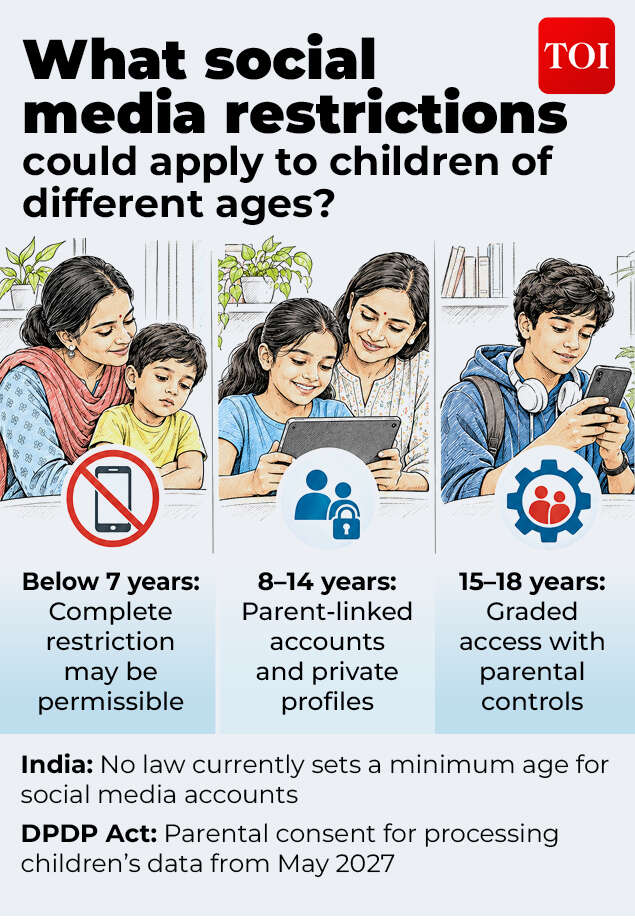
Kanu Agrawal, advocate, Supreme Court of India, said the right to access the internet does not mean children should be free to use every online service without limits.“The right to access internet is not absolute even for adults, and a fortiori not for children. Speech yields to Article 19(2) and liberty to a law that is just, fair and proportionate. It must be understood that the Supreme Court has never said that a six-year-old in Delhi holds an unqualified right to a social media account,” he added.Why age-based restrictions are being discussedIndia does not yet have a law that sets a minimum age for opening a social media account. The Digital Personal Data Protection Act, 2023, treats everyone below 18 as a child. From May 2027, it will require platforms to take verifiable parental consent before processing a child’s personal data. However, the law deals with how children’s data is used; it does not itself ban them from accessing social media.
–
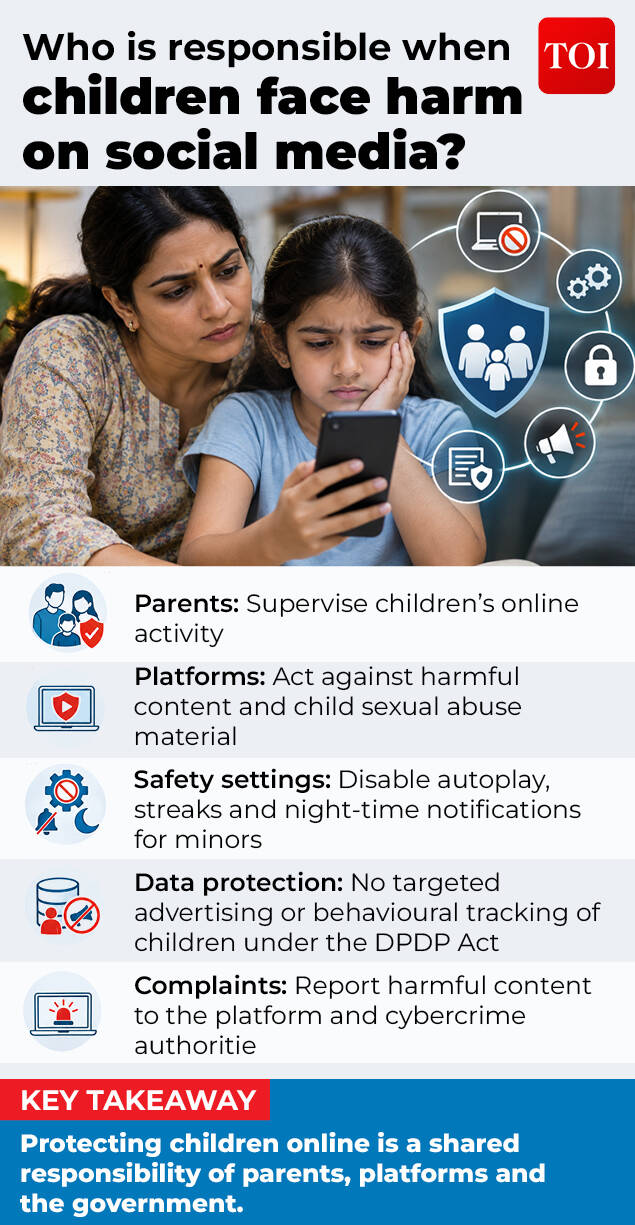
Some states have started discussing restrictions. Karnataka announced a proposed ban for children below 16 in its March 2026 Budget speech. Andhra Pradesh has proposed restricting access for children below 13 and setting different rules for those aged 13 to 16.Agrawal believes children should have different levels of access depending on their age.“The law can operate bands of ages. Below a particular age of maybe 7, even a complete ban on social media/internet can be constitutionally permissible. From 8 to 14, use must be hedged with high controls, through parent-linked accounts private by default and closed to strangers. From 15 to 18 graded adolescent use with parental controls is appropriate. The child’s right is real, but it is a right to be protected and provided for, exercised through the parent and secured by the State,” he said.Social media companies cannot ignore their responsibilitiesParents are not the only ones responsible for keeping children safe online. Social media companies also have duties under Indian law.Section 79 of the Information Technology Act gives online platforms protection from legal action over content posted by users, provided they follow the required rules. These include taking action on complaints about harmful content within specified time limits. Large platforms must also use tools to identify child sexual abuse material and report it to the police under the POCSO Act.The Supreme Court’s October 15, 2026, order has set out further steps, including checking content against a national database and submitting regular reports on compliance.Agrawal says platforms must also stop using features that encourage children to spend too much time online.“The responsibility is therefore ours and the government’s, and the platform’s duty is to obey. The State must make obedience cheaper than default, through penalties triggered by the default itself, a prohibition on profiling and targeted advertising directed at children, protective defaults switching off autoplay, streaks and night-time notifications for minors, and the burden of keeping children within their age band placed squarely on the platform,” Agrawal said.Age checks and children’s privacyChecking a child’s age does not automatically violate their privacy. A platform may need to know whether a user is a child so it can apply the right safety settings. But it should not collect more personal information than necessary or use that information for advertising.The legal expert said the bigger concern is what companies do with a child’s information after collecting it. Platforms should be able to confirm a user’s age group without asking for full identity details.What parents can do when a child faces online harmParents can first complain to the platform’s grievance officer. Under the IT Rules, platforms must acknowledge complaints within 24 hours and resolve them within seven days. Shorter timelines apply to certain types of content, including intimate or morphed images.
–
If the response is not satisfactory, parents can appeal to the government’s Grievance Appellate Committee within 30 days. Threats, stalking, sextortion or sexual images of a child can also be reported to the police or the Special Juvenile Police Unit. Parents can use the national cybercrime reporting portal as well.Parents need support, not blameParents are not automatically criminally responsible for something their child does online. Criminal liability generally depends on the child’s age and the law that applies. Parents also have a role under data protection law, as their consent may be required before a platform processes their child’s personal data.Advocate Agrawal said parents cannot be expected to control every online risk when they do not know how a platform works or what content its systems show to children.“The parent is the first guardian and the State the ultimate guardian as parens patriae. A parent cannot supervise what a platform conceals, and the government’s half of the duty is to equip parents with real tools, protective defaults and clear information, and to compel platforms to provide them,” Agrawal further said.If a child’s account is blocked because of their age, parents can ask the platform for the reason, provide proof of age and seek a review. If the complaint is not resolved, they can appeal to the Grievance Appellate Committee within 30 days. A government restriction can also be challenged in court if it violates the child’s rights.The aim should not be to keep children away from the internet altogether. It should be to make online spaces safer and ensure parents have the support they need to protect their children.

Leave a Reply