
You wake up one morning and notice that the vision in one eye is suddenly blurred. You wait, hoping it will clear on its own. Two hours later, your vision is back to normal. It sounds reassuring. But should you still see a doctor?
That is exactly what one person asks on Quora: “I woke up this morning with blurred vision in one eye that lasted for about 2 hours. What could’ve caused this?”
Several explanations are possible, ranging from something as simple as dry eyes to a problem involving the retina or blood vessels. But because the blurring comes on suddenly, affects only one eye and lasts for two hours, ophthalmologists advise getting it checked rather than assuming it is just tiredness or screen time.
DISCLAIMER: This article is based on information from the public domain and/or the experts we spoke to. Always consult your health practitioner before starting any routine.
It may be simple, but don’t assume it is
Dry eyes, eye strain, contact-lens irritation and temporary changes in the tear film can all make vision hazy. Spending long hours on a laptop or phone can contribute, particularly in an air-conditioned environment.
“Usually, the vision fluctuates and may improve after blinking or resting the eyes,” Dr Abhishek Hoshing, Sr Consultant, Ophthalmology, Apollo Hospitals Navi Mumbai, tells indianexpress.com.
Migraine is another possibility, particularly if someone has experienced similar episodes before. However, typical migraine-related visual symptoms often affect both eyes or the same part of the visual field in both eyes, rather than being genuinely limited to one eye.
Story continues below this ad
“Serious, high-risk causes include a micro-clot or embolus blocking retinal blood vessels (ocular TIA), carotid artery stenosis (narrowing of the main neck arteries feeding the brain), giant cell arteritis (an inflammatory condition of the blood vessels seen mostly in adults over 50), or acute glaucoma. Because the retina is an extension of the brain, any vascular issue in the eye serves as a direct window into overall cerebrovascular health,” says Dr Shibal Bhartiya, Clinical Director – Ophthalmology, Marengo Asia Hospitals, Gurugram.
 Flashes of light, a sudden increase in floaters, a curtain or shadow across the vision, or a sudden major reduction in vision also require urgent attention.
So there’s a real chance your temporary vision blur was related to corneal problems, retinal conditions, optic nerve disorders, and changes in blood sugar or blood pressure.
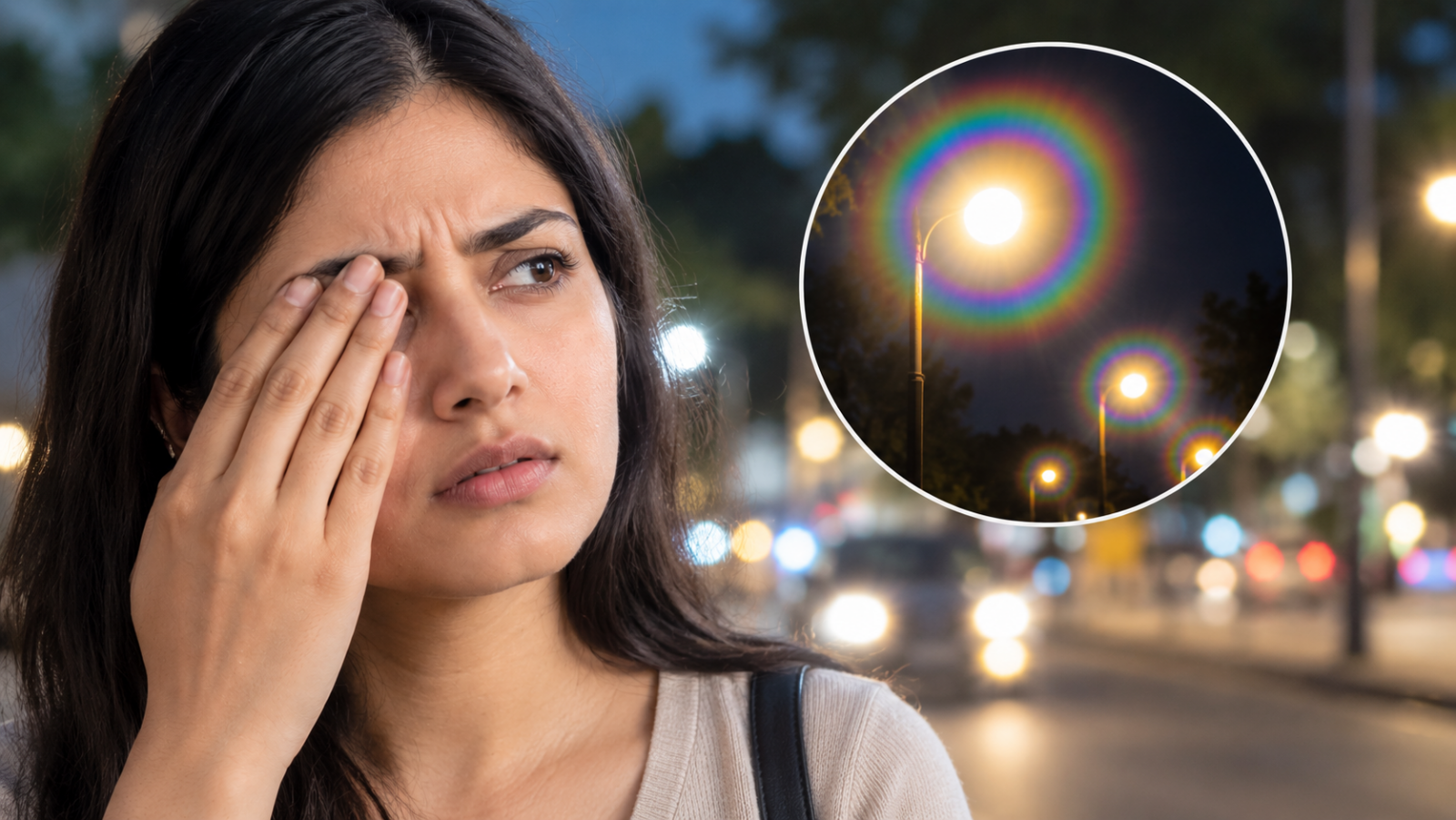
Acute angle-closure glaucoma is one condition that needs particular attention. It can cause sudden blurring in one eye and is usually accompanied by “seeing rainbow coloured haloes around points of light, redness of eyes and nausea or frank vomiting,” Dr Hoshing says.
Why doctors take sudden one-eye blurring seriously
One of the conditions that needs to be ruled out is “amaurosis fugax”, or transient monocular visual loss, also known as “mini stroke.” This occurs when the blood supply to the retina is temporarily reduced or blocked.
Story continues below this ad
“Temporary loss or significant reduction of vision in one eye can sometimes be a warning sign of amaurosis fugax,” Dr Abhijeet Singh Sachan, Senior Consultant, Regency Health Kanpur tells indianexpress.com. It can be associated with the same vascular processes that cause a TIA, making a seemingly temporary eye problem potentially important.
Dr Megha Kotecha, Professor, Department of Ophthalmology, DPU Super Specialty Hospital, Pimpri, Pune, echoes this and puts it similarly: sudden blurring in one eye lasting two hours “raises concern for reduced blood flow to the retina, known as transient monocular visual loss or amaurosis fugax.”
The risk is particularly relevant for people with diabetes, high blood pressure, high cholesterol, smoking history or cardiovascular disease.
“The retina has a very complex network of minute blood vessels, and since these are very small, they can get affected initially,” Dr Shalini Shetty, Ophthalmologist, Apollo Hospitals, Bannerghatta Road, Bengaluru tells indianexpress.com.
Story continues below this ad
She further explains that small clots due to diabetes, cholesterol, and other conditions that can “predispose to clot formation” can occur in the retinal blood vessels “much earlier than they occur elsewhere in the body.”
The tricky part is that you cannot reliably tell at home whether the episode is due to a migraine, dry eye or a temporary blood-flow problem. As Dr Sachan puts it, a person “cannot reliably distinguish a vascular event from a harmless cause simply based on how the symptom feels.”
“An ocular migraine tends to develop more gradually, frequently accompanied by visual disturbances like shimmering lights, jagged lines, or blind spots before the blurring sets in, and it may be followed by a headache,” Dr Bhartiya points out.
She further adds that “treatment pathways for a migraine and an impending stroke are fundamentally different; an immediate medical evaluation is essential.”
Story continues below this ad
Watch out for these warning signs
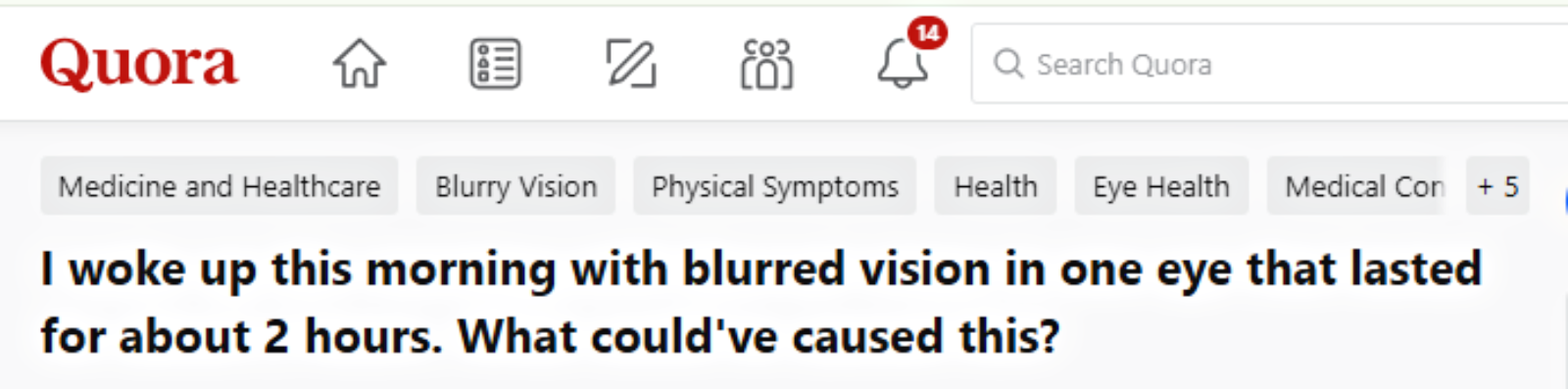 Screenshot of the query posted on Quora
Sudden blurred vision becomes more urgent when it comes with other neurological symptoms.
“If blurred vision occurs along with weakness or numbness of the face, arm or leg, difficulty speaking, confusion, severe dizziness, loss of balance or a sudden severe headache, emergency medical help is needed,” Dr Kotecha cautions.
There are also eye-specific red flags: flashes of light, a sudden shower of new floaters, a dark curtain or shadow across the vision, severe eye pain, redness, vomiting or a major or continuing loss of vision.
And symptoms disappearing does not necessarily make them harmless. “Transient neurological or visual symptoms can still require urgent assessment,” Dr Hoshing clarifies.
Story continues below this ad
What if the vision returns to normal?
It should still be evaluated, particularly if this is the first such episode.
“Complete recovery does not necessarily mean that the underlying cause was harmless,” Dr Sachan notes.
An ophthalmologist may check visual acuity, pupils, eye pressure and the retina. Depending on what they find, they may also recommend visual-field testing, retinal photographs, or an OCT scan.
If there is concern about a vascular or neurological cause, the evaluation can extend beyond the eye. According to ophthalmologists, blood tests, blood pressure and blood sugar checks, cholesterol testing, a carotid Doppler, cardiac evaluation, or CT/MRI imaging may be advised depending on the symptoms and medical history.
Story continues below this ad
Could dehydration, low sugar or sleeping awkwardly be behind it?
 A sudden, unusually severe headache is another warning sign, particularly if it is accompanied by neurological symptoms (Envato image)
Possibly, but these should not become the default explanation.
Dehydration, fatigue and low blood sugar can cause visual disturbances. Someone who has skipped meals or taken diabetes medication without eating enough may experience blurring along with sweating, shakiness, weakness or palpitations. Long screen hours can trigger dry eyes and eye strain, while migraine can cause temporary visual symptoms.
Pressure on the eye while sleeping can also cause brief blurring after waking.
But a two-hour episode affecting just one eye is different. These possible triggers “should not be assumed to be the cause of sudden blurring in one eye lasting two hours,” Dr Kotecha says.
Story continues below this ad
If it happens again, or if the person develops sudden vision loss, weakness, difficulty speaking, severe headache or severe eye pain, emergency medical attention is warranted. Even when the vision returns to normal, a first-time unexplained episode is worth discussing with an eye specialist.
As Dr Shalini Shetty, Ophthalmologist, Apollo Hospitals, Bannerghatta Road, Bengaluru, puts it: “Blurring of vision, even if it recovers after some time, always needs to be assessed.”
DISCLAIMER: This article is based on information from the public domain and/or the experts we spoke to. Always consult your health practitioner before starting any routine.

Leave a Reply