
New Delhi, September 15:
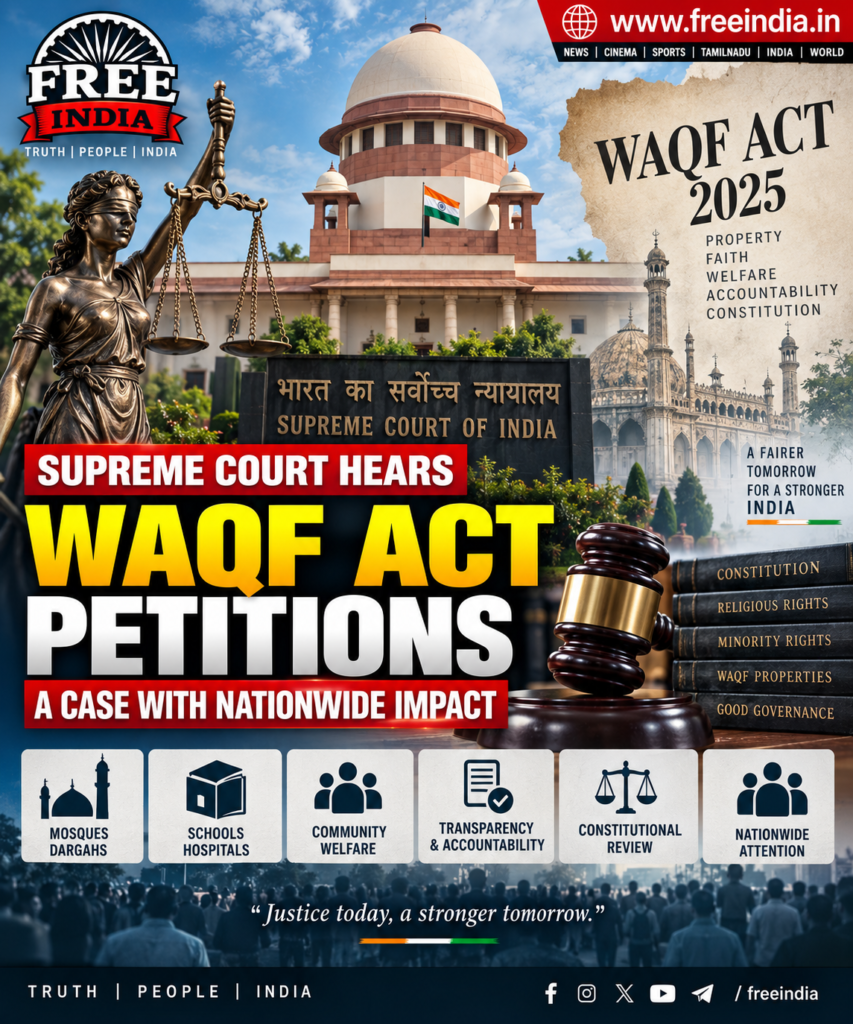
The Supreme Court of India is currently hearing a series of petitions challenging key provisions of the Waqf (Amendment) Act, 2025, a law that introduced major reforms in the administration and management of Waqf properties across the country.
Waqf properties are assets donated for religious, charitable, educational, and social welfare purposes under Islamic law. These include mosques, dargahs, cemeteries, schools, hospitals, and other community institutions. The management of these properties has long been overseen by Waqf Boards operating under legal frameworks established by the government.
The Centre introduced the Waqf (Amendment) Act with the objective of improving transparency, accountability, and governance in the administration of Waqf properties. According to the government, the reforms aim to ensure better record-keeping, prevent misuse of assets, and strengthen institutional oversight.
However, several religious organizations, community groups, and individuals have challenged certain provisions of the amended law before the Supreme Court. The petitioners argue that some changes may affect the autonomy of Waqf institutions and raise constitutional concerns regarding religious rights and the management of community-owned properties.
Among the major issues under debate are the role of non-Muslim members in Waqf-related bodies, government oversight mechanisms, and revised procedures for identifying and managing Waqf properties. Petitioners contend that these provisions require careful constitutional scrutiny.
The Union Government, on the other hand, maintains that the amendments are intended solely to improve governance and ensure that Waqf assets are utilized effectively for the welfare of the community. The government has defended the law as a necessary step toward modernizing the administration of religious endowments.
The Supreme Court has not yet delivered a final verdict. The court is examining the challenged provisions in detail and assessing whether they comply with constitutional principles relating to religious freedom, property rights, and minority protections.
Legal experts believe the outcome of the case could have far-reaching implications for the governance of Waqf properties and may influence future policies concerning religious institutions across India.
As the hearings continue, the case remains one of the most closely watched legal and political developments in the country, attracting attention from policymakers, religious organizations, legal scholars, and citizens alike.
Tags:

Leave a Reply