
3 min readNew DelhiJun 7, 2026 07:00 PM IST
If you are struggling to meet your daily protein intake, remember that the general guideline by the World Health Organization (WHO) suggests consuming about 0.8 to 1.2 grams per kilogram of body weight. But for active individuals who regularly strength-train or engage in intense workouts, a higher protein intake may be appropriate. If your goal is to hit 120g a day but you do not want to rely on supplements or animal-based sources, Edwina Raj, Head of Services – Clinical Nutrition & Dietetics, Aster CMI Hospital, Bangalore, suggests some sources to help you put together a meal plan.
Getting 120 g of protein daily as a vegetarian is possible without protein powders or supplements, but it requires careful meal planning. According to the expert, “protein should be spread across all meals instead of eating it in one sitting. A mix of dairy products, pulses, soy foods, nuts, and whole grains can help meet the requirement naturally.”
DISCLAIMER: This article is based on information from the public domain and/or the experts we spoke to. Always consult your health practitioner before starting any routine.
Focus on dairy
Milk and milk products are one of the easiest vegetarian protein sources. Two glasses of milk can give around 16 g of protein. One bowl of curd adds another 8–10 g. Paneer is also rich in protein, and 100 g of paneer can provide about 18 g of protein. Greek yoghurt or hung curd is another good option.
 You need 4-5 meals daily (Source: AI)
Make soy your bff
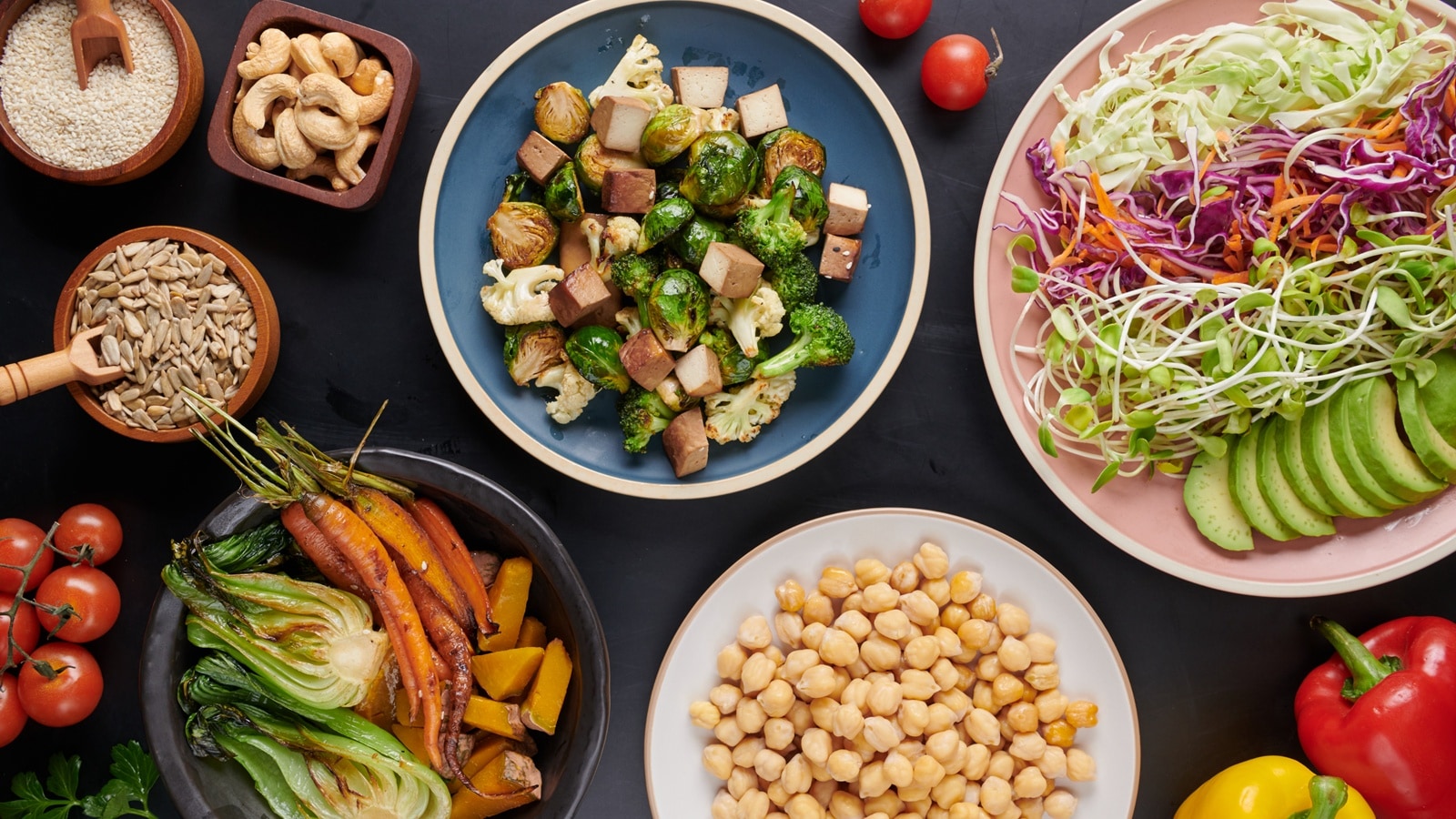
Soy-based foods are among the best vegetarian proteins. About 100 g tofu gives around 12–15 g protein. Soya chunks are very high in protein, and one cup cooked soya chunks can provide nearly 25 g protein. Including soy foods 3–4 times a week can help increase protein intake easily.
Add lots of legumes and pulses
Dal, chickpeas, rajma, green gram, black chana, and sprouts are important daily foods. One bowl of dal usually gives 7–10 g protein. Combining different pulses with rice or roti improves protein quality. Sprouts can be added to breakfast or salads for extra nutrition.
Don’t forget your dry fruits
Nuts and seeds also help increase protein intake. Almonds, peanuts, chia seeds, flaxseeds, pumpkin seeds, and sesame seeds can be used as snacks or added to meals. Peanut butter with whole wheat bread is another simple option.
Story continues below this ad
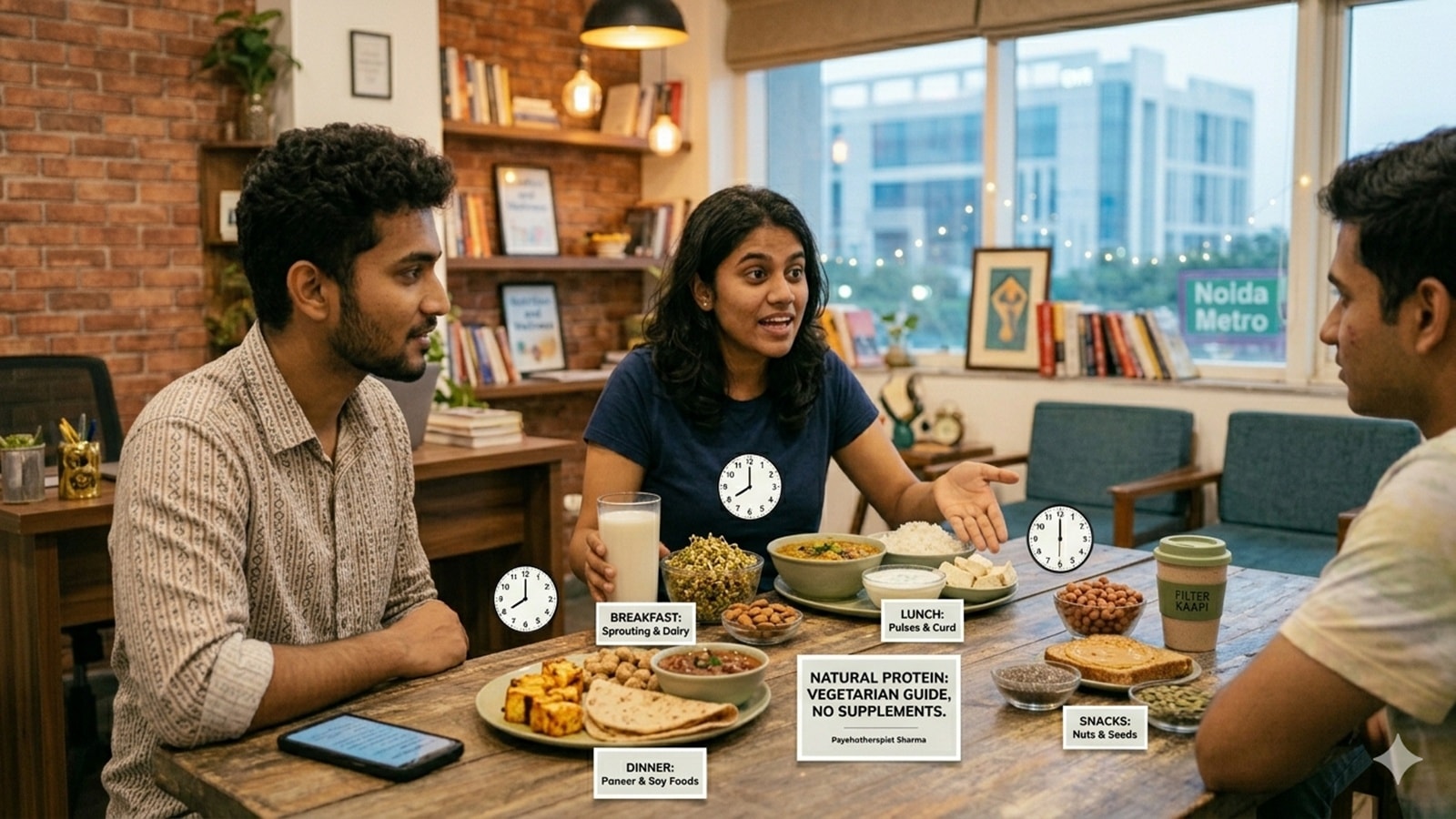
Raj reiterates that a vegetarian person aiming for 120 g protein may need 4–5 balanced meals daily. “For example, milk and sprouts for breakfast, dal and curd for lunch, nuts as snacks, and paneer or tofu with dinner can help meet the target,” she elaborates, adding that regular exercise and adequate calorie intake are also important so the body can use the protein properly.
DISCLAIMER: This article is based on information from the public domain and/or the experts we spoke to. Always consult your health practitioner before starting any routine.

Leave a Reply