
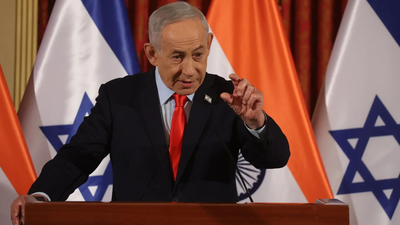
Israeli Prime Minister Benjamin Netanyahu has said he ordered the military to expand its control over the Gaza Strip to 70 per cent of the territory, signalling a further escalation despite the fragile ceasefire that came into effect in October 2025.Speaking at a conference in an Israeli settlement in the occupied West Bank on Thursday, Netanyahu said Israeli forces currently controlled around 60 per cent of Gaza. “We are currently squeezing Hamas,” he said in remarks broadcast by Israel’s Channel 12. “My directive is to move to 70 per cent. We’re squeezing them from all sides.”Under the terms of the ceasefire agreement, Israeli troops were expected to gradually withdraw behind a demarcation line separating areas under Hamas control from those occupied by the Israeli military. The second phase of the truce, which was meant to include Hamas disarming and a phased Israeli withdrawal, has remained stalled for months.Netanyahu’s latest comments underline Israel’s determination to maintain military pressure on Hamas, even as violence continues almost daily across Gaza. The Hamas-run health ministry says more than 900 Palestinians have been killed since the ceasefire began, while Israel accuses Hamas of repeatedly violating the agreement.The announcement came a day after Israel said it had killed Mohammed Odeh, the newly appointed head of Hamas’s armed wing in Gaza. Odeh had replaced Izz al-Din al-Haddad, who was reportedly killed earlier this month. Israeli officials say both men played major roles in planning the October 7, 2023 attacks that triggered the war.Israel has systematically targeted Hamas leaders throughout the conflict, killing several senior commanders including Yahya Sinwar and Mohammed Deif in 2024. However, analysts say such assassinations have historically failed to deliver decisive political results.Nasser Khdour, a researcher with the conflict-monitoring organisation ACLED, said the killings demonstrated Israel’s ability to penetrate Hamas’s military structure but were unlikely on their own to force the group to disarm or surrender control of Gaza.Experts point to similar examples involving Hezbollah and other militant groups, where leadership losses weakened organisations temporarily but did not end conflicts. Political scientist Max Abrahms warned that targeted killings can sometimes radicalise movements further, leading to more extreme successors and continued violence.Israeli Defence Minister Israel Katz meanwhile reiterated Israel’s aim of ending Hamas rule in Gaza and again referred to plans for the “voluntary migration” of Palestinians from the territory, a proposal that has drawn widespread international criticism.

Leave a Reply