
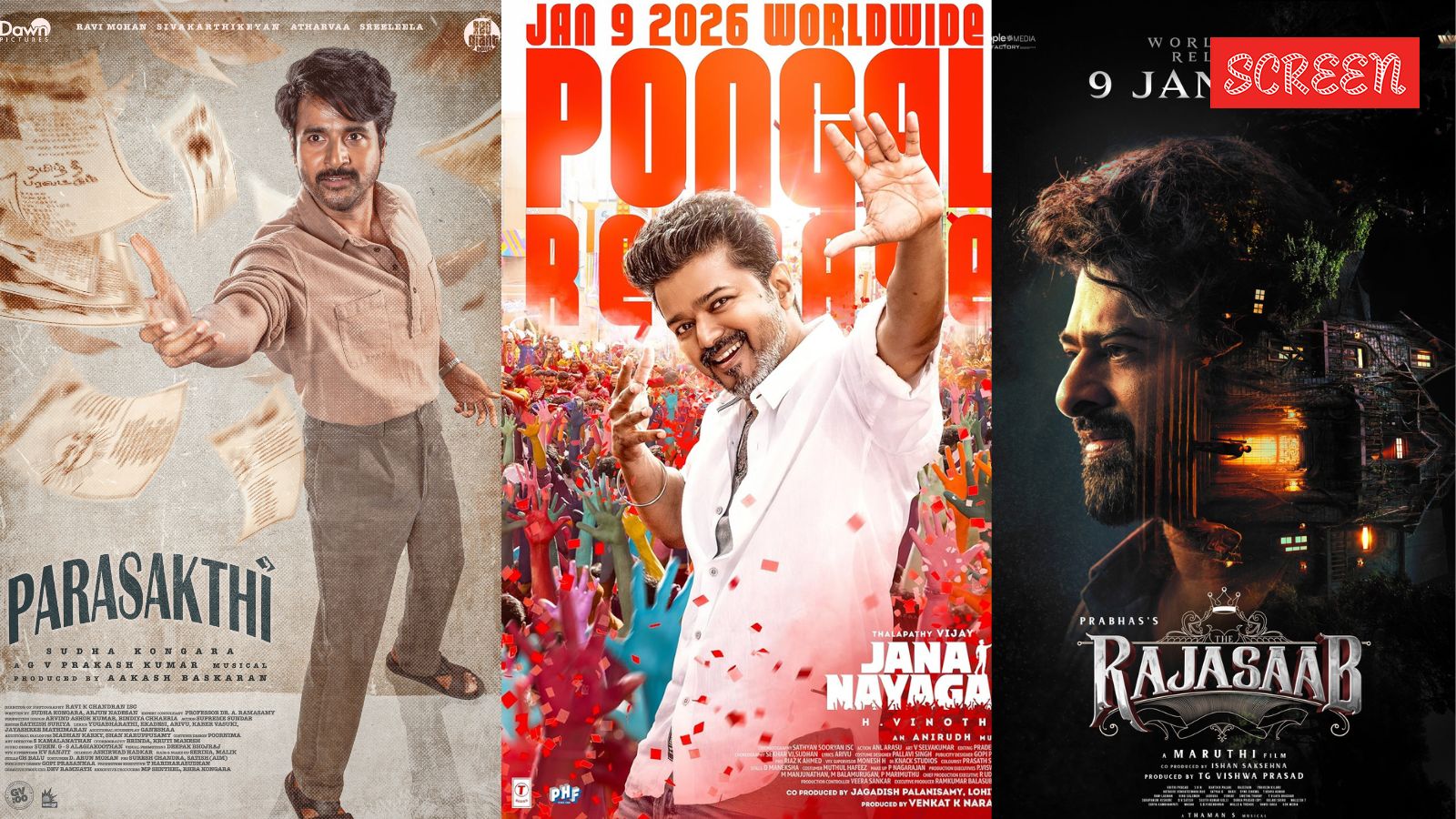
Sankranti and Pongal festivities have long been the most lucrative theatrical window for South Indian cinema—a season where superstardom, family audiences, and holiday footfalls converge to create box-office spectacles worth thousands of crores. Traditionally, the festival race has been dominated by Telugu cinema’s biggest names—Chiranjeevi, Nagarjuna, Mahesh Babu, Allu Arjun, Venkatesh Daggubati, Ravi Teja—often accompanied by major Tamil stars entering the Pongal fray. But Sankranti 2026 tells a noticeably different story as Prabhas’ The Raja Saab, Jana Nayagan joins the list.
While stalwarts like Chiranjeevi and Ravi Teja remain firmly in the race with Mana Shankara Varaprasad Garu and Bhartha Mahasayulaku Wignyapathi respectively, several familiar festival regulars are conspicuously absent. Nagarjuna, following the underperformance of his 2024 Sankranti release (Rs 37.32 crore lifetime), has opted out of the festival window for the second consecutive year. Mahesh Babu, after Guntur Kaaram, has shifted full focus to SS Rajamouli’s next and stayed away from the spotlight altogether. Allu Arjun—whose Ala Vaikunthapurramuloo (2020) remains one of Sankranti’s biggest blockbusters—has since devoted himself almost entirely to Sukumar’s Pushpa franchise, resulting in just two releases in nearly five years, both bypassing the festive slot.
Prabhas enters Sankranti race: The Raja Saab
The most significant and surprising addition to this year’s Sankranti lineup is Prabhas, who returns to the festival frame after more than a decade with The Raja Saab. The film marks his first foray into the horror genre and is also the most expensive Sankranti release this season, with an estimated budget of Rs 400–450 crore.
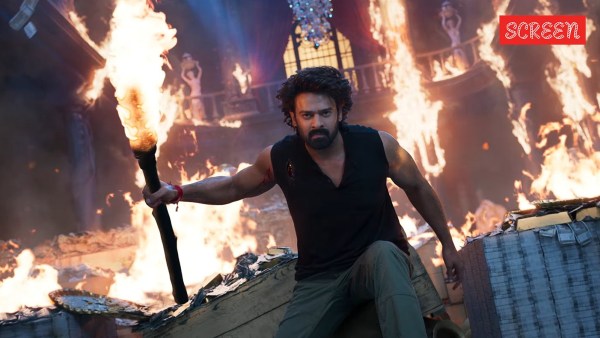 The Prabhas-starrer will hit the screens on the occasion of Sankranti.
Scheduled for a January 9 release, The Raja Saab will enjoy an uninterrupted opening weekend and an estimated 4,000–5,000 screens across India. The scale of the release reflects the industry’s continued faith in Prabhas’ pan-India pull, despite his uneven theatrical record in the post-Baahubali era—Kalki 2898 AD being the notable exception.
The strategy is clear: a strong opening combined with positive word-of-mouth could allow The Raja Saab to dominate screens deep into the festival week. However, in the event of mixed or poor reception, theatres are expected to rapidly divert screens to the next major release—Chiranjeevi’s Mana Shankara Varaprasad Garu, slated for January 12.
Chiranjeevi’s action entertainer, made on a reported budget of Rs 200 crore, faces an immediate box-office collision with Ravi Teja’s comedy Bhartha Mahasayulaku Wignyapathi (Rs 100–150 crore), releasing just a day later on January 13. The congestion peaks on January 14 with Naveen Polishetty’s mid-budget Anaganaga Oka Raju (Rs 40 crore) entering the race.
In this tightly packed release calendar, screen allocation will be dictated almost entirely by audience response rather than star value alone. In the post-pandemic theatrical ecosystem, long runs are no longer guaranteed—shows are won and lost on a daily basis through demand, occupancy, and word-of-mouth.
Story continues below this ad
Rs 800 Crore riding on four films
Put together, the Telugu film industry has more than Rs 800 crore invested across just four Sankranti releases this year. With rising production costs and non-theatrical revenues no longer acting as reliable safety nets, the financial pressure is immense. For several of these films, merely breaking even—rather than chasing records—may ultimately be considered a success.
Projected ROI Table – Sankranti 2026 (Telugu)
Tamil Pongal 2026
Story continues below this ad
On the Tamil side, Pongal 2026 was expected to be dominated by Thalapathy Vijay’s Jana Nayagan—not only because of its reported Rs 300 crore budget, but also due to its significance as Vijay’s expected final film before fully transitioning into politics. The project is widely seen as a cinematic extension of his political ambitions.
However, delays in the censor certification are likely to push Jana Nayagan away from its planned January 9 release, effectively clearing the field for Siva Karthikeyan’s Parasakthi, directed by Sudha Kongara. The political action drama, made on an estimated budget of Rs 142 crore, now stands to emerge as the primary Pongal attraction.
Also arriving during the festival is Sharwanand’s Nari Nari Naduma Murari, a lighter commercial entertainer positioned in a similar festive space as Ravi Teja’s Telugu release.
The shadow of Sankranti 2025
The cautious optimism surrounding Sankranti 2026 is deeply influenced by what transpired last year. Sankranti 2025 served as a stark reminder that scale and stardom no longer guarantee box-office success.
Story continues below this ad
The biggest shock came from Ram Charan’s Game Changer. Mounted on a massive budget exceeding ₹400 crore, the film collapsed theatrically, earning just Rs 186.28 crore worldwide—less than half its production cost. Nandamuri Balakrishna’s Daaku Maharaj, made on a Rs 100 crore budget, managed a Rs 126 crore lifetime total but failed to emerge as a clean hit.
Sankranti 2025: Budget vs Box Office vs ROI
The sole success story was Venkatesh Daggubati’s Sankranthiki Vasthunnam. Produced on a modest Rs 50 crore budget, the family entertainer struck gold, collecting Rs 255.2 crore and delivering exceptional returns.
In total, the Telugu industry invested approximately Rs 600 crore during Sankranti 2025 but recovered only Rs 567.48 crore—falling short of breakeven. The numbers exposed the fragile economics of festival releases and forced producers to reassess budgets, release strategies, and content priorities.
Industry-Level Snapshot: Sankranti 2025
Notably, Tamil cinema largely stayed out of the Sankranti race last year, avoiding the financial turbulence that hit Telugu cinema—perhaps unintentionally demonstrating restraint as a viable strategy.
Star Power vs Risk: Who’s carrying what in 2026?
Prabhas – The highest stakes
Pros: Massive pan-India pull, solo release weekend, 4,000–5,000 screens
Cons: Rs 400+ crore budget, post-Baahubali inconsistency, new genre (horror)
Verdict: If WOM clicks – blockbuster potential, if WOM falters – fastest screen erosion of the season
Chiranjeevi – The stability anchor
Pros: Loyal family audience, Sankranti-friendly genre, manageable budget
Cons: Less pan-India appeal compared to Prabhas
Verdict: Chiranjeevi may not set records, but he’s best placed to recover costs safely, especially if Prabhas’ film underperforms.
Ravi Teja – Volume over scale
Pros: Comedy genre, strong mass belt, quick recovery potential
Cons: Clash with Chiranjeevi, limited urban appeal
Story continues below this ad
Verdict: Ravi Teja’s film is unlikely to dominate headlines but could quietly emerge financially healthy.
Naveen Polishetty – The silent winner
Pros: Youth connect, low budget, late release after audience fatigue
Cons: Smaller release scale
Verdict: Even moderate success will mean outsized profits. This is the safest bet of the season.
Tamil Pongal 2026: A window of opportunity
With Thalapathy Vijay’s Jana Nayagan likely shifting away from January 9 due to CBFC delays, the Tamil industry’s Pongal momentum now rests with:
Story continues below this ad
Siva Karthikeyan’s Parasakthi (Rs 142 crore budget, Sudha Kongara direction)
Sharwanand’s Nari Nari Naduma Murari (lighter, festive entertainer)
This delay significantly reduces inter-industry box-office collision, indirectly benefiting Telugu releases in Tamil-speaking belts.
With hundreds of crores riding on a handful of films, Sankranti 2026 is shaping up to be more than just a festive box-office battle. It represents a turning point—where the industry must decide whether festivals are still about scale and star power, or about precision, content, and controlled risk.
The coming weeks will not only crown winners and losers—but may well redefine how South Indian cinema approaches its most prized theatrical window in the years ahead.

Leave a Reply