
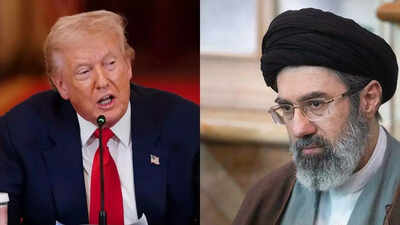
Driving the newsOn Day 11 of the US-Iran war, the gap between battlefield damage and political outcome is becoming clearer. President Donald Trump is insisting the campaign has inflicted devastating military losses on Iran and could end “very soon,” while Tehran is signaling it has no intention of folding and will keep fighting as long as necessary. That combination – US claims of rapid progress and Iranian vows of continued resistance – is turning the conflict into a test of endurance rather than a short, decisive war.Reuters reports that Iran’s strategy is now centered on outlasting Washington and Israel through attrition, missile pressure and energy disruption, while Trump has tried to calm markets and domestic nerves by suggesting the war is nearing completion.
Israel Iran War
Why it mattersThis is increasingly looking less like a classic contest of battlefield dominance and more like a contest over tolerance for pain. Iran’s calculation, as described by Reuters, is that it does not need to win militarily. It only needs to endure, keep enough of its missile and command structure intact, and make the economic and political price of continued war intolerable for Trump.That matters because Trump’s political vulnerability is more obvious than Iran’s military weakness. As per the WSJ, some of Trump’s advisers are privately urging him to develop an exit plan amid concerns about spiking oil prices, inflationary fallout and the risk of backlash before the November midterms. A Reuters/Ipsos poll found only 29% of Americans approve of the war, while 67% expect gas prices to rise in coming months. Stephen Moore, an outside Trump adviser, told the WSJ: “When the price of gas and oil rise, so does everything else. Given affordability was already an issue, this leads to real challenges.”That is the core of the “TACO” angle hanging over this fight. The phrase, shorthand for Trump Always Chickens Out, has been used by critics to describe Trump’s pattern of maximalist threats followed by tactical retreat or rhetorical repositioning when market or political pressure intensifies. This war is not a tariff fight or a campaign-trail bluff, so the stakes are far higher. But the market reaction is testing the same instinct. Oil spiked above $100 a barrel before plunging after Trump signaled the war could end earlier than expected. Investors clearly heard an effort to calm markets, not just to intimidate Tehran.Between the linesTrump looks like the more likely side to seek a face-saving off-ramp first – not because he lacks military leverage, but because he has more immediate political reasons to declare victory early.The clearest sign is his own language. Last week, he spoke in absolutist terms, demanding Iran’s “unconditional surrender.” By Monday, his tone had shifted to one closer to mission-complete messaging. According to the WSJ, he stressed that the operation had largely achieved its goals and seemed more interested in a quick conclusion than in pressing for regime change. That is not a small rhetorical adjustment. It suggests the White House is already searching for a narrative that can support de-escalation without looking weak.The market backdrop strengthens that reading. Trump said he would waive some oil-related sanctions to reduce prices and floated support for tanker escorts through Hormuz. Those are not the moves of a president indifferent to economic blowback. They are the moves of a president trying to contain it.Iran, by contrast, may have fewer incentives to blink quickly. The Revolutionary Guards remain firmly in control, have elevated Mojtaba Khamenei as supreme leader and are framing the war as existential. That makes compromise harder but endurance easier. For Tehran, survival itself can be sold as victory. Reuters put it starkly: even a badly damaged Iran could still claim success if it outlasts one of the most powerful military coalitions on earth.The WSJ reinforced that point, reporting that despite punishing strikes, Iran’s leadership is still functioning, security forces remain visible in major cities and there are no clear signs of regime collapse. One diplomat cited by the paper said the regime’s apparent goal is to hold on while the consequences of the war accumulate and pressure Trump to move on.The big pictureTrump may have escalation dominance, but Iran may believe it has patience dominance.That is the asymmetry driving this war. Trump can hit harder, faster and more broadly. Iran cannot match US and Israeli power in conventional terms. But Tehran appears to believe it can still exploit the weak link in the Western system: democratic politics, consumer prices and market panic.Reuters reports that Iran’s planners anticipated a confrontation and prepared a layered response. The aim is not necessarily battlefield reversal. It is attrition – enough missile fire, enough energy disruption and enough global unease to split the coalition or shorten its resolve.In that sense, the key audience for Iran’s strategy may not be Israeli generals or Pentagon planners. It may be suburban American voters watching gasoline prices. Trump understands that. That is why his comments now swing between triumphalism and reassurance. He wants to project strength without owning a long war.Fawaz Gerges, from the London School of Economics, told Reuters: “The big question is who blinks first in this all-out war-Donald Trump or Iran’s leaders?”Iran may absorb extraordinary punishment and still not blink in the conventional sense. Trump, meanwhile, may not need to “blink” openly. He can instead redefine the objective, say the military mission succeeded, point to degraded Iranian capabilities and pivot to deterrence. That would not look like retreat inside the White House. But it would amount to the same strategic reality: a decision to stop short of total capitulation from Tehran.What’s nextWatch three things. First, oil. If prices resume climbing and gasoline follows, pressure on Trump will intensify quickly. Second, Trump’s rhetoric. The more often he talks about being “ahead of schedule” or the war being nearly done, the more likely he is preparing the ground for a political exit. Third, Iran’s missile tempo and domestic cohesion. If Tehran can keep firing at a meaningful rate and avoid visible fractures, it strengthens its endurance bet.The bottom lineIran looks less likely to capitulate outright. Trump looks more likely to redefine success and move first toward an off-ramp, especially if energy shock starts to bite harder at home. In pure military terms, Tehran is weaker. In this specific test of political stamina, though, Trump may be the one under greater pressure to blink – even if he packages that blink as victory.(With inputs from agencies)

Leave a Reply